
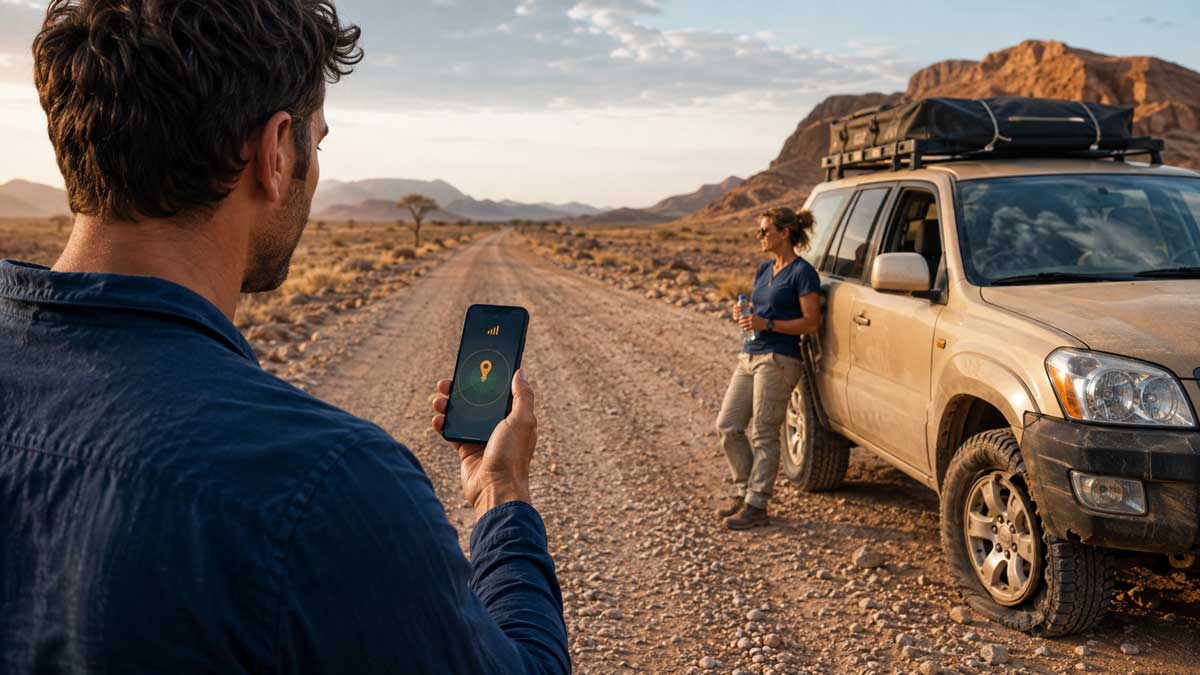
Imagine you are driving through Namibia and your vehicle leaves a gravel road after hitting an unexpected patch of loose surface. Nobody is seriously injured, but the vehicle cannot be driven and you are not completely sure how far you are from the nearest town. Your immediate problem is no longer simply the damaged vehicle. You need to establish exactly where you are, make contact with somebody who can help and determine what should happen next.
A very different emergency can create the same communication challenge. A traveller might wake at a safari lodge in Tanzania with severe abdominal pain and have no idea whether the nearest clinic is capable of treating the problem. Someone travelling independently in Johannesburg might feel threatened and need security assistance without knowing which local service to contact. A family member could become ill in Zanzibar, where the appropriate medical response may depend heavily on where on the island they are staying.
In each situation, the traveller needs to communicate what has happened, establish their location and reach somebody capable of assessing the problem. The quality and speed of that communication can influence everything that follows.
This is where an eSIM can contribute to travel safety. Where a supported mobile network is available, it can provide the data connection that allows a traveller to communicate, share a location and access assistance. It cannot provide the assistance itself.
TravelSafe SOS adds that next layer. Its role is to take the communication from the traveller, assess what has happened and help coordinate an appropriate response. Understanding the distinction between connectivity and response is fundamental to the idea of connected travel safety in Africa.
Connected travel safety in Africa
Why Connectivity Changes the Emergency Equation
Before smartphones became central to international travel, responding to an emergency in an unfamiliar country could be remarkably difficult. Travellers depended on hotel telephones, local guides, roadside assistance points, public phones or whatever communication happened to be available. Even when contact could be established, accurately describing an unfamiliar location was not always easy.
Most international travellers now carry a device capable of identifying a GPS location, accessing maps, storing travel insurance and medical information, sending photographs, connecting to messaging services and communicating with people thousands of kilometres away. During an ordinary holiday, those functions make travel easier. They help us contact transfer companies, navigate unfamiliar cities, check flights and communicate with hotels.
During an emergency, exactly the same technology takes on a more important role. A traveller may be able to communicate symptoms to somebody who can assist, share the location of a road accident, access insurance information or provide photographs that help explain what has happened. A travel consultant can be contacted and family members can be informed.
Most of those capabilities become considerably more useful when the device has mobile connectivity. This is why data should no longer be regarded purely as a way to use social media or check email while travelling. For someone visiting Africa, particularly on a journey involving safari areas, remote roads or several countries, connectivity can form an important part of the wider travel safety system.
It remains only one part of that system. Having mobile data and having somebody capable of coordinating help are two very different things.
An eSIM Does Not Rescue You
The travel technology industry sometimes allows the distinction between being connected and being protected to become blurred. They are not the same thing.
An eSIM has a very specific and useful purpose: it provides mobile connectivity through supported partner networks. If a traveller is injured, involved in a road accident, becomes seriously ill or feels threatened, that connection can provide a vital communication bridge. It may allow the traveller to share a location, describe what has happened, access important information or establish contact with somebody who can assist.
The eSIM itself cannot assess the traveller’s injuries, determine whether an ambulance is required or decide which medical facility is capable of treating a particular condition. During a security incident, it cannot assess the threat or decide what type of security response is appropriate. Nor can any conventional eSIM guarantee mobile signal throughout remote African destinations because its connectivity still depends on the underlying mobile network.
The value of an eSIM during an emergency therefore lies in what the connection enables. Somebody still needs to be at the other end of that connection who can understand the problem and help determine what happens next.
This is the fundamental difference between purchasing mobile data and using a connected travel safety service. TravelSafe SOS is designed around the problem that begins once the traveller makes contact: understanding what has happened, where it has happened and what assistance is appropriate.
From Mobile Signal to Real Emergency Response
An emergency can be confusing even in a traveller’s home country. In an unfamiliar destination, the uncertainty can be considerably greater because the traveller may know almost nothing about the local emergency infrastructure.
Travel insurance and travel safety apps
Knowing that you need medical assistance does not necessarily tell you which medical provider to contact. The closest clinic may not be equipped for the problem, while the most appropriate hospital could be considerably farther away. A traveller may not know whether an ambulance service operates in the area or whether another form of transport would be more appropriate. Security incidents create an entirely different set of questions about who should respond and what the traveller should do immediately.
These decisions become even more complicated in remote areas. A medical emergency in central Cape Town is operationally very different from one in Botswana’s Okavango Delta. A vehicle accident outside Windhoek presents different challenges from an incident on a remote road in Damaraland. A traveller requiring medical help in Stone Town may have access to different resources from somebody staying on a more isolated part of Zanzibar.
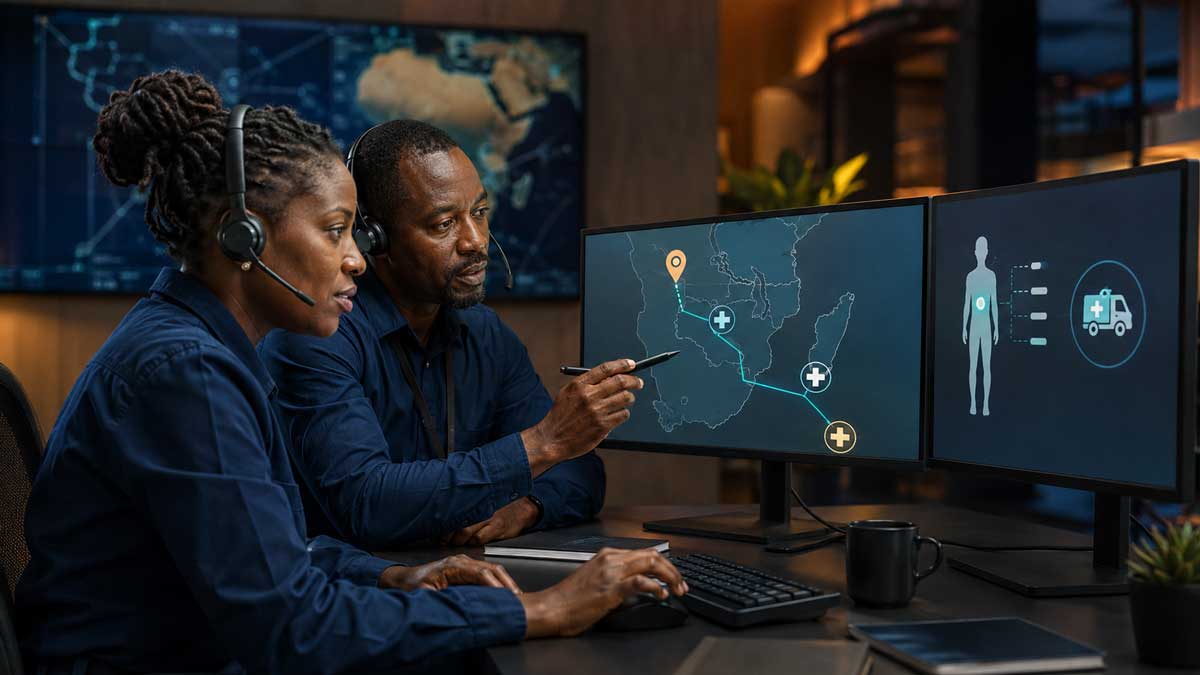
TravelSafe SOS is intended to bridge this gap between making contact and determining an appropriate response. When an emergency is activated, the control centre can establish the nature of the incident, consider the traveller’s location and coordinate assistance according to the circumstances and resources available.
Connectivity therefore solves the first problem by allowing the traveller to establish communication. Professional emergency coordination addresses the much more complicated question of what should happen next.
Why Knowing Your Exact Location Matters in Africa
One of the most underestimated difficulties during a travel emergency is answering the apparently simple question, “Where are you?”
In a familiar city, most people can provide a street name, suburb or nearby landmark. International travellers often cannot. Someone on safari may know the name of the lodge without having any idea of its precise geographical location. A self-drive traveller may know the road they intended to follow but not how far they have travelled along it. A visitor walking through an unfamiliar town may recognise their surroundings while being completely unable to provide an address.
Africa’s tourism geography makes accurate location particularly important because many of the continent’s most rewarding experiences deliberately take travellers beyond conventional urban environments. Safari reserves, desert routes, mountain regions, remote beaches and islands are part of the appeal of travelling here, but they also make traditional street-address descriptions less useful.
Where connectivity and device permissions allow it, GPS coordinates and digital location sharing can provide emergency coordinators with a much more accurate starting point. Instead of trying to interpret a description such as “about an hour from the lodge on a gravel road,” the people coordinating assistance can work from much more precise location information.
Location sharing does not magically bring a responder to the traveller, and it does not eliminate the challenges created by distance or terrain. What it does is remove one of the most important uncertainties at the beginning of an emergency: establishing where assistance is actually required.
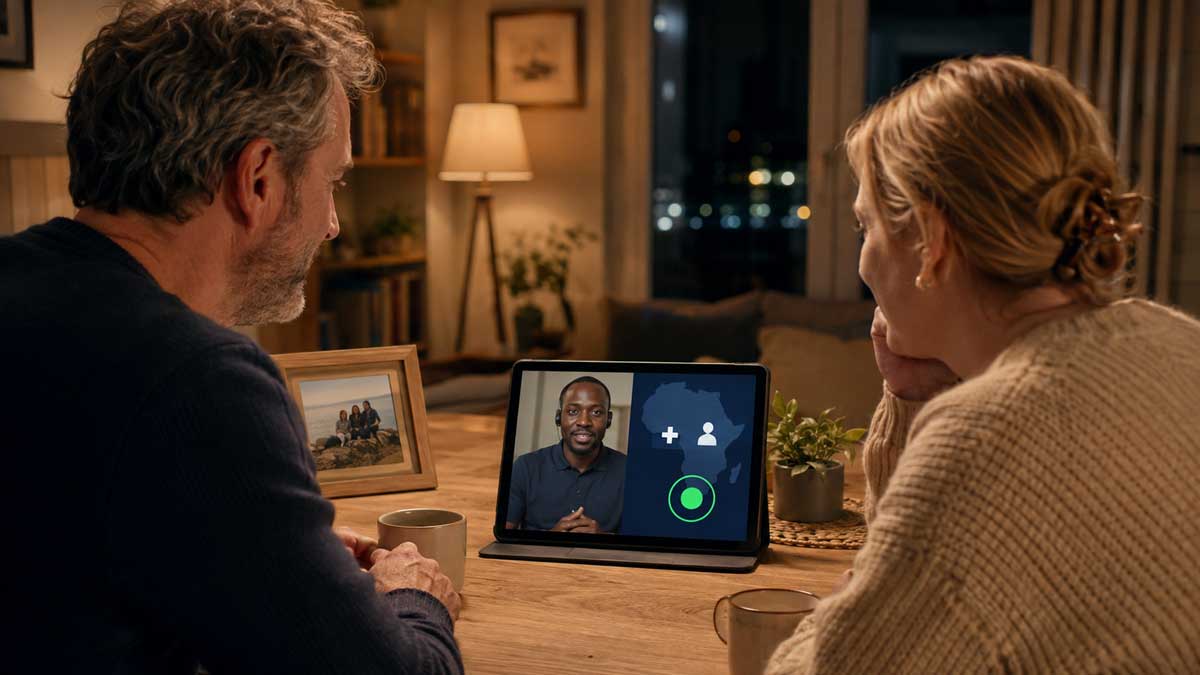
When “Hospital Near Me” Is Not Good Enough
Smartphones have made finding nearby services extraordinarily easy. Search for a pharmacy, petrol station or restaurant and the nearest options can appear within seconds. It is tempting to assume that medical emergencies work the same way.
They do not.
The closest healthcare facility is not necessarily the most appropriate facility for the traveller’s condition. A small clinic may be perfectly capable of treating a minor wound or uncomplicated illness but unsuitable for a serious cardiac event, complicated fracture or medical problem requiring advanced diagnostic equipment. In remote areas, choosing an inappropriate facility first can add unnecessary delay before the traveller reaches the level of care they actually require.
The problem becomes even more complicated for international visitors because they usually have no knowledge of the local healthcare system. A facility may appear on a digital map without giving the traveller any meaningful understanding of its capabilities, staffing or suitability for the particular emergency.
This is another reason why professional emergency coordination matters. The objective is not simply to locate the nearest building described as a hospital or clinic. It is to understand the circumstances, consider the resources available and help coordinate an appropriate level of response.
In some situations, local medical assessment may be the correct first step. More serious cases may require transport to a larger medical centre, communication with the traveller’s insurer or consideration of evacuation. These decisions depend on the circumstances rather than the results of a generic internet search.
An eSIM can provide the connectivity through which the process begins. The value of TravelSafe SOS lies in having somebody on the other side of that connection who can help coordinate what follows.
Medical Emergencies: Connectivity Is Only the Beginning
The overwhelming majority of African holidays pass without a serious medical incident, but illness and injury do not choose convenient locations. An allergic reaction can happen at a safari lodge, a traveller can fall during an excursion, heat illness can develop on a hot day and a pre-existing condition can worsen unexpectedly.
travel insurance, a travel safety app and an eSIM
During the first contact, relatively simple information can become extremely important. Emergency coordinators need to understand what symptoms are present, whether the traveller is conscious and able to communicate, whether somebody is with them and where the incident has occurred. Once that information is available, the response can become more specific.
This demonstrates why a connected phone is useful but insufficient. The traveller does not simply need internet access. They need somebody capable of interpreting the circumstances from an emergency-response perspective and helping determine the next appropriate action.
TravelSafe SOS provides access to a control centre that can assess the situation and coordinate assistance according to the circumstances and available local resources. For the traveller, this changes the nature of the problem. Instead of trying to research the local emergency system while already dealing with an illness or injury, they have established contact with somebody whose role is to help coordinate the response.
That reduction in uncertainty is one of the most valuable functions of an organised travel safety system.
Security Emergencies Need a Different Response
Not every travel emergency requires medical assistance. Travellers can experience theft, robbery, vehicle-related incidents, threatening behaviour or situations in which they simply feel unsafe and need help determining what to do next.
These circumstances require a different form of assessment. Someone who feels threatened may not know the local police structures or whether another security resource is available. They may also be reluctant to make several telephone calls or conduct internet searches while trying to remove themselves from an uncomfortable situation.
Connectivity again provides the ability to establish contact, but the value lies in what happens after contact has been made. TravelSafe SOS can assess whether an incident is medical, security related or requires another type of response and help coordinate accordingly.
This matters because people do not always make their best decisions when frightened. Trying to discover emergency numbers and understand an unfamiliar response system while an incident is already unfolding is very different from travelling with an emergency assistance service already configured on the phone.
The best time to decide how you will obtain help is before you need it.
What Happens When There Is No Mobile Signal?
Any credible discussion of eSIM travel safety in Africa must acknowledge one unavoidable limitation: there are places where conventional mobile signal is weak or completely unavailable.
Best mobile networks for travellers in Africa
This can happen whether the traveller uses an eSIM, a local physical SIM or international roaming. All of them ultimately depend on telecommunications infrastructure and the network coverage available at the traveller’s location.
The issue is particularly relevant in remote national parks, wilderness concessions, mountainous regions, sparsely populated desert areas and some coastal environments. These are also places international travellers deliberately visit because their remoteness is part of the experience.
Travellers should therefore never make a mobile phone their only safety plan when entering genuinely remote areas. Essential travel information and maps should be available offline, adequate battery capacity should be carried and somebody should know the planned route during independent travel.
Professional safari operators provide another important layer. Many lodges and guides maintain radio, satellite or other communications because their operations have always needed to function beyond conventional cellular infrastructure. In those environments, the lodge’s communication system may be more important during an immediate emergency than the traveller’s phone.
This does not reduce the value of an eSIM. It defines its role accurately. The eSIM provides convenient connectivity wherever a supported network is available, while good travel preparation anticipates the locations where terrestrial mobile service may disappear.
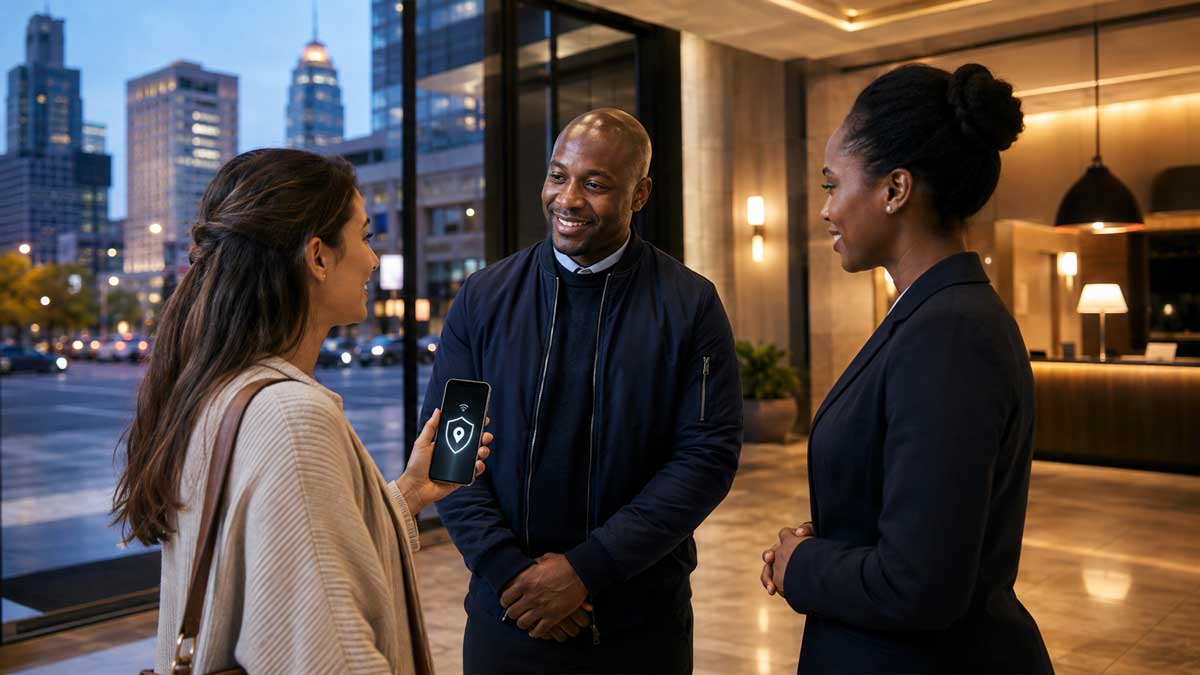
The Real Safety Benefit Is Reducing Uncertainty
The contribution mobile connectivity makes during an emergency is not that it somehow prevents the incident. Its value is that it can reduce uncertainty after something has happened.
Once contact is established, the traveller’s location can be communicated and the circumstances explained. Emergency coordinators can begin considering the appropriate response. Where necessary, medical or security resources can become involved, the insurer can be contacted, the travel consultant can begin managing disruptions and family members can receive more reliable information.
Each step removes another unknown from a situation that may initially feel chaotic.
This is why TravelSafe SOS is bringing emergency assistance and travel connectivity together. The purpose is not to claim that an eSIM prevents emergencies or guarantees uninterrupted communication across Africa. It is to improve the traveller’s ability to make contact when network coverage is available and connect that communication to a system capable of coordinating the next steps.
That is the real meaning of connected travel safety.
How an eSIM Can Make Travel in Africa Safer
Why an Emergency Quickly Becomes a Communication Problem
Establishing contact and arranging the immediate response are only the beginning of many travel emergencies. Once something serious has happened, several people may need reliable information, and the traveller is often the person least able to provide it.
Consider someone who becomes seriously ill during a safari in Tanzania. Their travelling companion wants to concentrate on the person who is ill. Their insurer may need to become involved if treatment or evacuation is required. Their travel consultant needs to know that tomorrow’s transfer, accommodation or flight may have to change. At the same time, family members at home understandably want to know what has happened and whether appropriate assistance has been arranged.
Apple Dual SIM and eSIM guidance
Without coordination, the traveller or companion can become the centre of an exhausting communication chain at precisely the moment when their attention should be elsewhere.
This is an important part of the TravelSafe SOS model. Where appropriate, the control centre can help ensure that nominated next of kin, the traveller’s insurer and their travel agent or tour operator are alerted and kept informed. Each has a different role, but getting accurate information to the right people can make the wider emergency considerably easier to manage.
Connectivity enables those communications. Professional emergency coordination helps organise them.
Why Travel Insurance and Emergency Assistance Work Together
Comprehensive travel insurance remains essential for international travel. Neither an eSIM nor TravelSafe SOS replaces it.
Travel insurance provides financial protection according to the terms, limits and exclusions of the policy. Depending on the cover purchased, this may include emergency medical expenses, evacuation, cancellation and other significant travel losses. Serious incidents may also require communication with the insurer before particular treatment, transport or evacuation arrangements can be authorised.
The immediate practical response to an emergency is nevertheless different from the insurance process.
If a traveller becomes seriously ill at a remote safari lodge, the first concern is not the eventual insurance claim. Their condition needs to be understood, their location established and the available response options considered. The appropriate medical facility may need to be identified and transport arranged. Once the situation is understood, the insurer may become an important part of what happens next.
TravelSafe SOS and travel insurance therefore perform complementary roles. TravelSafe SOS helps coordinate the practical emergency response, while the insurer provides the financial protection and assistance available under the policy.
For travellers, this distinction is important. The question should not be whether they need travel insurance or a travel safety service. A well-prepared traveller should have appropriate insurance and a clear way of obtaining practical assistance when something goes wrong.
Why Your Travel Agent Can Become Part of the Safety Network
A professional travel consultant or tour operator may know more about a traveller’s itinerary than almost anyone else involved in an emergency.
They know where the traveller is staying, how they were supposed to reach their next destination, which flights have been booked and what arrangements are due to happen over the following days. On a complex African journey, this information can become valuable very quickly.
If somebody is admitted to hospital, an onward flight may need to change. A safari transfer might require cancellation, accommodation could need extending or another member of the travelling party may need alternative arrangements. On a multi-country itinerary, one disrupted day can affect several bookings further down the journey.
This is particularly relevant in Africa, where sophisticated itineraries often combine international flights, light-aircraft transfers, remote safari lodges, road transfers, boats and several countries. Rearranging such a journey can be considerably more complicated than changing a city hotel booking.
Keeping the travel professional informed allows them to start managing these practical consequences while the emergency response remains focused on the traveller.
The travel agent is therefore more than somebody who sold the holiday. In the right circumstances, they become another part of the traveller’s support network.
Why Family at Home Needs Reliable Information
A serious incident overseas affects people thousands of kilometres away.
A short WhatsApp message saying that somebody has been taken to hospital can create enormous anxiety when no further information follows. Family members may not know where the traveller is, how serious the situation is, whether somebody is with them or whether professional assistance has been arranged.
Time zones make this more complicated. An emergency in Kenya or Tanzania may unfold while family members in the United States are asleep. A traveller may also be unable to communicate personally because they are receiving treatment, have lost access to their phone or are simply in no condition to manage repeated conversations.
TravelSafe SOS allows nominated emergency contacts to form part of the communication process where appropriate. The purpose is not to bombard family members with operational information. It is to help ensure that the people who need to know are not left trying to reconstruct events from incomplete messages.
There is an important reassurance in knowing that somebody is coordinating the situation. For relatives who may be on another continent and unable to help directly, accurate information can make an enormous difference.
Why TravelSafe SOS Is Including 1GB of Travel Data
The decision to include complimentary eSIM data within TravelSafe SOS follows directly from the emergency-response model.
Emergency assistance works better when travellers can communicate.
TravelSafe SOS plans to include 1GB of travel data with its standard 30-day activation at no additional charge, subject to compatible devices, supported destinations and the final conditions of the eSIM service.
The purpose is not to compete with specialist eSIM businesses by offering enormous quantities of cheap data. A traveller who wants to stream films, upload large videos or use a phone continuously as a hotspot will require considerably more data.
The complimentary allocation serves a different purpose. It helps the traveller arrive connected and provides useful data for ordinary travel communication, including messaging, maps, emails, accommodation information and other essential online functions.
From a travel safety perspective, the logic is even stronger. Where supported network coverage exists, that same connectivity provides the communications layer through which the traveller can access TravelSafe SOS.
This also changes the value proposition of the application. Conventional emergency products provide their greatest value only when something goes wrong. With included travel data, TravelSafe SOS can provide a practical benefit from the beginning of the journey, even when the traveller enjoys a completely incident-free holiday.
That is exactly the outcome everyone wants. The traveller uses the connectivity and never needs the emergency response.
But the response is there if circumstances change.
The eSIM Is Not the Product, Connected Travel Safety Is
TravelSafe SOS should not be understood as another company entering the market simply to sell mobile data.
There are already specialist eSIM providers competing on data allowances, country coverage and price. TravelSafe SOS begins with a different problem: how can a traveller be better prepared to obtain appropriate assistance if something goes wrong?
Connectivity forms one part of that answer. Emergency coordination forms another. Travel insurance provides financial protection, while travel professionals can help manage itinerary disruption and nominated family members need accurate information when a serious incident occurs.
The eSIM strengthens this wider system because it helps establish the connection through which those other services can begin working.
A standalone travel eSIM can get a traveller online. That is useful.
TravelSafe SOS aims to put an emergency response structure behind that connectivity.
The difference matters because having internet access during an emergency is not the same as knowing what to do with it.
What Connected Travel Safety Looks Like Across Africa
The value of this approach becomes much clearer when applied to actual African journeys.
A couple self-driving through Namibia may travel for hours through sparsely populated landscapes. Their safety preparation should include sensible route planning, adequate fuel and water, offline navigation and an understanding that cellular coverage can disappear. Where a supported mobile network is available, an eSIM provides an additional communication channel. If an accident or medical problem occurs and TravelSafe SOS can be reached, they have access to emergency coordination rather than having to begin researching unfamiliar services from the roadside.
Kruger National Park presents another environment. Travellers can cover considerable distances during a self-drive safari, and mobile coverage can vary by location. If a family experiences a medical problem where connectivity is available, being able to communicate their location and circumstances can make coordinating assistance easier. That does not mean travellers should expect uninterrupted signal throughout the park, and preparation for areas of weak connectivity remains important.
An East African journey might move from Nairobi into a safari area in Kenya before crossing into Tanzania, continuing to the Serengeti and finishing on Zanzibar. The traveller moves between cities, airports, remote wildlife regions and an island destination during a single holiday. A suitable regional eSIM can make maintaining mobile data across that journey considerably easier than repeatedly solving the connectivity problem at each stage.
Botswana’s Okavango Delta demonstrates the limits of cellular technology equally well. Many camps operate in genuinely remote wilderness environments where ordinary mobile coverage may be weak or absent. Professional safari operators use radio, satellite and other communications precisely because their operations cannot depend exclusively on public cellular networks. In that environment, the lodge’s communications may initially be more important than anything installed on the traveller’s phone.
These examples are important because they prevent the eSIM proposition from becoming exaggerated. TravelSafe SOS does not need to claim that its connectivity works everywhere to demonstrate its value.
Connected travel safety means using the best available communications while recognising where additional layers of preparation are required.
Set Up Your Safety System Before You Leave Home
The best time to organise connectivity and emergency information is before departure, when there is no pressure and reliable internet access is available.
Get an eSIM before travelling to Africa
Travellers intending to use an eSIM should check that their device is compatible and unlocked where necessary, understand how activation works and confirm that their destinations are included in the service. Those travelling through remote areas should download maps and important travel information for offline access rather than assuming mobile data will always be available.
Travel insurance should already be active, with the policy details easily accessible. TravelSafe SOS users should complete their profile and check that the nominated emergency contacts are correct before beginning the journey.
These are simple precautions, but together they remove decisions that would otherwise have to be made under pressure.
If the entire holiday passes without an emergency, the preparation remains almost invisible. If something does happen, the traveller begins from a much stronger position.
The Most Important Question Is Not Whether You Have Signal
Modern travellers naturally look at the top corner of their phone to see whether they have mobile coverage. During an emergency, however, there is another question that matters just as much: who is at the other end when you make contact?
Connectivity without a response plan can still leave the traveller responsible for solving the problem. They may have maps, messaging, internet search and location sharing, but they still need to determine which medical provider is appropriate, who should respond to a security incident or how to coordinate assistance in an unfamiliar country.
This is why adding eSIM connectivity to TravelSafe SOS is strategically different from simply bundling data with an application.
The eSIM helps close the communications gap.
TravelSafe SOS helps close the response gap.
Together, they create a stronger connection between the traveller experiencing the emergency and the people capable of helping coordinate what happens next.
Arrive Connected. Travel Protected.
Africa offers extraordinary journeys precisely because travellers can move beyond familiar environments. A single holiday can combine a major city, remote safari reserve, long self-drive route, tropical island and several different countries.
That variety is part of the attraction. It is also why sensible preparation matters.
eSIM technology allows compatible travellers to arrange mobile connectivity before departure. Where supported network coverage is available, that connection can provide access to messaging, maps, travel information, GPS location sharing and emergency communication.
TravelSafe SOS takes the concept further by putting professional emergency coordination behind the connection.
The planned inclusion of 1GB of complimentary travel data within the standard 30-day activation brings the two functions together. Travellers receive something useful from the beginning of their journey while retaining access to an emergency support system if something goes wrong.
An eSIM does not rescue you. It helps connect you to the people who can begin helping.
That distinction is what makes the combination powerful.