
Reliable mobile connectivity has become one of the most important parts of planning an African holiday. Whether you’re navigating unfamiliar roads in South Africa, boarding a dhow in Mozambique, tracking wildlife in the Serengeti or trekking through Rwanda’s mountain forests, choosing the right mobile network helps you stay connected, informed and prepared throughout your journey.
Staying Connected Is Now an Essential Part of Travel Planning
Travelling through Africa has never been easier.
International flights connect directly to many of the continent’s major tourism destinations, road infrastructure continues to improve and visitors can now explore everything from luxury safari lodges to remote Indian Ocean islands with confidence. At the same time, modern travellers rely on their mobile phones far more than they did only a few years ago.
Your smartphone has become your map, boarding pass, travel guide, camera, banking platform and primary communication tool. It helps you confirm airport transfers, stay in contact with accommodation providers, access weather forecasts, use WhatsApp with guides and family members and navigate unfamiliar destinations without carrying paper maps.
For travellers exploring Southern and East Africa, connectivity also provides reassurance. It allows you to check changing road conditions, receive airline notifications, access emergency information and communicate quickly should plans change unexpectedly.
The challenge is that Africa is not one telecommunications market.
Every country has its own mobile providers, network strengths and areas where coverage naturally becomes weaker. Large cities generally enjoy excellent service, while remote safari destinations, mountain regions and isolated coastlines may experience temporary gaps in reception.
That is entirely normal.
Most travellers never experience serious problems because they prepare before they arrive. They choose the right mobile network for their itinerary, download offline maps before entering remote regions and understand where reliable coverage is likely to be available.
This guide has been written specifically for travellers visiting Southern and East Africa. Rather than simply comparing mobile providers, it explains which networks perform best in the destinations visitors actually explore, from Kruger National Park and the Okavango Delta to the Bazaruto Archipelago, Zanzibar, the Masai Mara and Rwanda’s Volcanoes National Park.
Local SIM, eSIM or International Roaming?
One of the first decisions travellers face is whether to continue using their home mobile provider or switch to a local African network.
For short city breaks, international roaming may be sufficient. Most major international providers have agreements with African networks, allowing your phone to connect automatically after landing. The convenience is undeniable, but roaming can become expensive and often provides lower network priority once you leave the main urban centres.
For most visitors, purchasing a local SIM card remains the better solution.
Official mobile network stores are available at the majority of international airports throughout Southern and East Africa. Registration normally requires your passport and takes only a few minutes. Once activated, you gain access to local data packages, significantly lower costs and stronger coverage than many international roaming agreements can provide.
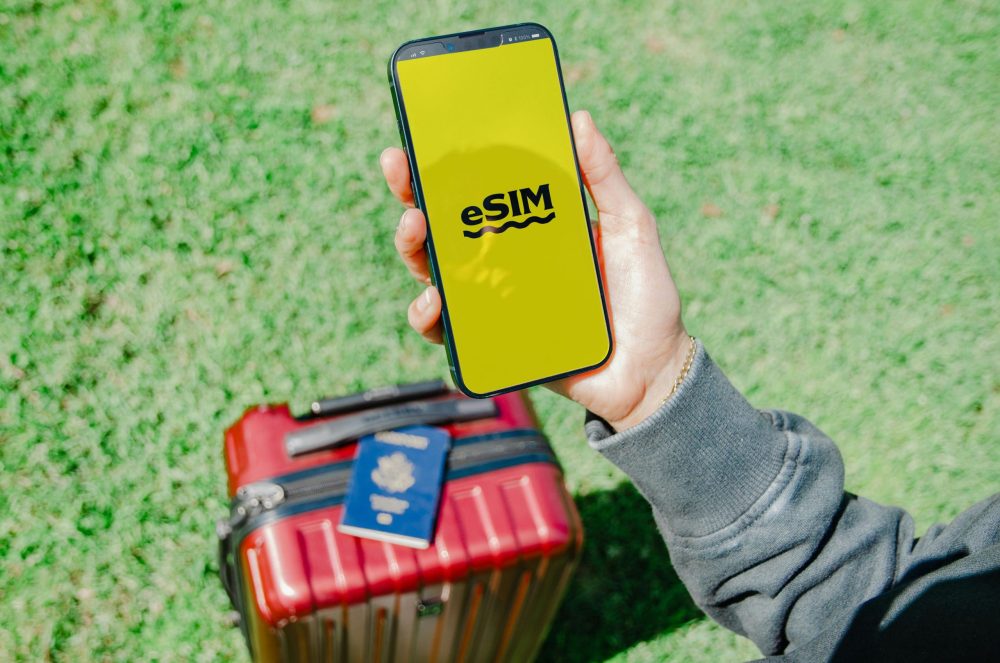
eSIM technology has made travel even simpler.
Many modern smartphones allow travellers to install an eSIM before departure without replacing their physical SIM card. This means your home number remains active while a second mobile profile provides local data as soon as you arrive. For visitors travelling through several countries during one itinerary, regional eSIM products are becoming an increasingly practical solution.
The best choice depends entirely on your route.
Someone spending two weeks between Cape Town and Kruger has different requirements from a traveller combining Kenya, Tanzania and Zanzibar or driving from South Africa into Mozambique.
Planning ahead almost always delivers the best results.
Buying a Local SIM Card
Buying a local SIM card should be one of the first tasks after arriving in Africa.
Most international airports have official kiosks operated by the country’s leading mobile providers. Purchasing directly from these outlets ensures your SIM card is registered correctly, activated immediately and loaded with the appropriate data bundle before leaving the terminal.
Official airport retailers also provide assistance with handset settings, APN configuration and eSIM activation where available.
Avoid purchasing SIM cards from unofficial roadside vendors or informal market stalls. Although these options occasionally appear cheaper, registration requirements differ between countries and improperly registered SIM cards may stop working unexpectedly.
Most travellers require only three essentials:
- Sufficient mobile data for navigation and communication.
- WhatsApp functionality.
- Reliable coverage across their planned itinerary.
Choosing the strongest network for your destinations is often far more important than selecting the cheapest tariff.
Why Local SIM Cards Usually Outperform International Roaming
Many first-time visitors assume roaming and local SIM cards perform similarly because they ultimately connect to the same infrastructure.
In reality, there can be significant differences.
Local subscribers generally receive higher network priority, better access to promotional data packages and more consistent support when travelling beyond the major cities. This becomes particularly noticeable during extended road journeys, visits to national parks and holidays that combine several destinations within one country.
For example, a traveller driving from Johannesburg into Kruger National Park before continuing to Mozambique benefits considerably from using regional networks optimised for those destinations rather than relying exclusively on international roaming agreements.
The same applies to visitors travelling between Arusha and the Serengeti, exploring Namibia’s remote desert regions or driving through Botswana’s safari circuits.
Reliable connectivity is rarely about achieving the fastest download speed.
It is about maintaining dependable communication wherever your journey takes you.
Mobile Coverage Changes Between Cities, Safaris and Coastlines
One of the biggest surprises for visitors is discovering that mobile coverage in Africa changes dramatically according to geography rather than population alone.
Large cities such as Johannesburg, Cape Town, Nairobi, Kigali, Dar es Salaam and Windhoek enjoy excellent network infrastructure comparable with many international destinations.
National parks operate differently.
Conservation areas are designed to protect wildlife rather than maximise telecommunications coverage. As a result, visitors should expect occasional periods without reception inside parts of Kruger National Park, Etosha National Park, the Okavango Delta, Gorongosa National Park, the Serengeti and other remote wilderness areas.
Similarly, island destinations such as the Bazaruto Archipelago, Zanzibar and sections of the Seychelles may experience variable signal depending on terrain, weather and distance from mainland infrastructure.
This should not discourage travellers.
Experienced safari operators understand these conditions well. Lodge managers know where reception is strongest, guides carry appropriate communication systems and most accommodation providers offer Wi-Fi in guest areas even when surrounding mobile coverage varies.
Preparation remains the key.
Download Google Maps for offline use before leaving major towns.
Save accommodation directions directly to your phone.
Carry a fully charged power bank during long travel days.
Store important travel documents where they remain accessible without an internet connection.
These simple habits ensure that temporary signal loss never becomes more than a minor inconvenience.
Best Mobile Networks by Country
Choosing the right mobile provider depends on your itinerary rather than simply the country you are visiting. The recommendations below focus on the destinations most frequently visited by international travellers and the networks that consistently perform best for tourism, safaris, beaches and self-drive holidays.
South Africa
South Africa has one of Africa’s most advanced telecommunications infrastructures, with excellent coverage throughout its major cities, tourism routes and much of the national road network.
Vodacom
The strongest all-round choice for international visitors.
Excellent coverage in:
- Johannesburg
- Cape Town
- Durban
- Garden Route
- Panorama Route
- Kruger National Park
- Cape Winelands
Official website:
MTN South Africa
An outstanding alternative with particularly strong metropolitan coverage.
Official website:
Telkom
A good budget option primarily suited to city-based travellers.
Official website:
Recommendation
For self-drive holidays and safari itineraries, Vodacom remains the preferred network.
Mozambique
Coverage varies considerably between southern, central and northern Mozambique, making network selection particularly important.
Southern and Central Mozambique
(Maputo, Ponta do Ouro, Inhambane, Tofo, Vilanculos and the Bazaruto Archipelago)
Vodacom Mozambique
Offers the strongest coverage across Mozambique’s principal tourism destinations and remains the preferred choice for most international visitors.
Official website:
Deep Rural Mozambique
Movitel
Excellent coverage across inland provinces and many remote rural districts where other providers become weaker.
Official website:
Northern Mozambique
(Pemba, Lichinga and surrounding districts)
Tmcel
Provides reliable urban coverage and remains an important provider for travellers visiting northern Mozambique.
Official website:
Recommendation
Visitors travelling extensively through Mozambique often benefit from a dual SIM setup combining Vodacom Mozambique with Movitel or Tmcel, depending on their itinerary.
Namibia
Namibia’s enormous landscapes make reliable mobile coverage particularly valuable during self-drive holidays.
MTC Namibia
The country’s strongest network.
Excellent coverage around:
- Windhoek
- Swakopmund
- Etosha National Park
- Damaraland
- Sossusvlei
Official website:
Telecom Namibia (TN Mobile)
Reliable around larger towns.
Official website:
Recommendation
Choose MTC if travelling beyond the major towns.
Botswana
Mascom
The leading network for visitors exploring:
- Okavango Delta
- Chobe National Park
- Maun
- Kasane
Official website:
Orange Botswana
Excellent urban coverage.
Official website:
BTC Mobile
Alternative provider with improving national coverage.
Official website:
Kenya
Kenya has one of Africa’s strongest and most reliable telecommunications sectors.
Safaricom
The market leader and the best option for international travellers.
Excellent coverage throughout:
- Nairobi
- Masai Mara
- Amboseli
- Laikipia
- Naivasha
- Diani Beach
- Mombasa
Safaricom also powers M-Pesa, making digital payments extremely convenient for visitors.
Official website:
Airtel Kenya
A good lower-cost alternative, although rural coverage is generally weaker.
Official website:
Telkom Kenya
Suitable mainly for urban users.
Official website:
Tanzania
Vodacom Tanzania
The preferred network for travellers visiting:
- Arusha
- Serengeti
- Ngorongoro
- Tarangire
- Kilimanjaro
- Dar es Salaam
Official website:
Airtel Tanzania
Excellent in Dar es Salaam and Zanzibar.
Official website:
Halotel
Growing rural coverage.
Official website:
Zanzibar
Although part of Tanzania, Zanzibar deserves separate consideration.
Zantel
The strongest coverage throughout Unguja and Pemba Islands.
Official website:
Tigo Tanzania
Good coverage in the principal tourism areas.
Official website:
Recommendation
Choose Zantel for the most reliable island-wide performance.
Uganda
MTN Uganda
The preferred network for:
- Kampala
- Bwindi
- Queen Elizabeth National Park
- Murchison Falls
Official website:
Airtel Uganda
Strong alternative.
Official website:
Rwanda
MTN Rwanda
Excellent coverage nationwide, including Volcanoes National Park.
Official website:
Airtel Rwanda
Reliable throughout Kigali and expanding nationally.
Official website:
Zimbabwe
Econet Wireless
Zimbabwe’s leading network with excellent tourism coverage.
Best for:
- Victoria Falls
- Hwange National Park
- Harare
Official website:
NetOne
Strong urban alternative.
Official website:
Zambia
MTN Zambia
Outstanding coverage across:
- Lusaka
- South Luangwa
- Lower Zambezi
- Livingstone
Official website:
Airtel Zambia
Good city coverage.
Official website:
Zamtel
National alternative.
Official website:
Malawi
Airtel Malawi
The preferred network around:
- Lake Malawi
- Liwonde National Park
- Blantyre
Official website:
TNM Malawi
Strong urban coverage.
Official website:
Eswatini
MTN Eswatini
Best national coverage.
Official website:
Lesotho
Vodacom Lesotho
The preferred choice for mountain travel and remote roads.
Official website:
Econet Lesotho
Good urban performance.
Official website:
Mauritius
my.t
Excellent island-wide coverage.
Official website:
Emtel
Strong alternative.
Official website:
Madagascar
Telma Madagascar
The leading provider for both cities and remote tourism circuits.
Official website:
Airtel Madagascar
Reliable around larger urban centres.
Official website:
Seychelles
Airtel Seychelles
Excellent coverage across Mahé, Praslin and La Digue.
Official website:
Cable & Wireless Seychelles
Strong urban alternative.
Official website:

Mobile Coverage Is Only Part of Staying Safe
Reliable connectivity allows travellers to communicate, navigate and stay informed, but mobile signal alone is not an emergency plan.
If you become ill in a remote safari camp, experience a vehicle breakdown on an isolated road or require urgent medical assistance while travelling between destinations, simply having reception does not tell you who to call, how to coordinate an evacuation or how to contact your insurer and family.
That is where TravelSafe SOS complements the mobile networks recommended in this guide.
Once connected to any available mobile network, TravelSafe SOS provides immediate access to a professional emergency coordination centre serving Southern and East Africa. The control centre can assess the situation, coordinate with medical providers, arrange emergency assistance where appropriate, notify your travel insurer, inform your travel consultant and keep your nominated next of kin updated.
Your mobile network provides the connection.
TravelSafe SOS helps manage the response.
Stay Connected. Travel With Confidence.
Before leaving home, choose the network best suited to your itinerary, download offline maps, activate your local SIM or eSIM and ensure your phone is ready for the journey ahead.
Whether you are driving through Kruger National Park, diving in Mozambique, exploring Namibia’s deserts or enjoying a safari in Kenya or Tanzania, reliable connectivity combined with TravelSafe SOS gives you greater confidence wherever your African adventure takes you.