
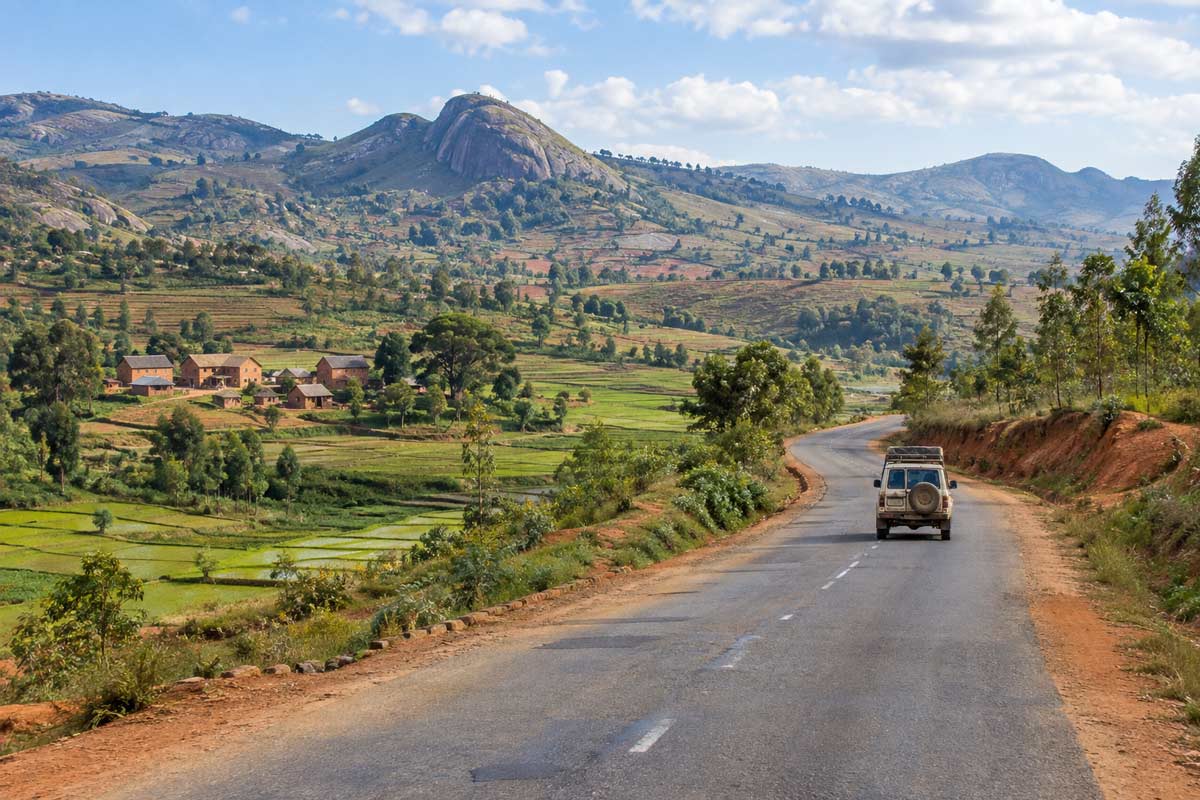
Road travel in Madagascar can be undertaken safely when travellers use a recognized operator, an experienced driver, a suitable vehicle and realistic daytime itineraries. Risk increases when journey times are underestimated, vehicles are poorly maintained, travel continues after dark or routes are affected by heavy rain, flooding or regional security concerns.
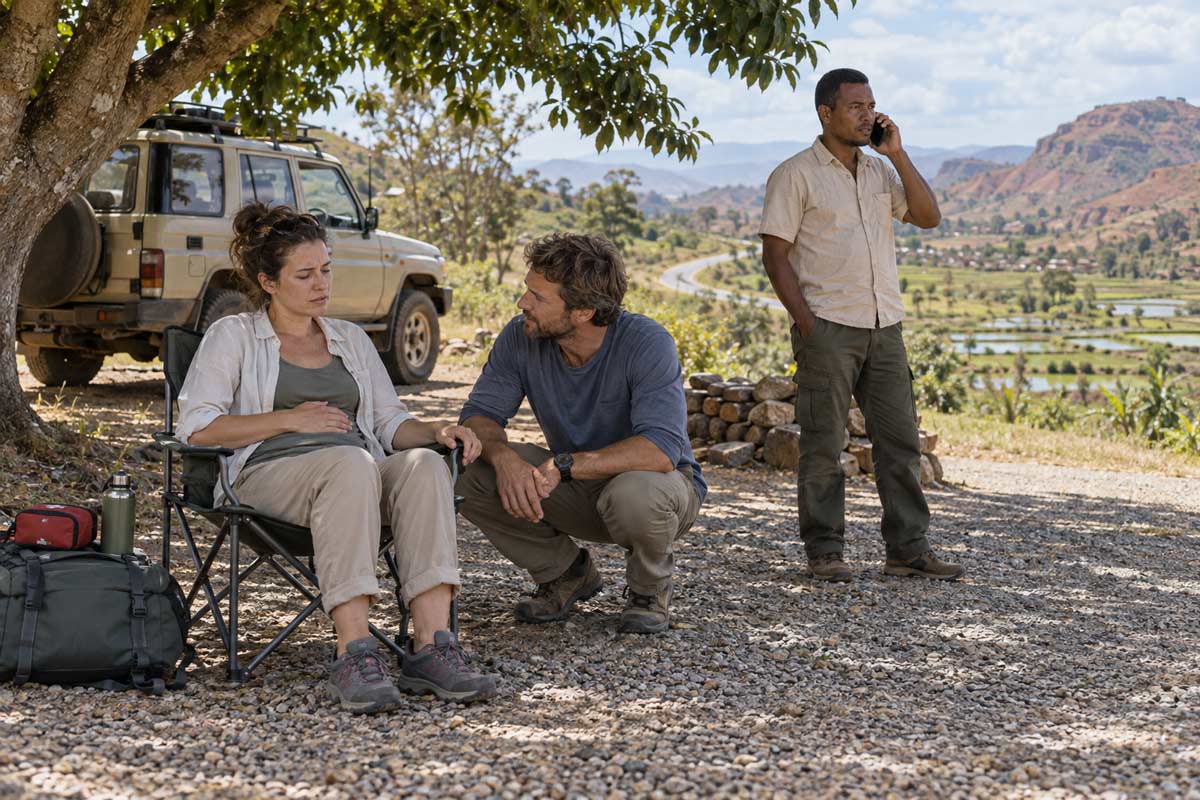
Your vehicle leaves Antananarivo early for a multi-day journey. Several hours later, the road surface deteriorates and heavy rain slows progress. Mobile coverage becomes intermittent, darkness is approaching and one passenger develops severe abdominal pain.
The driver understands the road, but the group does not know which medical facility can provide appropriate care, whether the insurer must authorize treatment or who should notify the traveller’s family.
This illustrates the central challenge of road travel in Madagascar. Safety is not only about preventing a collision. It is also about managing illness, injury, a breakdown or a security incident far from suitable assistance.
Official US guidance advises travellers that intercity road travel can be difficult and time-consuming. It also warns that medical infrastructure is very limited in populated areas and extremely limited in rural Madagascar.
Official Madagascar travel and road-safety guidance
A competent driver may reduce the likelihood of an incident. TravelSafe SOS provides an emergency coordination pathway if a medical or security emergency still occurs.
Why Do Madagascar Road Journeys Take So Long?
Distances on a map can create an unrealistic impression of journey times. A route that appears manageable may include damaged surfaces, unsealed sections, congestion, roadworks, pedestrians, livestock, carts, slow-moving vehicles or bridges that require cautious crossing.
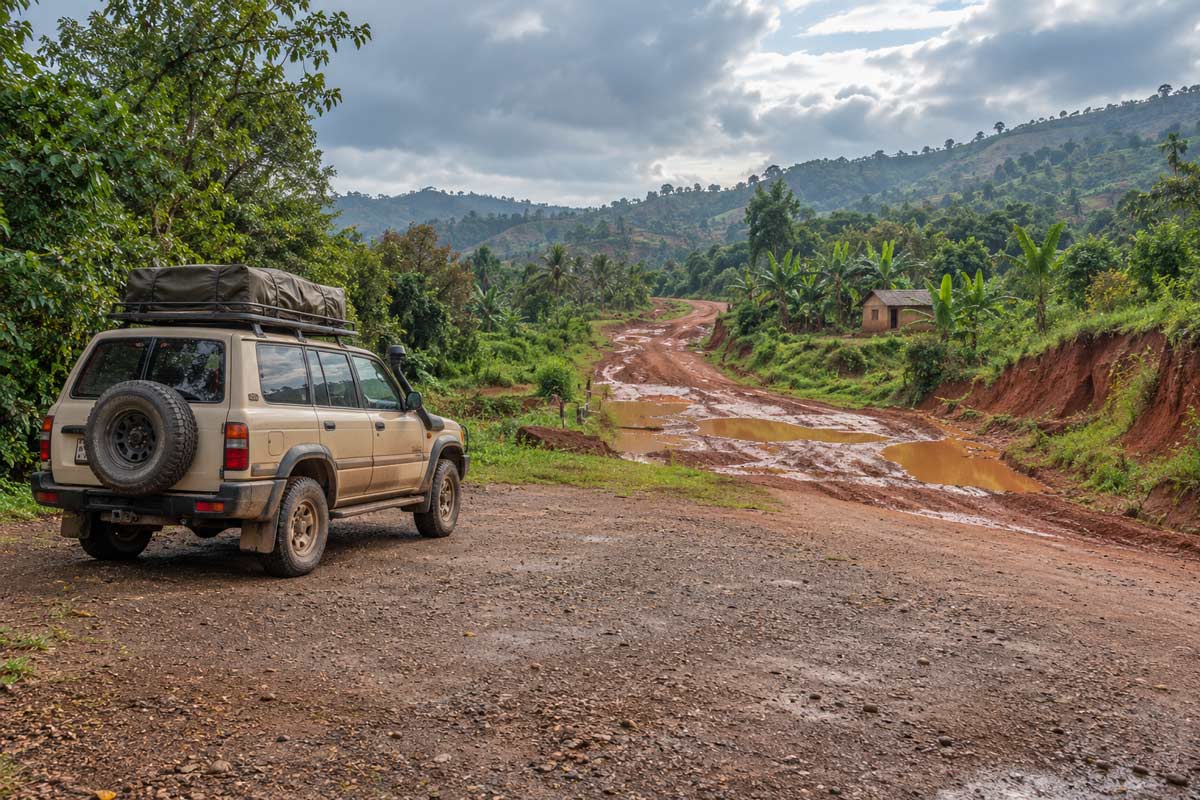
Conditions can change during a single journey. A relatively good section of road may be followed by deep potholes, erosion or extended areas where speed must be reduced considerably. Heavy rain can further lengthen the trip or make an unsealed road temporarily impassable.
Avoid planning around distance alone. Ask the operator how many hours the route usually takes under current conditions, when the vehicle will depart and whether sufficient daylight has been allowed for delays.
An itinerary should include time for rest, fuel, meals and unexpected disruption. Pressuring a driver to recover lost time may encourage greater speed, continued travel after dark or unsafe decisions when the correct response is to stop or change the route.
Should You Hire an Experienced Driver?
For longer journeys and travel into less accessible regions, an experienced local driver supplied by a recognized operator is generally the most practical choice.
A suitable driver should know the route, realistic journey times, seasonal conditions and locations where fuel or mechanical assistance may be available. Local language skills and established communication with the operator or accommodation can also be valuable when plans change.
Before confirming the journey, ask:
- Who supplies the driver and vehicle?
- Does the driver regularly travel on the planned route?
- Will the journey be completed during daylight?
- What happens if the vehicle breaks down?
- Is the vehicle suitable for the seasonal conditions?
- Are working seatbelts available for every passenger?
- What communication equipment is carried?
- What emergency procedure does the operator follow?
Hiring a driver does not remove every risk. Travellers should still wear seatbelts, monitor the itinerary and speak up if the driver appears tired, uses a phone while driving, travels at excessive speed or attempts to continue in unsafe conditions.
Why Is Driving at Night More Dangerous?
Night travel increases several risks simultaneously. Roads may have limited lighting and inadequate markings. Pedestrians, bicycles, carts and animals can be difficult to see, while some vehicles may have poor or non-functioning lights.
A pothole or damaged road edge that is visible during daylight can become a serious hazard after dark. Driver fatigue also increases during a long day, while a breakdown or medical incident may be harder to manage when businesses, clinics and roadside services are closed.
Night travel may also increase exposure to crime or make it more difficult to assess an unfamiliar security situation.
Plan long journeys to begin early and finish before dark. If delays make this impossible, stopping at suitable accommodation may be safer than forcing the original itinerary to continue.
Which Routes Require Additional Planning?
Madagascar should not be described as uniformly dangerous. Road conditions and security risks differ considerably by route, region and season.
The RN7 is one of the country’s principal tourism corridors, connecting Antananarivo with destinations in the south. However, it is a long route, and current official advice should be checked before departure. UK guidance has reported attacks affecting vehicles on sections of the RN7 and recommends additional vigilance on the RN7, RN27, RN10 and RN34.
Current regional safety advice for Madagascar
Some southern and western routes require greater preparation, current local advice and an operator experienced in the specific region. This does not mean that every journey on these roads will be unsafe. It means travellers should not rely on an old itinerary, a general map or assumptions based on previous seasons.
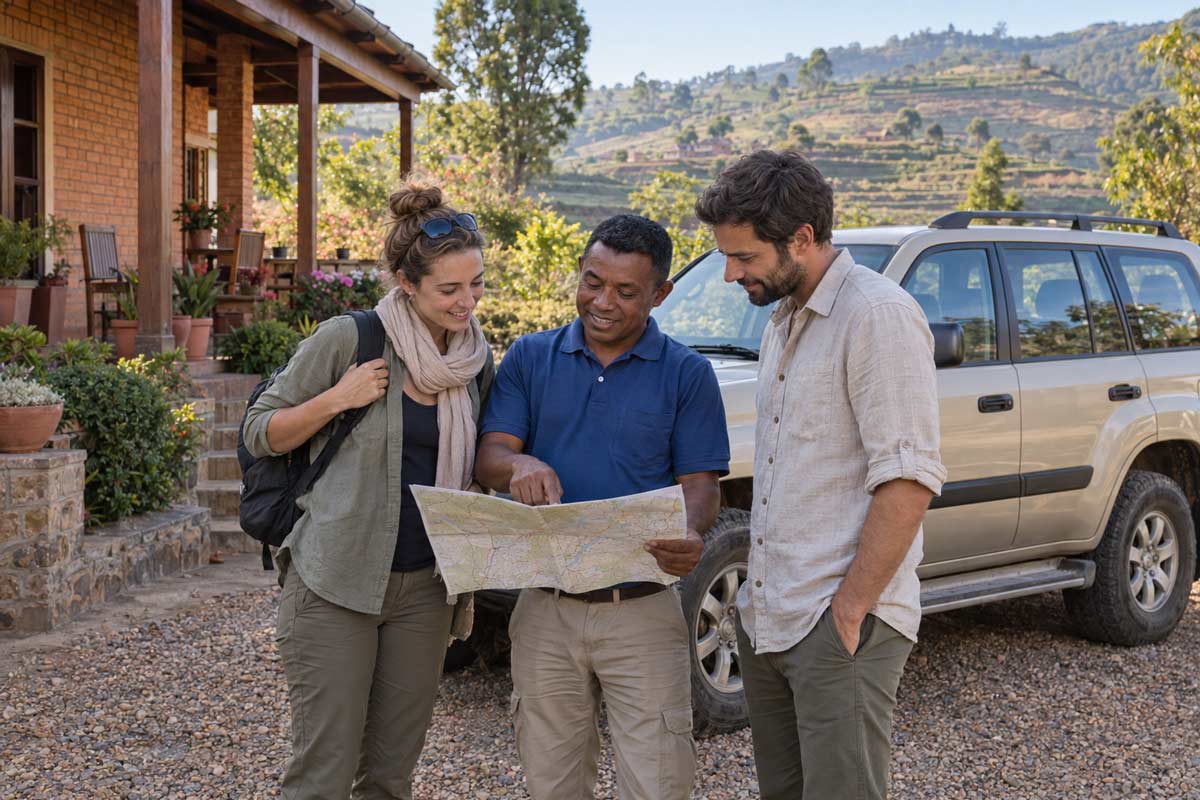
Ask the operator or accommodation about current road conditions, recent security incidents and any route changes before leaving. Advice should be specific to the day, route and destination.
Check the Vehicle Before Departure
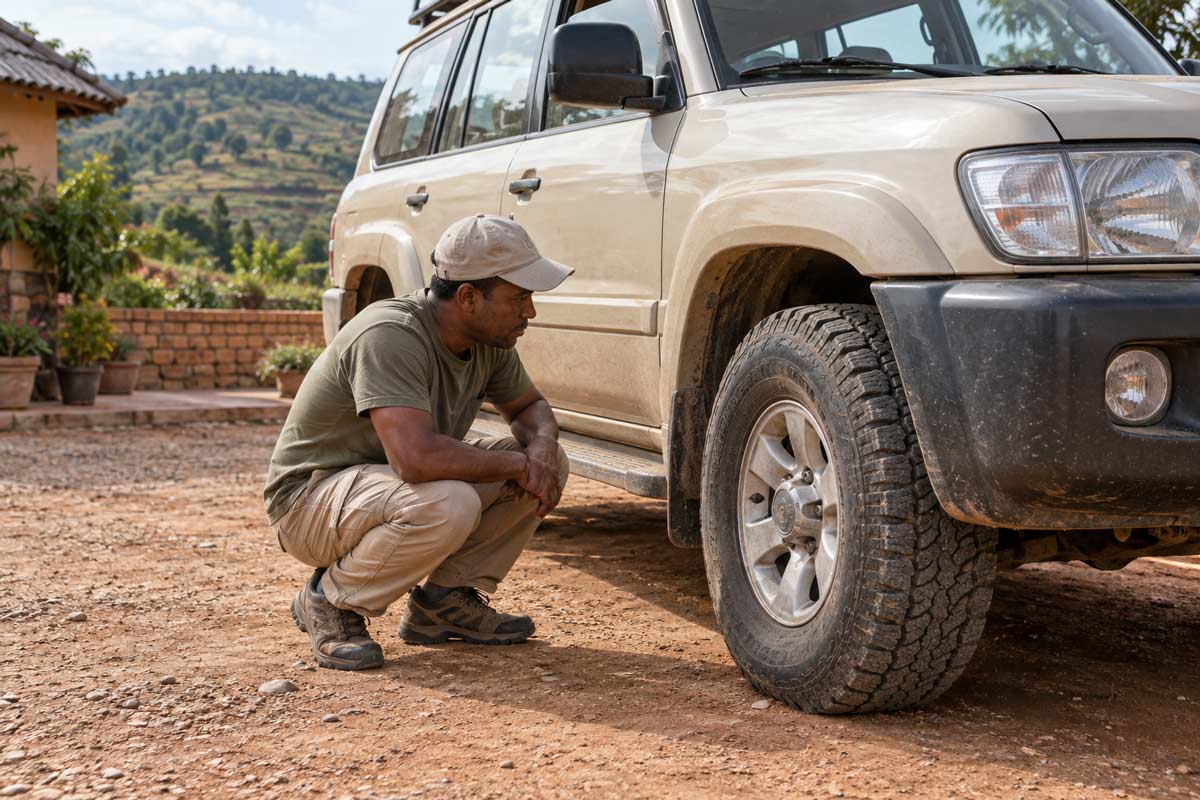
A reputable operator remains responsible for maintaining its vehicle, but passengers should still complete a basic visual check before a long journey.
Confirm that every passenger has a functioning seatbelt. The vehicle should have suitable tires, a usable spare wheel, a jack, basic tools and enough fuel for the planned route. Drinking water, food, essential medication, first-aid supplies, phone chargers and backup power should remain accessible rather than buried beneath luggage.
For remote or seasonally difficult routes, ask whether the proposed vehicle is genuinely appropriate. A standard passenger vehicle that is adequate for a major road may not be suitable for deep mud, river crossings or badly damaged tracks.
What Happens When Road Conditions Change?
Madagascar’s cyclone season generally extends from November to April. Heavy rain, flooding, damaged bridges and washouts may close roads or isolate destinations. Even outside this period, local weather can alter conditions quickly.
Do not treat a route change or delayed arrival as a failure by the driver or operator. An experienced driver who turns back, waits for daylight or refuses to cross an unsafe section is managing the risk correctly.
Keep your accommodation informed of significant delays where communication is available. Carry offline route information, but remember that a downloaded map cannot confirm whether a bridge has been damaged or a road has become impassable.
A safe driver and suitable vehicle reduce risk. They do not remove the need for an emergency pathway if a passenger becomes seriously ill, a collision occurs or the journey cannot continue.
Why Does Medical Access Change the Risk?
A road incident in Madagascar may occur many hours from a medical facility capable of treating a serious injury or illness. The nearest clinic may provide basic care without having the equipment, specialists, medication or diagnostic facilities required for a complex emergency.
Medical infrastructure is particularly limited outside Antananarivo and other major urban centers. A traveller with severe trauma, breathing difficulties, a suspected stroke, chest pain or another serious condition may require stabilization followed by transfer to a more suitable facility. In some cases, medical evacuation may need to be considered.
Emergency medical evacuation in Africa
The medical risk is therefore affected by more than the original illness or injury. Distance, road conditions, weather, communications, available transport and insurer authorization may all influence how quickly appropriate treatment can be reached.
TravelSafe SOS operates in Madagascar and across its supported destinations in Southern and East Africa. It provides an established emergency coordination pathway when a successfully transmitted SOS alert reaches the control centre.
Where TravelSafe SOS operates in Africa
TravelSafe SOS does not guarantee that an ambulance, specialist facility or evacuation aircraft will be immediately available. Its role is to help assess the incident and coordinate appropriate available assistance using the traveller’s location, emergency profile and registered support information.
What Should You Do After a Road Incident?
After a collision, breakdown or medical emergency, first determine whether remaining in the vehicle or immediate area creates further danger. Look for fire, leaking fuel, unstable ground, moving traffic or a security threat.
If anybody may have sustained a head, neck or spinal injury, avoid unnecessary movement unless staying in the same position presents a greater immediate danger. Provide first aid within your level of training and follow professional instructions where communication is available.
Establish:
- Your GPS coordinates or nearest identifiable location
- The road number and direction of travel
- The last town, lodge or landmark passed
- The number of people involved
- The nature of any injuries or illness
- Whether the vehicle is blocking the road
- Whether fire, fuel or another hazard is present
- The name of the driver and tour operator
In Madagascar, the emergency numbers listed by the UK government are 17 from a landline or 117 from a mobile for an ambulance or police emergency. Availability and response capability can vary, particularly in remote areas. Contact your tour operator, accommodation and insurer or medical-assistance provider where appropriate.
Madagascar emergency-service information
For the complete response procedure, read our guide to what to do after a road accident in Africa.
Do not accept an unnecessary lift from an unknown person or leave an injured traveller alone unless obtaining help requires someone to travel and this can be done safely. If the incident occurs in an isolated area, the driver or operator’s local knowledge may be critical.
What Happens After a TravelSafe SOS Alert?
When a successfully transmitted SOS alert reaches the TravelSafe SOS control centre, an operator attempts to contact the traveller and assess the available information.
The response may include:
- Reviewing the available location and registered profile details.
- Attempting to establish what has happened.
- Assessing the nature and apparent urgency of the emergency.
- Identifying appropriate available medical, security or operational assistance.
- Contacting relevant local services, the tour operator or accommodation.
- Connecting the incident with the traveller’s insurer or assistance provider where required.
- Alerting the registered travel agent and nominated next of kin according to the applicable procedures.
- Supporting coordination through the relevant local and insurance pathways.
How the TravelSafe SOS control centre responds
This can prevent an injured or frightened traveller from having to determine which clinic is appropriate, locate an insurance policy number and explain an unfamiliar road position while also trying to manage the immediate emergency.
TravelSafe SOS does not control local responders, guarantee an arrival time or promise evacuation. It provides one established pathway connecting the emergency with the people and information required to manage it.
Why Do Insurance and Evacuation Cover Matter?
Comprehensive travel insurance should be arranged before departure, but travellers must understand what the policy actually covers.
Ask whether the policy includes:
- Emergency treatment in Madagascar
- Ambulance and medical-transfer costs
- Road travel in remote areas
- Medical evacuation when necessary
- Repatriation following a serious emergency
- Treatment relating to declared medical conditions
- Direct coordination through an assistance company
Confirm whether the insurer must authorize treatment, transfer or evacuation before costs are incurred. Keep the policy number and emergency-assistance contact available offline, and register the same accurate information in your TravelSafe SOS profile.
TravelSafe SOS does not replace insurance or medical evacuation cover. It helps connect the incident with the insurer and assistance provider when the traveller may be unable to manage that process independently.
What If Mobile Coverage Is Unavailable?
A phone may continue displaying a GPS position without having sufficient connectivity to transmit a call, message or SOS alert. Location capability and successful communication are not the same thing.
If the TravelSafe SOS alert cannot transmit, use the safest available alternative. This may include a voice call, SMS, satellite device, driver or guide radio, nearby accommodation, police post, park authority or another vehicle.
Record your coordinates and preserve battery power. Keep the phone protected from water and extreme heat, and avoid repeated calls that rapidly drain the battery.
Remote road travel requires layered preparation. Download maps, save essential contacts offline, carry backup power and confirm the driver’s communication arrangements before departure. TravelSafe SOS adds an emergency coordination pathway when connectivity allows the alert to reach the control centre.
Set Up Emergency Support Before Your Road Journey
Before leaving Antananarivo, your lodge or another departure point:
- Register for TravelSafe SOS.
- Complete your medical and medication information.
- Add your insurer and assistance-provider details.
- Register your travel agent and nominated next of kin.
- Add your current itinerary and accommodation.
- Confirm the driver, vehicle and operator.
- Check that every passenger has a working seatbelt.
- Plan long journeys for daylight hours.
- Ask about current road, weather and security conditions.
- Carry water, food and essential medication.
- Charge your phone and carry backup power.
- Download offline maps and save essential contacts.
- Tell the next accommodation when you expect to arrive.
- Never pressure the driver to continue in unsafe conditions.
Your family should not have to determine which road you were travelling on, which operator supplied the vehicle, which insurer covers you or which medical facility may have received you.
Register for TravelSafe SOS before travelling
Madagascar’s roads lead to some of the island’s most remarkable landscapes, parks and communities. Prepare for those journeys with an experienced driver, realistic travel times, suitable insurance and an emergency profile completed before departure.
Your driver manages the road. TravelSafe SOS helps manage the emergency response if the journey does not go according to plan.