

Understanding Medical Evacuation Challenges Across Africa
Africa offers world class wildlife, coastlines, adventure and culture, but the continent’s remoteness can create challenges when a traveller suddenly needs urgent medical evacuation. From national parks in Tanzania to offshore islands in Mozambique, from deserts in Namibia to mountain ranges in Kenya, medical care may be hours away. Understanding how emergency medical evacuation works, what affects response times, and what gaps travellers often overlook is essential for anyone exploring Southern and East Africa in 2026.
Emergency Medical Evacuation Africa is not only about reaching a hospital. It is about ensuring the correct responders are dispatched, the right level of care is provided at each step, and communication remains active throughout the crisis. With proper preparation and the right safety technology, travellers can navigate emergencies with far less uncertainty.
Why Emergency Medical Evacuation Matters in Africa
- Large distances between towns, medical facilities and remote lodges can delay treatment.
- Many safari regions and islands rely on bush airstrips or boat transfers.
- Local clinics often stabilise patients but cannot offer advanced care.
- Weather and daylight can affect aviation response times.
- Travellers often misunderstand what their travel insurance covers.
- Coordination between operators, hospitals and aviation providers must be immediate.
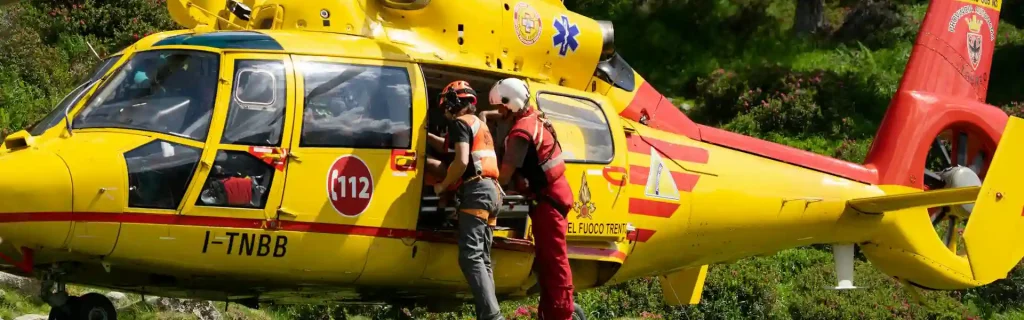
Common Situations That Require Emergency Medical Evacuation
- Serious injuries during safari activities such as walking safaris, vehicle accidents or falls.
- Severe allergic reactions or anaphylaxis in remote locations.
- Cardiac events and strokes where time is critical.
- Diving accidents or decompression illness in coastal Mozambique, Tanzania or Kenya.
- Malaria complications in high risk regions.
- Appendicitis, gastrointestinal infections or sudden medical deterioration.
- Road incidents during self drive holidays.
How TravelSafe SOS Supports Emergency Medical Evacuation
TravelSafe SOS provides a 24 hour control center covering South Africa, Namibia, Botswana, Zimbabwe, Mozambique, Malawi, Tanzania, Zanzibar, Kenya, Uganda and Rwanda. When a user triggers the SOS button, the system shares accurate geolocation, medical profile information and alert details with trained operators. Immediate phone contact follows to assess severity.
The control center coordinates with regional responders, medical escorts, ambulance services, park authorities, lodge teams and aviation partners when needed. By maintaining constant communication, responders know exactly where the traveller is and what medical support is required at each stage. This significantly reduces delays and ensures safe transfer from a remote environment to a suitable facility.

What Travellers Often Overlook About Medical Evacuation
- Evacuation is not guaranteed unless the correct support and coverage are in place.
- Not all insurance policies cover air ambulance services.
- Some policies require pre approval, which slows down response during emergencies.
- Evacuation may involve multiple steps, from lodge to stabilisation point to major hospital.
- Weather, daylight and fuel availability can change timelines.
- Communication with a real control center prevents costly delays caused by uncertainty
When Fast Decision Making Saves Lives
Rapid information transfer and clear guidance prevent panic, confusion and miscommunication. In remote African settings, a delay of even 30 minutes can change medical outcomes. TravelSafe SOS provides constant support through live location tracking, medical coordination and real time updates to ensure travellers do not face emergencies alone.

How Travellers Can Prepare Before Visiting Remote Areas
- Understand how evacuation works in the countries you plan to visit.
- Confirm whether your travel insurance includes air ambulance evacuation.
- Save your passport, medical notes and next of kin details into your TravelSafe SOS app profile.
- Learn how to trigger the SOS button before your trip.
- Share your planned movements with the app to improve coordination.

Why TravelSafe SOS Reduces Evacuation Risk in Africa
TravelSafe SOS gives travellers immediate human support when emergencies occur in remote areas. The app ensures responders receive accurate information and location data, improving evacuation timelines and reducing confusion during critical moments.
Your Emergency Lifeline for Africa Travel
TravelSafe SOS connects you instantly to a live control center that can coordinate medical evacuation, arrange responders and guide you through every stage of an emergency. Whether you are hiking, diving, on safari or travelling between rural towns, the app ensures you never face a medical crisis alone.
Download today to travel confidently across all regions covered by the app.
Download TravelSafe SOS on Android or iOS to receive instant support across Southern and East Africa. Your safety is our priority and your response begins the moment you press SOS.
FAQs, Emergency Medical Evacuation Africa 2026
How fast can emergency medical evacuation happen in remote parts of Africa?
Evacuation timelines depend on distance, weather, landing strip availability and how quickly responders receive accurate information. In some parks, evacuation to a stabilisation facility may take one to three hours. Offshore islands, desert regions and mountainous areas can take longer depending on aviation conditions and daylight restrictions. TravelSafe SOS reduces delays by sending accurate geolocation to responders, coordinating with aviation teams and maintaining real time communication with lodges and hospitals. Travellers who rely solely on insurance hotlines often face delays caused by slow approvals, difficulty reaching the right people or miscommunication about their exact location.
Do all travel insurance policies cover air ambulance evacuation in Africa?
No, many policies exclude or limit air ambulance services. Some require pre authorisation, which can add hours to the process. Travellers often assume evacuation is automatic but discover too late that their policy covers only ground transport or regional transfers. Always review the medical evacuation clause carefully before travelling. TravelSafe SOS does not replace insurance but improves coordination by notifying the correct medical and aviation partners instantly. This ensures time is not lost while travellers attempt to navigate insurance procedures under stressful conditions.
What happens if weather prevents an evacuation flight from reaching a remote area?
Weather affects aviation throughout Africa. Strong coastal winds, afternoon storms, fog or low visibility can restrict landing at bush strips or island airfields. In such cases, a patient is often moved by ground or boat to a stabilisation point until aviation becomes possible. TravelSafe SOS helps manage these situations by communicating continuously with park rangers, lodge teams, medical responders and aviation operators, ensuring the traveller remains monitored until conditions improve. This real time coordination reduces uncertainty and ensures decisions are made with accurate information.
How do responders find me if I am off trail or away from my group?
In emergencies, responders need precise location information. Many travellers struggle to explain where they are, especially in large parks, forests or unfamiliar towns. TravelSafe SOS sends exact GPS coordinates from your device to the control center, allowing responders to navigate directly to your location. Even if signal is weak, the last known location is stored and used to begin response coordination. This capability is critical for hikers, photographers, birders, divers or solo travellers exploring lesser known areas.
Can medical evacuation happen at night in Africa?
Night operations depend on aircraft type, airstrip facilities and safety regulations in each country. Some bush airstrips cannot operate after sunset for safety reasons. In those cases, medical teams prepare stabilisation at the nearest clinic or lodge until aviation becomes possible at first light. TravelSafe SOS helps manage night emergencies by liaising with medical personnel, rangers and lodge teams to ensure the traveller receives correct care during overnight waiting periods. The control center maintains continuous communication to prevent delays when daylight operations resume.
What information should a traveller keep ready to speed up medical evacuation?
Travellers should store essential information in their TravelSafe SOS profile such as medical conditions, allergies, medications, emergency contacts and passport details. This ensures responders have critical data during early assessment. Keeping your itinerary updated also helps responders understand your movements, which is valuable when signals drop. When evacuation is needed, this information shortens decision timelines, improves treatment accuracy and reduces errors caused by missing medical history.