

Imagine you are driving through Namibia.
It has been a spectacular day. You left your lodge several hours earlier and are travelling towards your next destination on one of the country’s long gravel roads. There has been almost no other traffic for the past 40 minutes.
The vehicle hits a patch of loose gravel, leaves the road and comes to a stop against an embankment.
Nobody appears to be critically injured, but one passenger has hit their head and is confused. The vehicle cannot be driven.
You pick up your phone.
There is a mobile signal.
That is good news, but it does not solve the problem.
You are not completely certain where you are. You know which road you were travelling on, but you do not know your exact position. You do not know which emergency number applies in this area, how far away the nearest ambulance is or whether the closest clinic is equipped to assess a possible head injury.
You also do not know whether moving the injured passenger is sensible.
You are connected.
But you are not yet being helped.
That distinction sits at the centre of emergency communication when travelling in Africa.
mobile connectivity across Africa
Modern smartphones have made it extraordinarily easy to communicate from unfamiliar destinations. Travellers can message family, access maps, search for hospitals and share locations within seconds. eSIM technology makes it increasingly possible to arrange that connectivity before leaving home.
But an emergency creates a different problem from an ordinary travel question.
The traveller does not simply need information.
They need to turn communication into an appropriate response.
staying connected and safe while travelling in Africa
Emergency Communication Is a Chain, Not a Phone Call
When people imagine contacting emergency services, they often picture a simple sequence: something happens, somebody makes a call and help arrives.
Real travel emergencies can be more complicated, particularly when the person needing assistance is unfamiliar with the country, local infrastructure and their exact location.
The first communication needs to establish what has happened. Is this primarily a medical emergency, a security incident, a road accident or another type of problem? If somebody is injured or ill, what symptoms are present? Is the traveller conscious? Are they able to move? Is there anybody else at the scene who can assist?
The next question is location.
Only once the circumstances and location are reasonably understood can somebody begin considering what response is appropriate and what resources are realistically available.
That process can be straightforward in a well-serviced urban area. It becomes more complicated when the traveller is on a remote road, at a safari lodge, on an island or several hours from a major medical facility.
This is why reducing communication delay matters.
It is not responsible to claim that every minute has the same medical significance in every emergency. A minor injury and a serious trauma clearly require different responses. What can be said is that unnecessary uncertainty and communication delays do not improve an emergency.
The sooner the circumstances can be understood, the sooner the process of determining appropriate assistance can begin.
Africa Does Not Have One Emergency Response System
One of the biggest mistakes international travellers can make is thinking about Africa as though it has a single emergency infrastructure.
It does not.
Africa is a continent of more than 50 countries, and emergency services vary enormously between countries and between regions within the same country.
A traveller who experiences a medical emergency in central Cape Town is operating in a very different environment from someone on a remote road in Namibia. A visitor in Nairobi has access to resources that may not exist in a distant Kenyan safari area. Emergency options in Dar es Salaam differ from those available deep in the Serengeti, just as Stone Town is operationally different from a remote part of Zanzibar.
Southern and East Africa contain sophisticated private hospitals, ambulance services, medical professionals and security providers. They also contain some of the world’s great wilderness areas, where distance and infrastructure create completely different response challenges.
This does not mean remote Africa is inherently unsafe.
It means the response needs to fit the location.
On safari, the lodge or guide may have radio or satellite communication and established procedures for obtaining assistance. On an isolated self-drive route, the traveller may be more dependent on their own preparation and whatever terrestrial mobile coverage is available.
A useful travel safety system therefore cannot assume that the same response works everywhere.
It has to begin by understanding where the traveller is and what has happened there.
“Where Are You?” Can Be a Surprisingly Difficult Question
During an emergency, location is one of the first pieces of information a responder needs.
For a traveller, providing it can be harder than expected.
Imagine driving through Namibia’s Damaraland, Botswana’s safari regions or a rural part of South Africa. You may know the destination you left that morning and the lodge you are driving towards, but that does not necessarily mean you can describe your current location accurately.
Safari presents the same problem in a different form. A traveller might know the name of the reserve or camp but have little understanding of the surrounding geography. Someone visiting Zanzibar may recognise the beach or village where they are staying while having no idea what address would be meaningful to a responder.
This is where the smartphone becomes much more than a communication device.
Where device functionality and connectivity permit it, GPS location sharing can provide coordinates or a digital position that is far more useful than trying to describe an unfamiliar landscape.
Accurate location does not eliminate the challenges created by distance, road conditions or limited infrastructure. An ambulance still has to reach the traveller. A medical facility may still be some distance away.
But identifying where the emergency has occurred removes one important uncertainty at the beginning of the response.
In an unfamiliar environment, that can save valuable time.
The Nearest Hospital Is Not Necessarily the Right Hospital
Once travellers have internet access and know their location, the obvious reaction to a medical problem is often to search for “hospital near me.”
For ordinary medical needs, that can be useful.
For a serious emergency, proximity alone is not enough.
A small clinic may be close to the traveller but lack the diagnostic equipment, specialist staff or facilities required for the problem. Another medical facility farther away may be substantially better equipped.
International travellers are particularly poorly positioned to make this assessment because they generally have no knowledge of the local healthcare system.
A map can tell you that a hospital exists.
It cannot necessarily tell you whether that hospital is the right destination for a complicated fracture, serious cardiac event, head injury or another significant medical condition.
This becomes even more important in remote areas, where transferring a patient to an unsuitable facility first may add another stage to an already complicated journey.
Emergency coordination therefore involves more than finding the closest medical pin on a map. The circumstances need to be assessed and the available options considered.
Sometimes the correct response will be straightforward local medical care. In other situations, a larger regional hospital may be more appropriate. Serious cases can involve the traveller’s insurer and potentially medical evacuation.
The traveller should not have to understand all of those systems before asking for help.
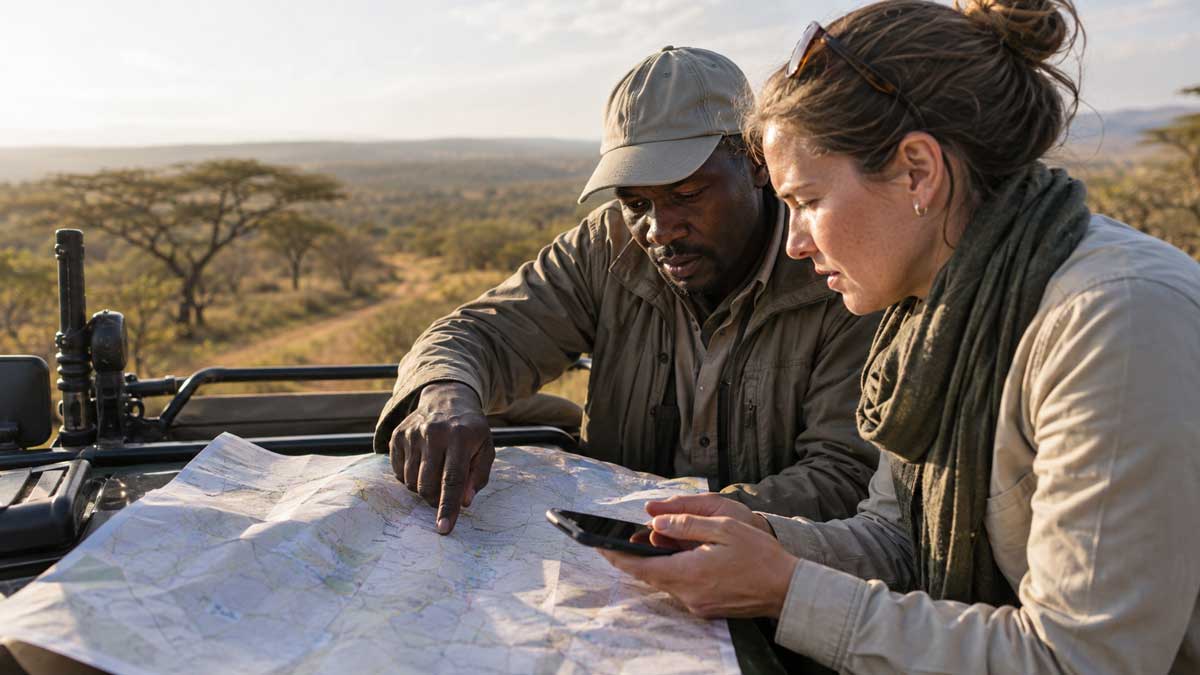
Calling for Help Is Not the Same as Coordinating Help
This is one of the most important distinctions in modern travel safety.
A mobile connection allows the traveller to establish communication.
Google can provide information.
A map can display medical facilities.
WhatsApp can contact family.
An eSIM can provide mobile data where a supported network is available.
None of those things, by themselves, coordinates an emergency response.
Somebody still needs to understand what has happened, establish where the traveller is and consider what type of assistance is appropriate.
That is the gap TravelSafe SOS is designed to address.
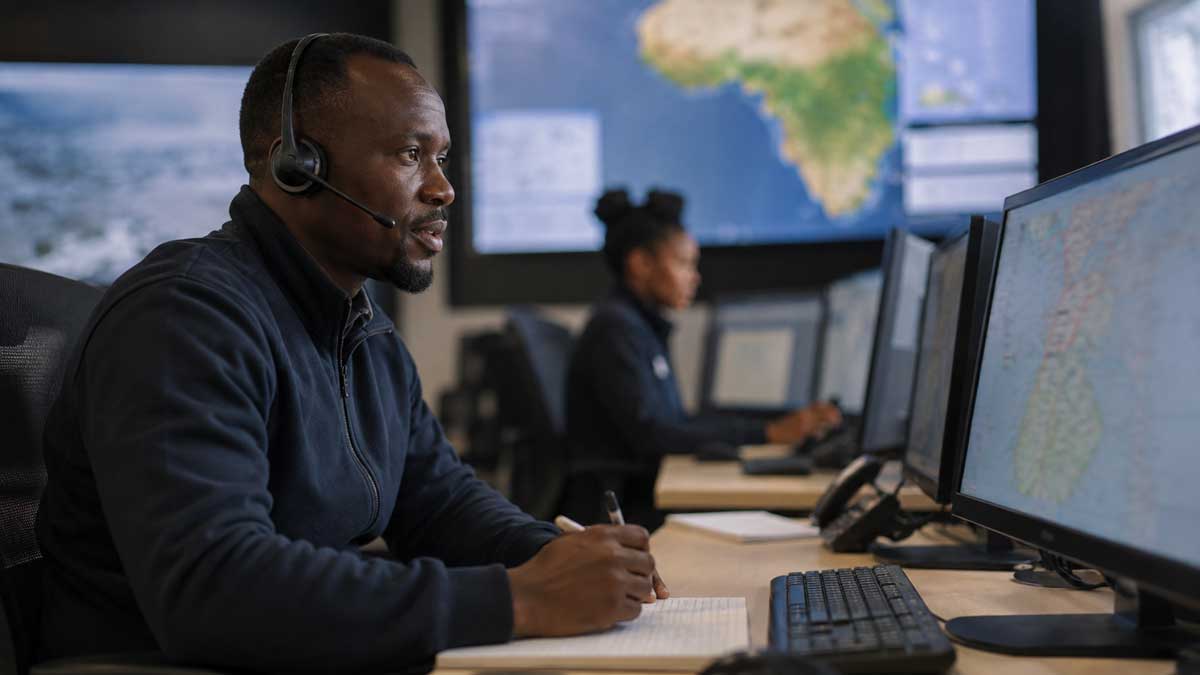
When a traveller activates an emergency through TravelSafe SOS, the control centre can make contact, assess the nature of the situation and begin coordinating an appropriate response using the resources available in that location.
A medical emergency may require medical assistance. A personal security incident may require a different response. A road accident can involve several considerations simultaneously.
The important point is that the traveller does not have to begin the process by researching an unfamiliar emergency system while already under pressure.
Connectivity gets the message out.
Emergency coordination determines what should happen next.
TravelSafe SOS emergency assistance
Why Mobile Connectivity Has Become Part of Travel Safety
Twenty years ago, travellers planned communication very differently.
Today, the smartphone holds an extraordinary amount of the infrastructure needed for an international journey. Boarding passes, accommodation confirmations, maps, payment services, travel insurance details and contact information may all be stored on the same device.
It is therefore unsurprising that mobile connectivity has become part of travel preparation.
Local SIM cards, international roaming and eSIM technology provide different ways of establishing that connection. Each has advantages, and none guarantees signal in every part of Africa.
The growth of eSIM is particularly relevant because connectivity can often be arranged before departure. A traveller can potentially arrive in an African destination with a data connection already configured rather than making connectivity the first task after leaving the aircraft.
For ordinary travel, that is convenient.
During an emergency, it can become considerably more important.
A connected traveller may be able to share a GPS location, communicate what has happened, receive instructions and access important travel or insurance information without first searching for Wi-Fi.
This is why TravelSafe SOS is integrating eSIM connectivity into the wider travel safety service.
The objective is not simply to sell data.
It is to reduce one of the barriers between the traveller and assistance.
arrange an eSIM before travelling to Africa
An eSIM Helps Establish Contact, It Does Not Create a Rescue Service
This distinction is essential.
An eSIM is a connectivity technology. It allows a compatible device to connect to supported mobile networks without requiring a traditional removable SIM card.
It cannot diagnose an illness, assess injuries after an accident or decide whether somebody requires an ambulance. It cannot determine which hospital is appropriate or send a security responder.
It also cannot provide mobile coverage where no supported terrestrial network exists.
This is particularly important in Africa because some of the continent’s most extraordinary travel experiences take place beyond reliable cellular coverage. Remote safari camps, wilderness concessions, mountain areas and isolated road routes may have limited or no conventional signal.
No responsible travel safety service should pretend otherwise.
The value of eSIM connectivity is that, when a supported network is available, it can help create the communication bridge through which assistance can be requested.
TravelSafe SOS provides the human response layer behind that connection.
This is why the combination matters.
The traveller does not merely need a signal.
They need a plan for what happens when they use it.
how an eSIM can make travel in Africa safer
What Happens After TravelSafe SOS Receives the Alert?
The first objective is to establish what has happened and where the traveller is.
That sounds simple, but those two pieces of information shape almost everything that follows. A traveller reporting severe illness at a resort in Mauritius requires a different response from someone involved in a road accident in rural Namibia or experiencing a security concern in Johannesburg.
Once the situation has been assessed, the control centre can begin coordinating the appropriate assistance based on the incident, location and resources available.
The process does not end when somebody has been contacted.
A serious travel emergency can quickly affect other parts of the journey. The traveller’s insurer may need information. A travel agent or tour operator may need to change onward arrangements. Nominated next of kin may need to know what has happened.
Good emergency communication therefore extends beyond the initial SOS.
It is about turning fragmented information into a coordinated response.
And that is where the difference between simply being online and being connected to an emergency support system becomes most apparent.
How Emergency Communication Can Save Critical Time When Travelling in Africa
Medical and Security Emergencies Need Different Responses
Not every emergency begins with an injury or illness.
A traveller may feel threatened while walking back to a hotel, discover that important belongings have been stolen, experience an attempted robbery or become concerned about a situation developing around them. Someone driving independently may break down in an unfamiliar area and feel increasingly vulnerable as daylight disappears.
These situations require a different response from a medical emergency.
The traveller still needs to establish communication and location, but the assessment changes. Instead of asking which medical facility is appropriate, the immediate questions may concern personal safety, whether the traveller should remain where they are and what security resources are available.
This illustrates why emergency coordination cannot be reduced to a directory of telephone numbers.
A traveller experiencing chest pain needs a very different response from somebody who feels threatened. A road accident can involve medical, security and logistical considerations at the same time.
The role of the control centre is to understand what has happened before determining which response is appropriate.
For the traveller, this means one of the most difficult questions has already been simplified.
They do not first need to decide who to call.
They need to make contact and explain what has happened.
The Emergency Can Continue Long After the First Response
Getting appropriate assistance to the traveller is the immediate priority, but serious travel emergencies rarely exist in isolation.
Imagine somebody is admitted to hospital during the middle of a two-week African itinerary. The immediate medical problem may now be under professional care, but the consequences of the incident are only beginning.
There may be a flight the following morning that the traveller can no longer take. A safari lodge is expecting them later that day. A private transfer has been booked. Their travelling companion needs somewhere to stay. The insurer may require medical information before approving additional treatment or transport.
Family members thousands of kilometres away want to know what is happening.
The traveller should not be expected to coordinate all of this while lying in a hospital bed.
This is why TravelSafe SOS treats communication as part of the wider emergency response rather than simply the moment at which an SOS button is activated.
The first call begins the process.
It does not necessarily end it.
Why Your Travel Insurer Needs to Know
TravelSafe SOS does not replace travel insurance.
The two services solve different problems and should work together.
Comprehensive travel insurance provides financial protection according to the terms, limits and exclusions of the policy. Depending on the cover purchased, it may contribute towards emergency medical treatment, hospitalisation, evacuation, cancellation and other significant travel costs.
TravelSafe SOS focuses on helping coordinate the practical response when the emergency occurs.
This distinction matters because a traveller experiencing a serious medical problem should not have to begin by wondering whether the closest facility accepts their insurance or trying to interpret policy wording while assistance is needed.
The immediate circumstances need to be understood first.
As the situation develops, communication with the insurer can become increasingly important, particularly when substantial medical costs, specialist treatment or evacuation are being considered.
Where appropriate, TravelSafe SOS can help ensure the insurer is alerted and relevant information can begin moving between the parties involved.
Good emergency preparation therefore should not involve choosing between travel insurance and emergency assistance.
A traveller needs appropriate insurance for financial protection and a practical plan for obtaining help when something actually happens.
Why Your Travel Agent or Tour Operator Matters
On a complex African itinerary, the travel professional who organised the journey can become an important part of the response network.
They may know the traveller’s movements in remarkable detail. They know which lodge they left that morning, where they were supposed to sleep that night, what transfer had been arranged and which flight they were due to take the following day.
This knowledge becomes valuable when an emergency interrupts the itinerary.
A travel consultant can start changing flights, contacting lodges, postponing transfers and reorganising the journey while the traveller and emergency responders concentrate on the immediate situation.
This is particularly relevant to safari travel. Many itineraries involve small aircraft, private transfers, remote camps, boat connections and border crossings. Missing one connection can affect several bookings that follow.
Where appropriate, TravelSafe SOS can alert the traveller’s nominated travel professional so they know an incident has occurred and can begin addressing the travel consequences.
That is a very different role from the medical or security response.
But it can make the aftermath of an emergency considerably easier to manage.
Keeping Your Family Informed Without Creating More Panic
Family members at home are often the forgotten participants in an overseas emergency.
They may receive a brief message from the traveller and then hear nothing for an hour. They may know that an ambulance has been called but have no idea where the traveller is being taken. In more serious circumstances, the traveller may not be capable of communicating at all.
Distance magnifies uncertainty.
A parent in London, partner in New York or family member in Sydney cannot simply drive to the hospital to see what is happening. They depend entirely on the information reaching them.
TravelSafe SOS allows nominated next of kin to be alerted where appropriate so that the communication process does not depend exclusively on the person experiencing the emergency.
This is not simply a convenience feature.
It reduces the burden on the traveller and their companions while giving family members greater reassurance that somebody is coordinating the situation.
The same principle applies to the insurer and travel professional.
Emergency communication works best when the right information reaches the right people rather than everybody independently trying to discover what is happening.
What Happens When There Is No Mobile Signal?
Any serious article about emergency communication in Africa has to acknowledge the limitation of conventional cellular technology.
There are places where your phone will not connect.
This can happen whether you use international roaming, a physical local SIM or an eSIM. All three ultimately depend on mobile-network infrastructure.
The issue is particularly relevant in remote safari areas, desert regions, mountains and sparsely populated road networks. These are not necessarily places travellers should avoid. They are often among the reasons people travel to Africa in the first place.
The correct response is preparation rather than pretending that mobile coverage is universal.
Professional safari operators often use radio, satellite communication or other systems because their guides and camps cannot depend exclusively on public cellular networks. Travellers staying at remote lodges should understand how the property communicates in an emergency.
Independent travellers need additional preparation. Offline maps should be downloaded before entering remote areas. Important telephone numbers and travel information should remain accessible without internet access. Someone should know the intended route and expected arrival time when undertaking genuinely isolated journeys.
An eSIM can improve the convenience of connecting to supported networks.
It cannot manufacture signal where no terrestrial network exists.
That limitation should be understood before departure rather than discovered during an emergency.
best mobile networks for travellers in Africa
Why 1GB of Included Data Matters to TravelSafe SOS
TravelSafe SOS plans to include 1GB of eSIM travel data with its standard USD 20, 30-day activation at no additional charge, subject to compatible devices, supported countries and final service conditions.
The decision is directly connected to the emergency communication problem.
A travel safety application is more useful when the traveller has a practical way to connect to it.
The included data is not intended to compete with large commercial data packages. A traveller streaming video, working remotely or uploading substantial amounts of content will need significantly more than 1GB.
The purpose is to help travellers arrive with useful mobile connectivity already available.
Messaging, maps, email, travel information and ordinary online communication can all be supported by a relatively modest data allowance when used sensibly. More importantly, where a supported mobile network is available, that same data connection can provide a route to TravelSafe SOS.
The traveller therefore receives a practical everyday benefit from the application before an emergency ever happens.
Hopefully, the SOS service is never required.
But the communications bridge is already in place if circumstances change.
A Safari Emergency Shows Why the System Matters
Consider a traveller staying in a remote safari region who begins experiencing severe abdominal pain during the night.
The lodge will often be the first and most important source of immediate assistance. Staff understand their location, know the local logistics and may have established medical or evacuation procedures.
Where cellular connectivity exists, the traveller also has another communication route.
TravelSafe SOS can be contacted and the circumstances assessed. Depending on the situation and resources available, the response may involve the lodge, local medical providers, transport arrangements, the traveller’s insurer or other appropriate assistance.
Now compare that with a traveller experiencing the same symptoms in central Cape Town.
The medical condition may be identical.
The response environment is completely different.
This is why emergency coordination matters more than simply maintaining a database of emergency numbers.
The objective is not to apply one response everywhere.
It is to understand the traveller’s circumstances and location and help coordinate an appropriate response from the resources that are actually available there.
How an eSIM Can Make Travel in Africa Safer?
Prepare the Communication Chain Before You Travel
The best emergency plan is established when there is no emergency.
Before leaving home, travellers should make sure they understand how their phone will connect in the countries they are visiting. Whether they choose international roaming, a local SIM or an eSIM, the decision should be made deliberately rather than left until something goes wrong.
Important information should also be accessible without depending entirely on an internet connection. Travel insurance details, emergency contacts, accommodation information and key parts of the itinerary should be available when required.
TravelSafe SOS users should complete their profile before departure and ensure their nominated next of kin, travel professional and other relevant details are correct.
Travellers heading into remote regions should ask their lodge or tour operator how emergency communications work when conventional mobile signal is unavailable.
None of this requires travellers to become obsessed with what might go wrong.
Good preparation has the opposite effect.
Once the systems are in place, travellers can concentrate on the journey.
eSIM vs local SIM vs international roaming in Africa
From “Something Has Happened” to “Help Is Being Coordinated”
This is ultimately what emergency communication is supposed to achieve.
Something happens.
The traveller establishes contact.
Their location and circumstances are understood.
The situation is assessed.
Appropriate assistance begins to be coordinated.
The people who need to know are informed.
Each stage reduces uncertainty.
Technology can make the first stages dramatically easier. Smartphones can identify location, eSIMs can provide convenient mobile connectivity and messaging can move information around the world almost instantly.
But technology does not replace the people required to interpret the situation and act on that information.
TravelSafe SOS combines those two sides of the problem.
The eSIM helps the traveller establish connectivity where supported mobile coverage exists.
The control centre provides the human layer that begins after the traveller makes contact.
That is the difference between having data and having an emergency response plan.
Arrive Connected. Know Who to Call.
Most travellers to Africa will never experience a serious emergency.
That is precisely why emergency preparation should be simple.
You should not spend your safari worrying about hospitals. You should not drive through Namibia constantly wondering where the nearest ambulance is. You should not sit on a Zanzibar beach thinking about what might happen if you become ill.
You should make those preparations before you travel and then get on with enjoying Africa.
Arrange appropriate travel insurance. Understand how your phone will connect. Prepare for periods without mobile signal when travelling remotely. Make important information accessible offline.
And know who you will contact if something goes wrong.
TravelSafe SOS is designed to make that final decision easier.
With planned eSIM connectivity included as part of the service, the objective is to help travellers arrive connected and retain access to professional emergency coordination throughout their journey where communication is available.
Because during an emergency, the important question is not simply:
Do I have signal?
It is:
What happens after I make contact?