
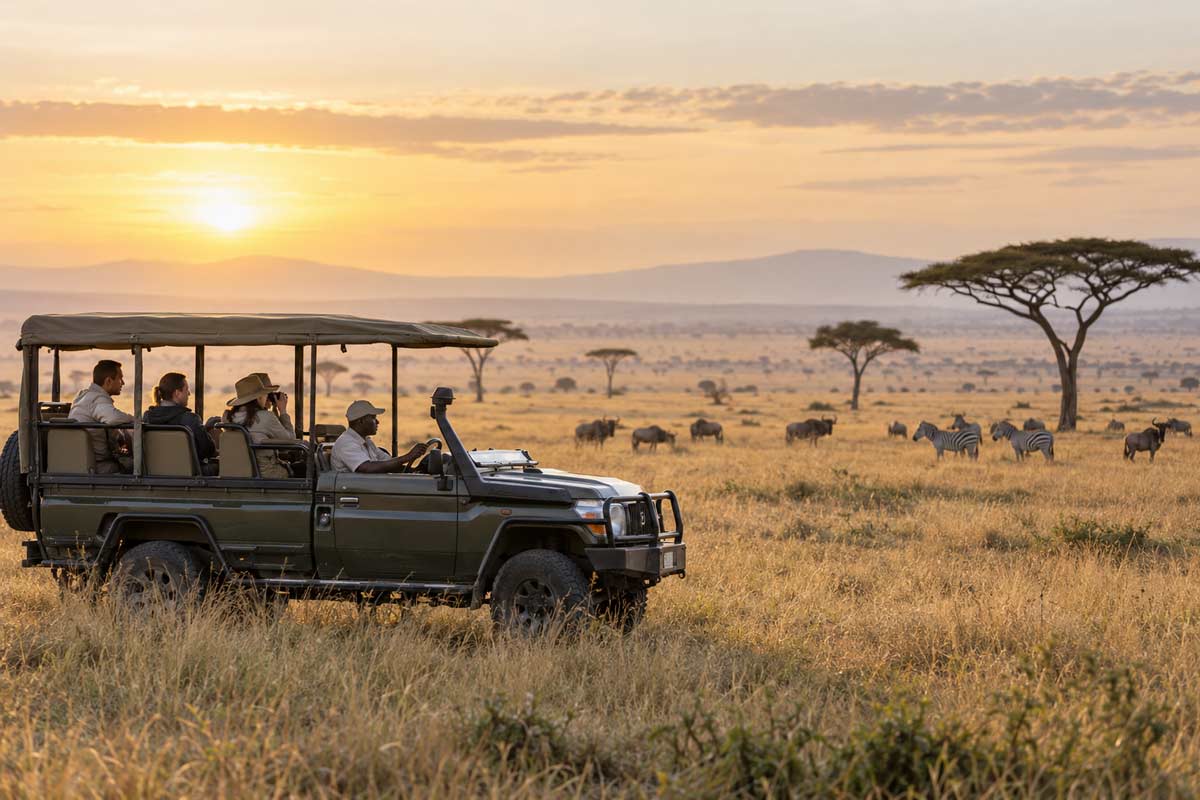
Serengeti Safari Safety: What Travellers Need to Know
The Serengeti is generally safe for tourists travelling with reputable safari operators. It is one of Africa’s best-established wildlife destinations, supported by professional guides, experienced camps, regional airstrips and established tourism procedures.
However, a safe destination is not the same as a risk-free destination.
The Serengeti is a vast wildlife area. Travellers may stay in remote camps, spend long hours away from their accommodation and travel considerable distances by road or light aircraft. Mobile coverage can be inconsistent, and advanced medical facilities are not located around every camp or safari route.
This changes what happens when a traveller becomes seriously ill, suffers an injury or is involved in a vehicle accident. The immediate danger may be manageable, but distance, communication and limited medical access can complicate the response.
US travellers should also distinguish between a national travel advisory and the conditions at a professionally managed safari destination. The current US Department of State advisory raises concerns about unrest, crime, terrorism and the treatment of gay and lesbian individuals in Tanzania. These concerns must be taken seriously, particularly in cities, transit areas and specifically identified higher-risk regions. They do not mean that every part of Tanzania presents the same risks or that a guided Serengeti safari is inherently unsafe.
Travellers should read the complete advisory, enroll in the US Department of State’s Smart Traveler Enrollment Program, known as STEP, and follow current instructions from their safari operator. They should also have an emergency plan that does not depend solely on assistance from the US government.
US Department of State Tanzania Travel Advisory
Does Safety Differ Across the Serengeti?
The Serengeti should not be treated as one uniform destination. It covers an immense area, and practical conditions differ according to the season, safari route and location of the traveller’s camp.
The Central Serengeti, including the Seronera area, has a comparatively established concentration of permanent camps, safari vehicles and airstrip access. This can support communication and transport, but the area is still far from the advanced hospital facilities that travellers may expect in a major US or European city.
The Northern Serengeti becomes particularly popular when the migration reaches the Mara River. Some camps are seasonal, road journeys can be long and a traveller may be far from the nearest usable airstrip or medical assistance. Rain, road conditions and the exact position of the camp may influence access.
The Western Corridor includes extensive wilderness, river systems and remote safari accommodation. Travel times can be significant, particularly when the emergency occurs during a game drive rather than at the lodge.
The Southern Serengeti and neighboring Ndutu area attract large numbers of visitors during the calving season. Camps may move or operate seasonally to follow wildlife concentrations. An itinerary might say “Southern Serengeti,” but an emergency coordinator may still require the precise camp, route, GPS location or nearest accessible collection point.
Location becomes even more important when a traveller is between camps, at an airstrip, on a balloon safari or several hours into a game drive. The lodge name alone may not identify where assistance is actually required.
No Serengeti region should automatically be described as unsafe because it is remote. Remoteness simply means that travellers, safari operators and camps should understand how communication, first response and medical transfer would work from the exact places included in the itinerary.
What Are the Main Risks on a Serengeti Safari?
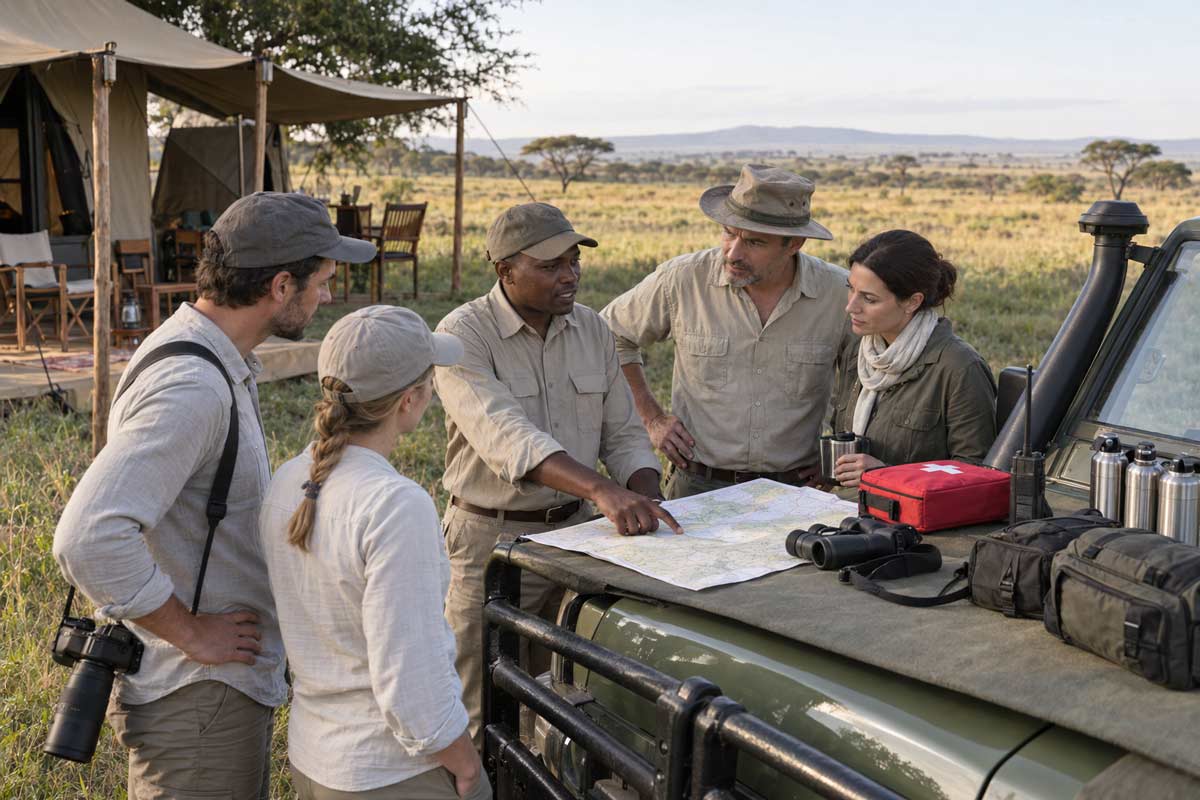
Wildlife is often the first concern for prospective visitors, but serious animal incidents involving travellers who follow professional instructions are not the normal safari experience. The more realistic risks include a combination of wildlife, road travel, illness, environmental exposure and delayed access to medical care.
Wild animals can move through unfenced camps, particularly after dark. Travellers should never approach an animal, leave designated areas without permission or walk between their room and the main lodge at night unless the camp confirms that it is safe. Where escorts are provided, they should always be used.
During game drives, travellers should remain inside the vehicle unless a guide authorizes them to leave. Feeding animals, making excessive noise or attempting to attract an animal’s attention can create unnecessary danger.
Road travel presents another practical risk. Safari tracks may be rough, muddy, flooded or deeply rutted. Long drives can also involve dust, heat and sudden vehicle movement. Seat belts should be used whenever available, and travellers should keep cameras, phones and loose equipment secure.
Health risks may include malaria, mosquito-borne illness, gastrointestinal illness, dehydration, sun exposure and the unexpected worsening of an existing medical condition. Travellers should obtain personalized medical advice before departure rather than relying on general online recommendations.
Tanzania National Parks advises visitors to carry water and sun protection, consult a doctor about malaria and vaccinations, use licensed operators and roadworthy vehicles, and follow guide instructions. It also recommends suitable travel insurance.
Tanzania National Parks Travel and Safety Guidance
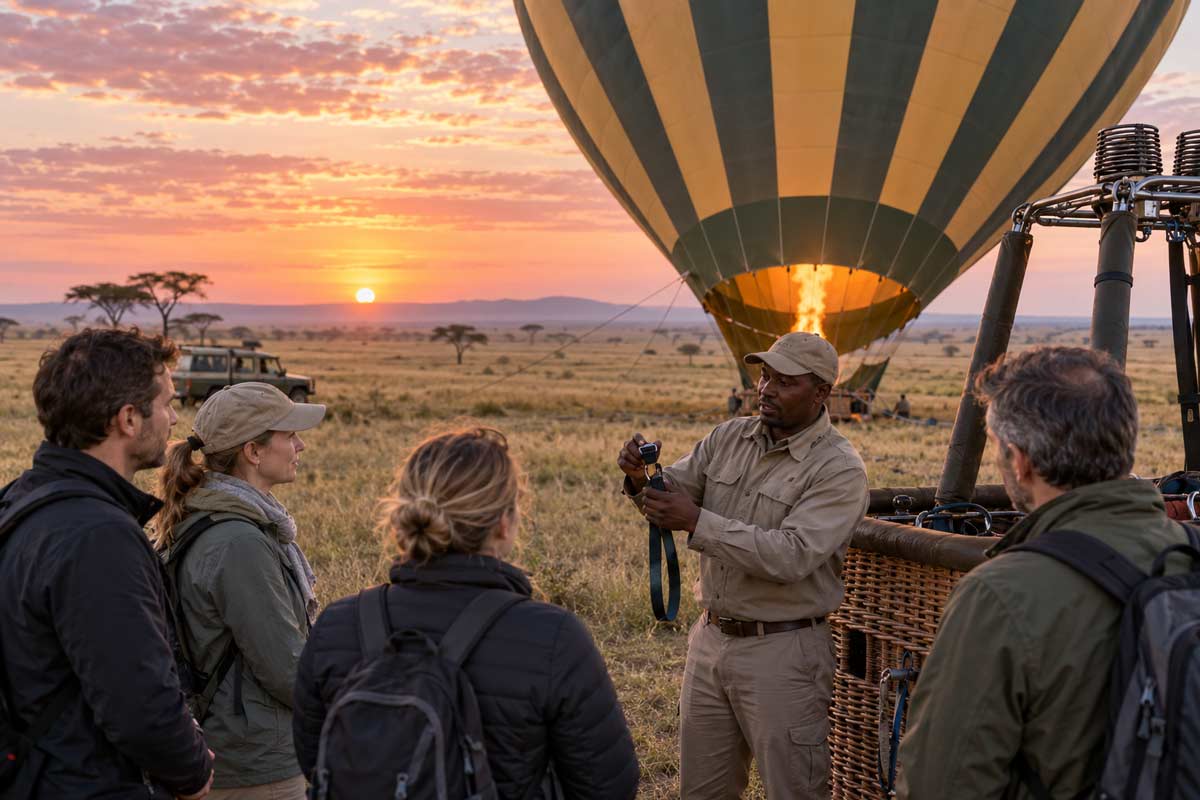
Balloon safaris require separate consideration. They involve an early departure, remote launch and landing locations and operating conditions that differ from an ordinary game drive. Travellers should use an authorized operator, disclose relevant medical or mobility concerns and follow every pre-flight and landing instruction.
The central safety issue is not that these risks make the Serengeti unsuitable for travel. It is that even a common medical problem can become more serious when it occurs far from advanced care.
How Do Guides and Camps Keep Travellers Safe?
Reputable safari operators manage foreseeable risks through trained guides, maintained vehicles, camp procedures and regular communication between staff.
A guide understands animal behavior, road conditions, distances and the safest way to move through the park. Guides also know where reliable radio or telephone communication may be available and which camp, airstrip or access route is closest.
At the lodge or camp, safety measures may include:
- A detailed arrival briefing
- Escorts between rooms and public areas after dark
- Rules governing movement around the property
- Staff radios or other communication equipment
- First-aid supplies and trained personnel
- Procedures for contacting medical or evacuation providers
- Arrangements for moving a guest to a road, airstrip or collection point
These systems significantly improve safari safety, but a camp is not a hospital. Staff may provide first aid, communicate with a doctor or begin the property’s emergency procedure, but advanced assessment and treatment may require a transfer.
Before travelling, ask the safari specialist or camp how emergencies are managed. Important questions include whether guides carry radios, how the camp communicates when mobile service is unavailable, which medical facilities are normally used and whether an airstrip can support an emergency departure after dark.
The quality of these answers matters more than a vague promise that the camp has “emergency procedures.”
What Should You Do If You Become Ill or Injured?
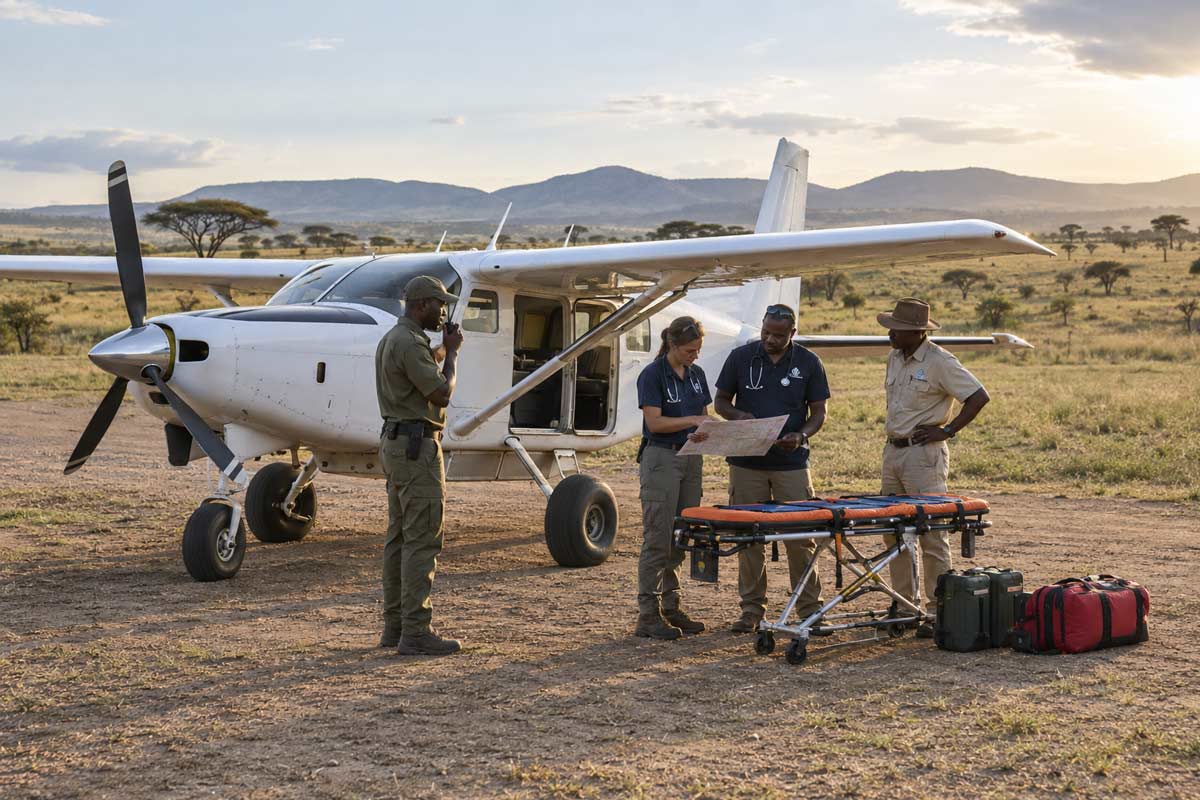
Tell your guide, camp manager or another responsible member of staff immediately. Do not wait until the end of the game drive or remain alone in your room while serious symptoms become worse.
The immediate sequence should be:
- Alert the guide or camp manager.
- Move away from further danger where possible.
- Obtain first aid or professional medical guidance.
- Activate TravelSafe SOS when connectivity is available.
- Confirm your exact location.
- Make your medical and insurance information accessible.
- Follow professional advice about treatment or transfer.
Early action does not mean that every illness requires evacuation. It allows the situation to be assessed while more response options may remain available.
Travellers should never separate themselves from the guide during an emergency. The guide may be the person best able to identify the location, communicate by radio and arrange transport back to camp, an airstrip or another accessible collection point.
Emergency Medical Help on an African Safari
What Happens If You Become Seriously Ill at a Remote Lodge
How Can TravelSafe SOS Help in a Serengeti Emergency?
When an SOS alert is successfully transmitted, the TravelSafe SOS control centre receives the available alert, location and registered traveller information. An operator can attempt to contact the traveller, establish what has happened and begin coordinating an appropriate response.
Depending on the incident, this may involve communication with the guide, camp, medical provider, ambulance or evacuation service, insurer, registered travel agent and nominated next of kin.
This is especially important for travellers from the United States or Europe. Their insurer, family and travel agent may be thousands of miles away and may not know whether the traveller is in Central Serengeti, at a seasonal northern camp or on a game drive away from the lodge.
TravelSafe SOS provides an emergency coordination pathway. It does not replace the guide, lodge emergency procedure, medical professional, insurer or physical responder. It does not operate every ambulance or evacuation aircraft, and it cannot guarantee that an aircraft or medical team will be immediately available.
Its value lies in helping to activate the response, connect the relevant parties and reduce avoidable time lost establishing who the traveller is, where the emergency occurred and what assistance may be appropriate.
The app should be downloaded and registered before departure. Medical, insurance, travel-agent and emergency-contact information should be completed accurately while the traveller is well enough to provide it.