

An African safari is generally a well-managed and rewarding way to travel. Reputable safari operators and established lodges take guest safety seriously, guides are trained to manage the surrounding environment, and many camps have emergency procedures in place. However, a medical emergency in a remote wildlife area presents a very different challenge from becoming ill in a city.
The first person to assist may be a guide, camp manager or lodge employee rather than a doctor or paramedic. The nearest clinic may be several hours away, and it may not have the facilities needed to treat a serious injury or illness. Mobile coverage may be unreliable, roads may be difficult, and air access can be affected by daylight, weather, aircraft availability and the condition of the nearest airstrip.
This does not mean that safari travel is inherently unsafe. It means that travellers should understand how assistance is obtained before they enter a remote area. Our guide to safari safety risks in Africa explains the wider precautions travellers should consider. This article focuses specifically on medical emergencies, response coordination and access to appropriate care.
How Do You Get Emergency Medical Help on Safari?
If you become seriously ill or injured on safari, alert the people physically closest to you and activate your emergency-support system as soon as possible. At a lodge or camp, this will usually mean immediately informing your guide, camp manager or another staff member. If you are travelling between destinations, you may need to contact your driver, tour operator, local emergency services or emergency-assistance provider.
The immediate priority is to establish:
- What has happened
- Where the traveller is located
- Whether there is an immediate threat to life
- What first aid or medical support is available nearby
- Whether the traveller can be treated locally
- Whether ground transport or medical evacuation may be required
A traveller experiencing chest pain, difficulty breathing, severe bleeding, loss of consciousness, stroke symptoms, a serious allergic reaction or a significant injury requires urgent professional assessment. Travellers should not attempt to diagnose a serious condition themselves or delay asking for help because they are uncertain whether the situation is severe enough.
The TravelSafe SOS app provides a direct way to raise an alert and share available location information with the 24-hour control centre. The operator can attempt to contact the traveller, assess the information available and begin identifying suitable assistance. Depending on the circumstances, this may involve communication with the lodge, local medical providers, emergency responders, the traveller’s insurer, travel agent or nominated next of kin.
TravelSafe SOS does not replace the guide standing beside the traveller, the clinician making a medical decision, the responder providing physical assistance or the insurer responsible for eligible costs. Its role is to help connect the people and information needed to move the response forward.
Why Location Can Determine the Speed of the Response
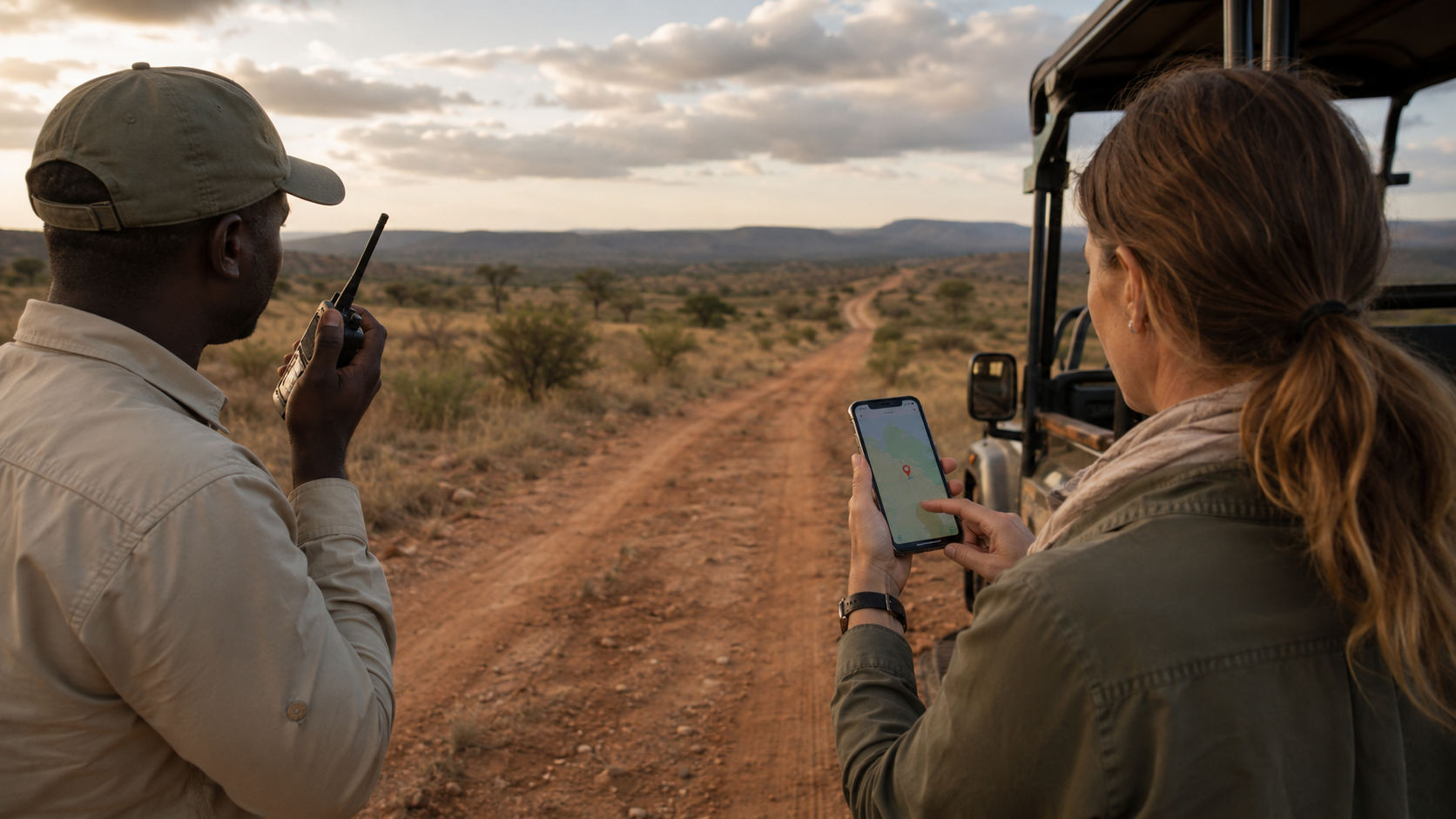
In a city, a caller can usually provide a street address, hotel name or nearby landmark. In a national park, private reserve or remote concession, the traveller may only know the name of the lodge. During a game drive, walking safari, boat excursion or road transfer, even that information may not describe the traveller’s current position.
An exact or recent GPS location can help the control centre, lodge and responders understand where assistance is required. This is particularly valuable when a traveller is on an unnamed track, between camps or unable to explain the route taken.
TravelSafe SOS location sharing allows available GPS information to be shared with nominated contacts and used during the emergency-response process. Location information does not remove the practical limitations of distance, weather, communications or responder availability, but it can reduce the time lost trying to establish where the emergency has occurred.
Travellers should activate and configure the app before leaving home, allow the required location permissions and ensure that their personal, medical and emergency-contact information is current. Waiting until an emergency occurs to download an app, locate policy details or find the lodge’s contact information creates avoidable delays.
Who Provides the First Assistance?
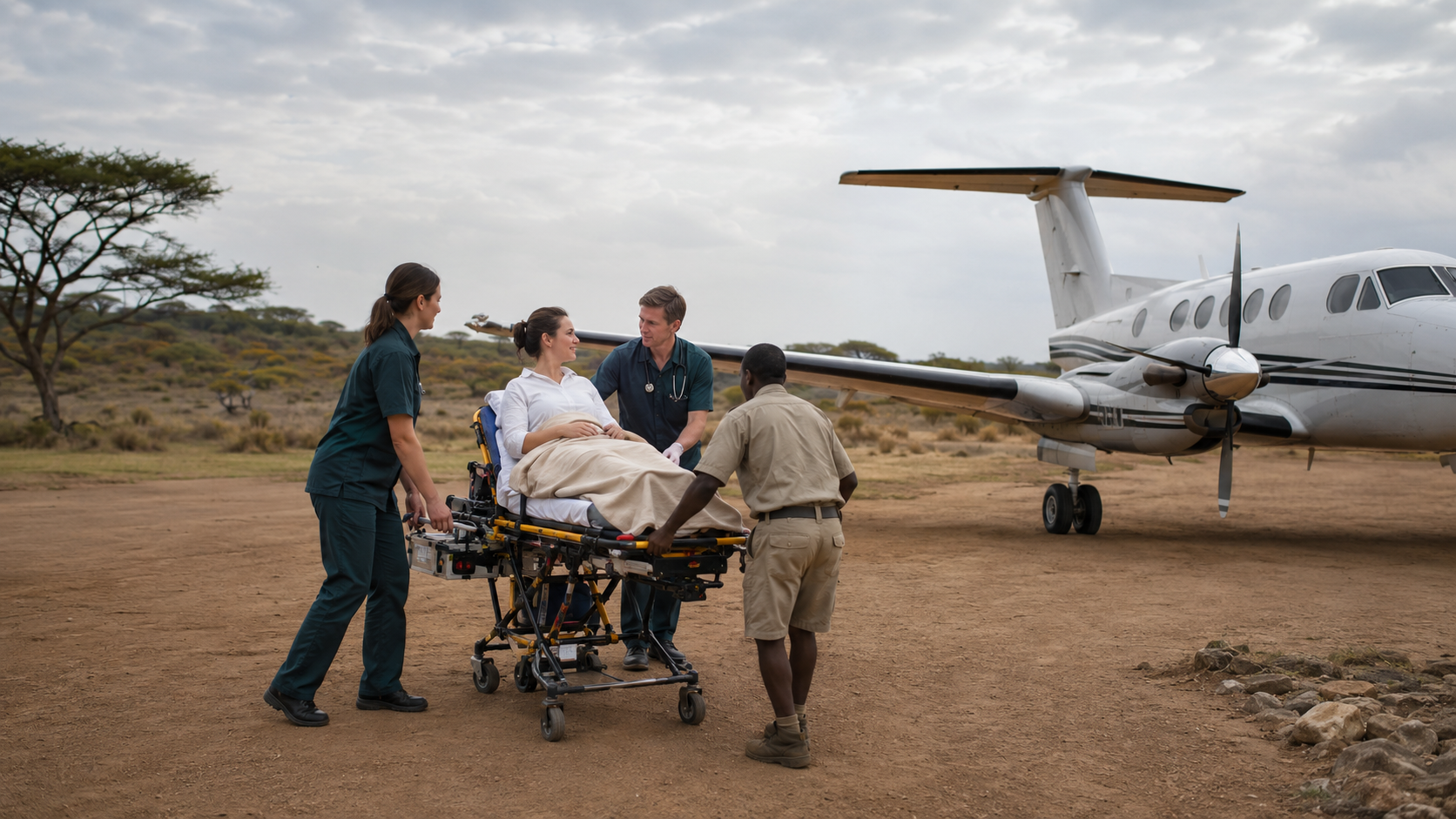
The first response normally depends on where the traveller is when the emergency occurs. At an established safari lodge, staff may provide first aid, contact a local doctor or clinic, arrange transport and communicate with the traveller’s tour operator. Some properties have medically trained personnel or access to remote medical advice, while others have more limited resources.
A lodge’s ability to help should never be confused with hospital-level treatment. Staff may be able to stabilise and support a traveller, but serious conditions can require transfer to a regional centre or major city. Government travel guidance warns that medical resources may be limited in remote safari regions and that evacuation may be delayed or unavailable in certain circumstances, particularly at night.
US Department of State Botswana Travel Advisory
The quality, speed and availability of assistance vary by country, region and operator. Before travelling, ask the lodge or safari company what emergency procedures it follows, where the nearest appropriate medical facility is located and how an evacuation would normally be arranged.
How Is the Need for Evacuation Assessed?
Not every medical problem requires evacuation. A traveller with a minor injury or manageable illness may be treated at the lodge, taken to a nearby clinic or assessed through an available medical service. A serious or rapidly deteriorating condition may require transfer to a hospital with appropriate diagnostic, surgical or intensive-care facilities.
The decision should be based on professional medical assessment, the traveller’s condition and the care available locally. The closest facility is not always the most appropriate facility. A small rural clinic may provide initial treatment but may not be equipped to manage a cardiac emergency, major trauma or another complex condition.
Ground transport may be suitable when roads are accessible, the patient is stable and an appropriate facility can be reached safely. Air evacuation may be considered when distance, road conditions, urgency or the patient’s medical needs make ground transport unsuitable. However, aircraft availability, weather, daylight, airstrip access, medical authorisation and payment arrangements can all affect the response.
TravelSafe SOS can help coordinate communication between the traveller, lodge, medical professionals, responders and insurer. It does not make the final clinical decision or guarantee that an aircraft, ambulance or hospital bed will be immediately available.
Who Arranges and Pays for Medical Evacuation?
Medical evacuation can be expensive, particularly when a traveller must be collected from a remote area and transferred to a major regional hospital. Responsibility for approving and funding the evacuation normally depends on the traveller’s insurance policy, membership benefits and the circumstances of the emergency.
Some travel insurers provide 24-hour assistance and may coordinate directly with medical providers. Others require specific authorisation before they will accept evacuation or treatment costs. Policy limits, exclusions, pre-existing medical conditions, adventure activities and the definition of the nearest appropriate facility can all affect cover.
Travellers should therefore confirm before departure:
- Whether emergency medical treatment is covered
- Whether ground and air evacuation are included
- The evacuation benefit limit
- Whether pre-authorisation is required
- Which activities or medical conditions are excluded
- Whether the insurer provides a 24-hour assistance number
- Whether repatriation to the traveller’s home country is covered
The US Department of State recommends medical evacuation insurance when travelling to places where medical care may be limited. Its travel-insurance guidance also explains that evacuation cover may be included in a policy or purchased separately.
US Department of State Travel Insurance Guidance
Internal link for Mark: Add a forward link to Article 2, “Travel Insurance and Emergency Assistance: Why Travellers May Need Both,” once published.
TravelSafe SOS is not an insurance policy and does not pay medical, ambulance, evacuation or hospital costs. The control centre can help establish what is happening, identify appropriate assistance and communicate with relevant stakeholders, but financial approval remains subject to the traveller, insurer or another responsible party.
What Does the TravelSafe SOS Control Centre Do?
An emergency rarely involves only one telephone call. The lodge may be speaking to a local clinic, the insurer may require medical information, the family may have incomplete details, and the traveller may be too ill or distressed to coordinate everyone personally.
When an SOS alert is successfully transmitted, the TravelSafe SOS control centre receives the available alert, location and registered account information. An operator attempts to contact the traveller and assess the situation using the information available.
Depending on the emergency, the control centre may then:
- Contact an appropriate medical or security responder
- Communicate with lodge or tour staff near the traveller
- Provide available location information
- Contact the traveller’s insurer or assistance provider
- Alert nominated next of kin
- Keep the registered travel agent informed where applicable
- Continue monitoring and coordinating communication as the incident develops
Only information relevant to the emergency and permitted by the service’s procedures should be shared. Travellers must provide accurate details, select their nominated contacts and understand how their personal information may be used during an emergency.
TravelSafe SOS Terms and Conditions
A control centre cannot remove every practical obstacle. It cannot guarantee mobile connectivity, immediate responder availability, a particular response time, medical evacuation, insurer authorisation or a specific medical outcome. Its value lies in providing a clear point of contact and helping the traveller navigate a fragmented response when time, location and communication matter.
Internal link for Mark: Add a forward link to Article 8, “How the TravelSafe SOS Control Centre Responds to an Emergency,” once published.
What If There Is No Mobile Signal?
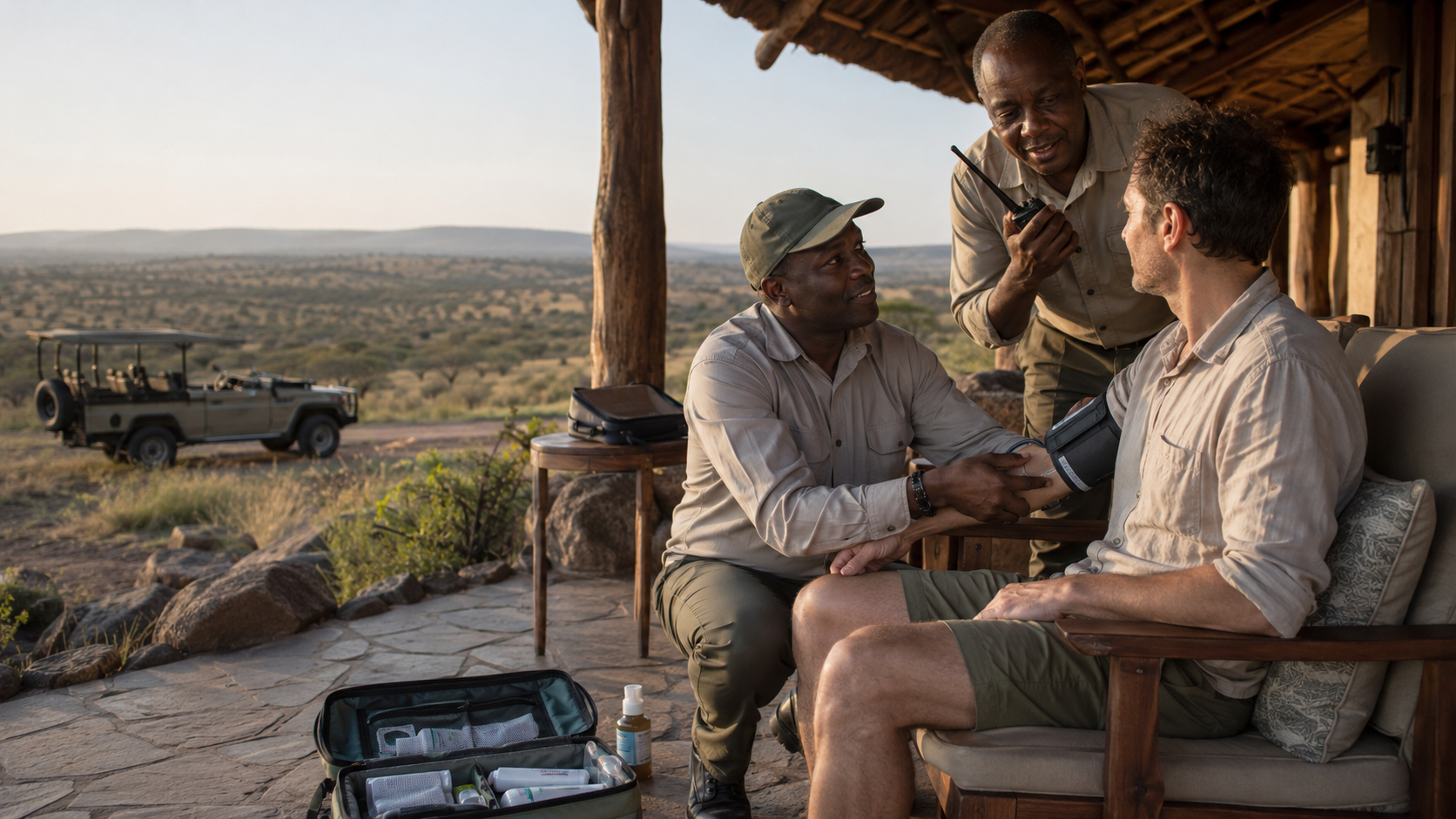
Remote safari regions may have inconsistent mobile-data and Wi-Fi coverage. An app-based alert cannot reach a control centre until the device has a suitable connection. Location services may still determine a position without mobile data, but transmitting that information requires connectivity.
Before entering a remote region, travellers should:
- Download, register and test TravelSafe SOS
- Allow the required location and notification permissions
- Save the lodge and tour operator’s contact details
- Store the insurer’s policy and emergency-assistance numbers
- Ask what radio or satellite communications the lodge uses
- Tell nominated contacts where they will be staying
- Carry a charged phone and suitable backup power
- Keep essential information available offline
If an alert cannot be transmitted, the traveller should use the fastest available alternative. This may mean speaking directly to lodge staff, using a vehicle or camp radio, calling the operator, or using another emergency communication device carried by the guide or lodge.
TravelSafe SOS strengthens an emergency plan, but it should not be the traveller’s only means of requesting help in an area known to have limited connectivity.
Prepare Before You Leave for Safari
The best time to organise emergency assistance is before the journey begins. Registration completed during an emergency wastes valuable time and may leave the control centre without the information needed to support the traveller effectively.
Before departure, ensure that your TravelSafe SOS profile contains current personal information, medical details, insurer information and nominated contacts. Tell your travel companion how to activate the app on your behalf. Check that your travel insurance is valid for every country and activity on the itinerary, including remote safaris and any planned walking, boating or adventure activities.
Ask your safari operator how emergencies are managed at each lodge. A responsible operator should be able to explain how staff communicate, which medical facilities are normally used and how a traveller may be transferred from the property.
These measures do not suggest that an emergency is likely. They provide a clear response pathway if an unexpected illness or injury occurs.
Add Immediate Emergency Support to Your African Journey
A remote medical emergency can leave a traveller trying to reach a lodge manager, doctor, responder, insurer, travel agent and family member while ill, injured or frightened. TravelSafe SOS provides one direct alert pathway to a 24-hour control centre that can assess the available information and help coordinate the appropriate response.
The service is available across TravelSafe SOS coverage destinations in Southern and East Africa. Travellers should confirm current destination coverage, register before departure and ensure that the app is correctly configured.
Download TravelSafe SOS before travelling, complete your emergency profile and give yourself, your family and your travel partners greater peace of mind throughout your African journey.