
Is the Okavango Delta Safe for Tourists?
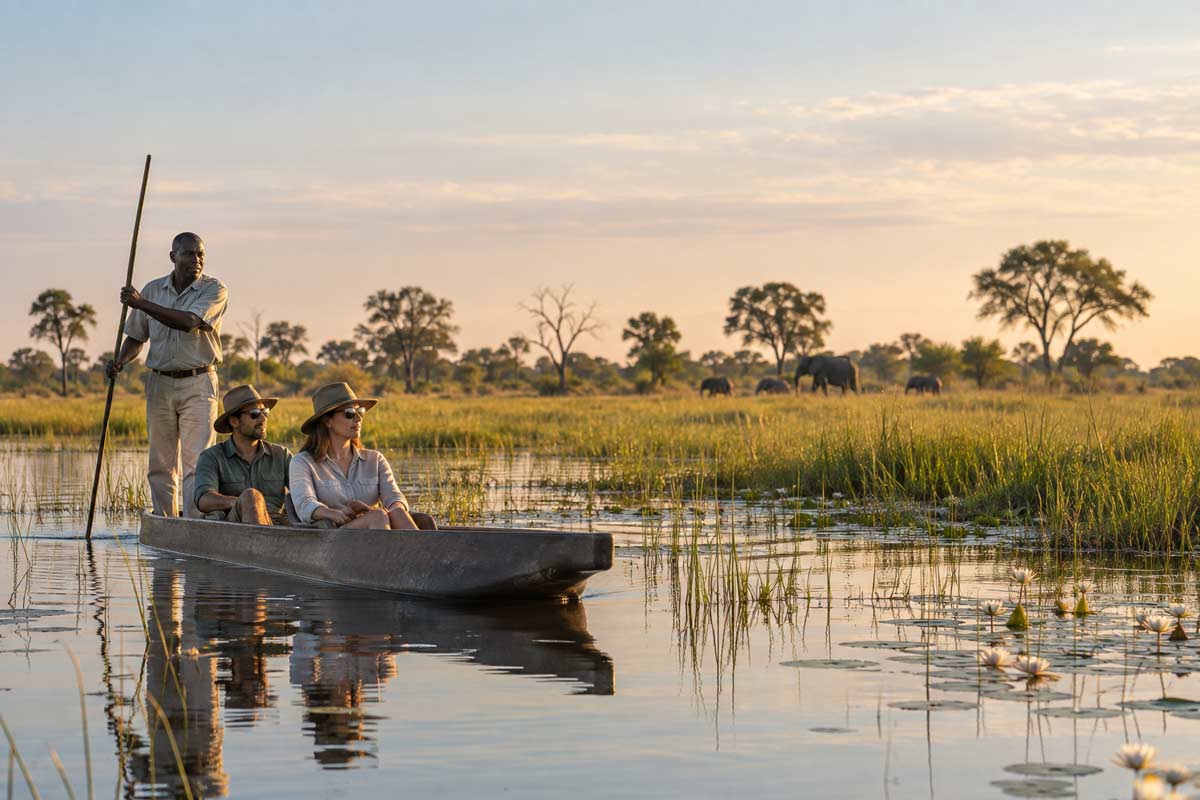
The Okavango Delta is generally a safe and professionally managed safari destination for international visitors. Established camps use experienced guides, follow wildlife-safety procedures and manage daily activities around local conditions. Most travelers visit without experiencing a serious medical or security emergency.
However, the Delta is one of Africa’s most remote safari environments. Many camps are surrounded by seasonal floodplains, channels and wilderness rather than public roads or towns. Access may involve a light-aircraft flight, boat transfer or journey by four-wheel-drive vehicle. Mobile coverage can be unreliable, and appropriate medical facilities may be a considerable distance away.
The central safety question is therefore not simply whether the Okavango Delta is safe. Travelers should also ask what would happen if they became seriously ill or injured in a camp that cannot be reached quickly by a conventional ambulance.
The answer depends on the traveler’s location, condition, available communications, time of day, weather, airstrip access and the emergency procedures followed by the lodge. These variables make preparation and immediate coordination particularly important.
Internal link for Mark: Link “safe and professionally managed safari destination” to the existing Botswana Travel Safety country pillar.
Why Medical Access Is Different in the Delta
A medical emergency in a city may be managed through a street address, a public emergency number and road access to a hospital. In the Okavango Delta, the first response usually begins with lodge staff or the guide accompanying the traveler.
The guide or camp manager may provide first aid, contact a medical professional and activate the lodge’s emergency plan. This immediate local assistance can be extremely valuable, but a safari camp is not a hospital. Serious trauma, chest pain, breathing difficulty, stroke symptoms, severe allergic reactions or a rapidly worsening illness may require transfer to a more suitable medical facility.
Medical resources and communications are limited in rural Botswana. Official US travel guidance also warns that evacuation from remote parts of the country may be unavailable or delayed, particularly at night.
US Department of State Botswana Travel Advisory
UK Government Botswana Health Advice
This does not mean that emergency assistance cannot be arranged. It means that the response may involve several organizations and several stages. The camp, doctor, transport provider, evacuation company, receiving medical facility, insurer and traveler’s family may all require accurate information.
TravelSafe SOS provides a direct alert pathway to a 24-hour control center. When an alert is successfully transmitted, available location and account information can help the operator assess the situation, contact the traveler and begin coordinating appropriate assistance.
Emergency Medical Help on an African Safari
What Are the Main Safety Risks in the Okavango Delta?
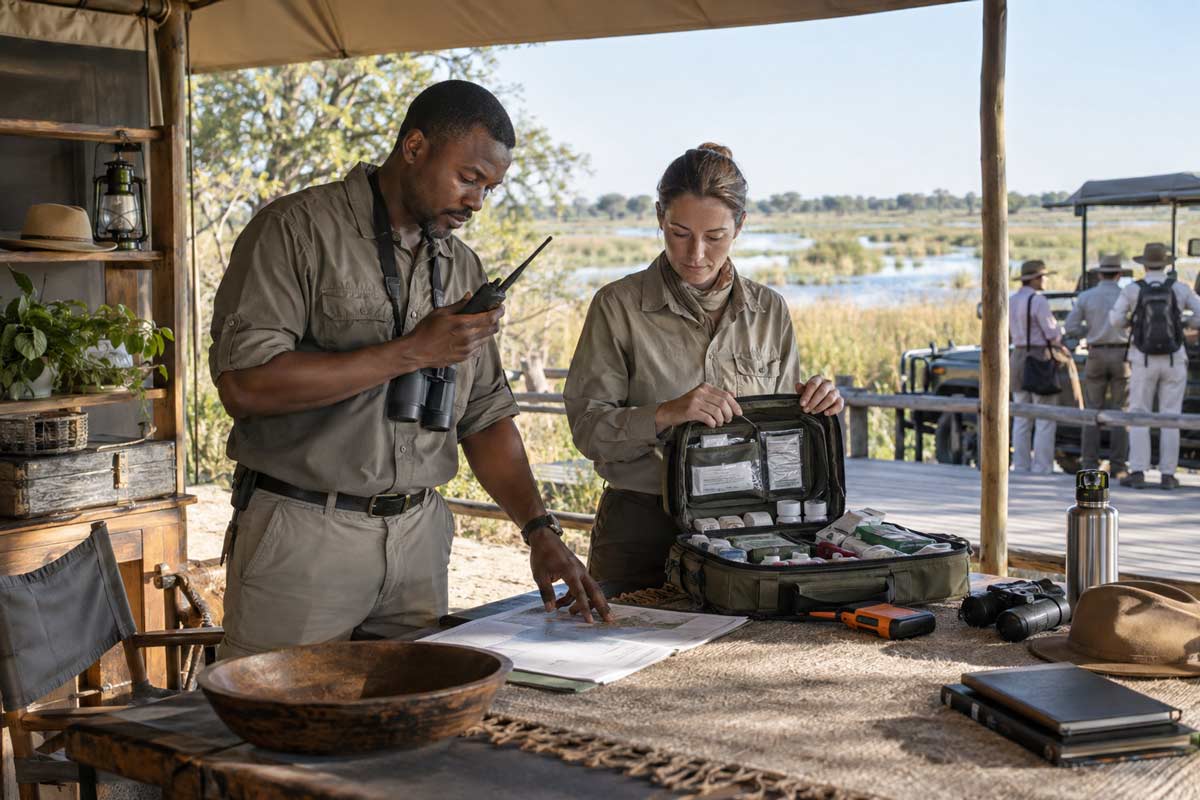
The Okavango Delta’s safety risks arise primarily from its wildlife, environment, activities and remoteness. These risks are normally managed effectively by reputable safari operators, but travelers must follow instructions and avoid becoming complacent.
Wild animals can move through unfenced camps, including at night. Travelers should never walk around a camp after dark unless lodge staff have confirmed that it is safe or provided an escort. They should not leave designated areas, approach animals, stand during wildlife sightings or disregard a guide’s instructions.
Mokoro excursions and boat activities introduce water-related risks. Travelers should remain seated when instructed, wear available safety equipment and avoid sudden movements. Hippos, crocodiles and other wildlife must be treated with caution, but experienced guides plan routes and activities according to conditions.
Heat, dehydration, sun exposure, insect bites and minor injuries are more common than dramatic wildlife incidents. Travelers should drink sufficient water, use sun protection, wear suitable clothing and tell their guide if they feel unwell. A minor problem can become more serious when the traveler is several hours from advanced medical care.
Malaria is also a recognized concern in northern Botswana, including the Okavango Delta. The level of risk varies by season, and travelers should obtain individualized medical advice before departure rather than relying on general online guidance. Bite avoidance remains important even when preventive medication has been prescribed.
UK Malaria Prevention Country Recommendations
What Should You Do During a Medical Emergency?
If a traveler becomes seriously ill or injured, the first step is to alert the guide, camp manager or nearest responsible staff member immediately. Lodge staff understand the camp’s location, available communications, access routes and established emergency procedures.
The traveler or a companion should then activate TravelSafe SOS when connectivity permits. The immediate priorities are to:
- Establish what has happened
- Protect the traveler from further harm
- Provide appropriate first aid
- Confirm the traveler’s location
- Obtain professional medical guidance
- Decide whether local treatment or transfer is required
- Contact the insurer if costs need authorization
- Keep nominated contacts properly informed
Travelers should not delay requesting help because they are uncertain whether an illness or injury is serious. Chest pain, severe bleeding, breathing difficulty, loss of consciousness, stroke symptoms, major trauma and severe allergic reactions require urgent professional assessment.
If the traveler cannot activate the app, a companion can raise the alert if they have access to the registered device and understand how to use it. This is one reason travelers should complete their profile before departure and explain the emergency process to the person traveling with them.
Is the Okavango Delta Safe for Tourists?
The Okavango Delta is generally a safe and professionally managed safari destination for international visitors. Established camps use experienced guides, follow wildlife-safety procedures and manage daily activities around local conditions. Most travelers visit without experiencing a serious medical or security emergency.
However, the Delta is one of Africa’s most remote safari environments. Many camps are surrounded by seasonal floodplains, channels and wilderness rather than public roads or towns. Access may involve a light-aircraft flight, boat transfer or journey by four-wheel-drive vehicle. Mobile coverage can be unreliable, and appropriate medical facilities may be a considerable distance away.
The central safety question is therefore not simply whether the Okavango Delta is safe. Travelers should also ask what would happen if they became seriously ill or injured in a camp that cannot be reached quickly by a conventional ambulance.
The answer depends on the traveler’s location, condition, available communications, time of day, weather, airstrip access and the emergency procedures followed by the lodge. These variables make preparation and immediate coordination particularly important.
safe and professionally managed safari destination
Why Medical Access Is Different in the Delta
A medical emergency in a city may be managed through a street address, a public emergency number and road access to a hospital. In the Okavango Delta, the first response usually begins with lodge staff or the guide accompanying the traveler.
The guide or camp manager may provide first aid, contact a medical professional and activate the lodge’s emergency plan. This immediate local assistance can be extremely valuable, but a safari camp is not a hospital. Serious trauma, chest pain, breathing difficulty, stroke symptoms, severe allergic reactions or a rapidly worsening illness may require transfer to a more suitable medical facility.
Medical resources and communications are limited in rural Botswana. Official US travel guidance also warns that evacuation from remote parts of the country may be unavailable or delayed, particularly at night.
US Department of State Botswana Travel Advisory
UK Government Botswana Health Advice
This does not mean that emergency assistance cannot be arranged. It means that the response may involve several organizations and several stages. The camp, doctor, transport provider, evacuation company, receiving medical facility, insurer and traveler’s family may all require accurate information.
TravelSafe SOS provides a direct alert pathway to a 24-hour control center. When an alert is successfully transmitted, available location and account information can help the operator assess the situation, contact the traveler and begin coordinating appropriate assistance.
Emergency Medical Help on an African Safari
What Are the Main Safety Risks in the Okavango Delta?
The Okavango Delta’s safety risks arise primarily from its wildlife, environment, activities and remoteness. These risks are normally managed effectively by reputable safari operators, but travelers must follow instructions and avoid becoming complacent.
Wild animals can move through unfenced camps, including at night. Travelers should never walk around a camp after dark unless lodge staff have confirmed that it is safe or provided an escort. They should not leave designated areas, approach animals, stand during wildlife sightings or disregard a guide’s instructions.
Mokoro excursions and boat activities introduce water-related risks. Travelers should remain seated when instructed, wear available safety equipment and avoid sudden movements. Hippos, crocodiles and other wildlife must be treated with caution, but experienced guides plan routes and activities according to conditions.
Heat, dehydration, sun exposure, insect bites and minor injuries are more common than dramatic wildlife incidents. Travelers should drink sufficient water, use sun protection, wear suitable clothing and tell their guide if they feel unwell. A minor problem can become more serious when the traveler is several hours from advanced medical care.
Malaria is also a recognized concern in northern Botswana, including the Okavango Delta. The level of risk varies by season, and travelers should obtain individualized medical advice before departure rather than relying on general online guidance. Bite avoidance remains important even when preventive medication has been prescribed.
UK Malaria Prevention Country Recommendations
What Should You Do During a Medical Emergency?
If a traveler becomes seriously ill or injured, the first step is to alert the guide, camp manager or nearest responsible staff member immediately. Lodge staff understand the camp’s location, available communications, access routes and established emergency procedures.
The traveler or a companion should then activate TravelSafe SOS when connectivity permits. The immediate priorities are to:
- Establish what has happened
- Protect the traveler from further harm
- Provide appropriate first aid
- Confirm the traveler’s location
- Obtain professional medical guidance
- Decide whether local treatment or transfer is required
- Contact the insurer if costs need authorization
- Keep nominated contacts properly informed
Travelers should not delay requesting help because they are uncertain whether an illness or injury is serious. Chest pain, severe bleeding, breathing difficulty, loss of consciousness, stroke symptoms, major trauma and severe allergic reactions require urgent professional assessment.
If the traveler cannot activate the app, a companion can raise the alert if they have access to the registered device and understand how to use it. This is one reason travelers should complete their profile before departure and explain the emergency process to the person traveling with them.
Why an Accurate Location Matters
A lodge name alone may not identify where an emergency has occurred. The traveler could be at the camp, on a game drive, in a mokoro, on a walking safari or transferring between properties.
Available GPS information can help the control center and local responders understand where assistance is needed. Lodge and guide details remain important because the camp may have the fastest radio contact, the best knowledge of the area and direct access to the traveler.
TravelSafe SOS location sharing can reduce time lost trying to describe an unfamiliar position. It does not guarantee that a responder can arrive immediately, and it cannot remove delays caused by weather, darkness, aircraft availability or weak connectivity. Its practical value is that it helps connect the emergency to a usable location and a coordinated response pathway.
Travelers should download and register the app before leaving home, enable the required location permissions and check that their medical, insurance and emergency-contact information is correct. Attempting to complete this setup after an emergency has started can waste valuable time.
How Does Medical Evacuation From the Okavango Delta Work?
Medical evacuation from the Okavango Delta is not a single, automatic process. The response depends on the traveller’s medical condition, exact location, camp access, time of day, weather, aircraft availability and the facilities able to receive the patient.
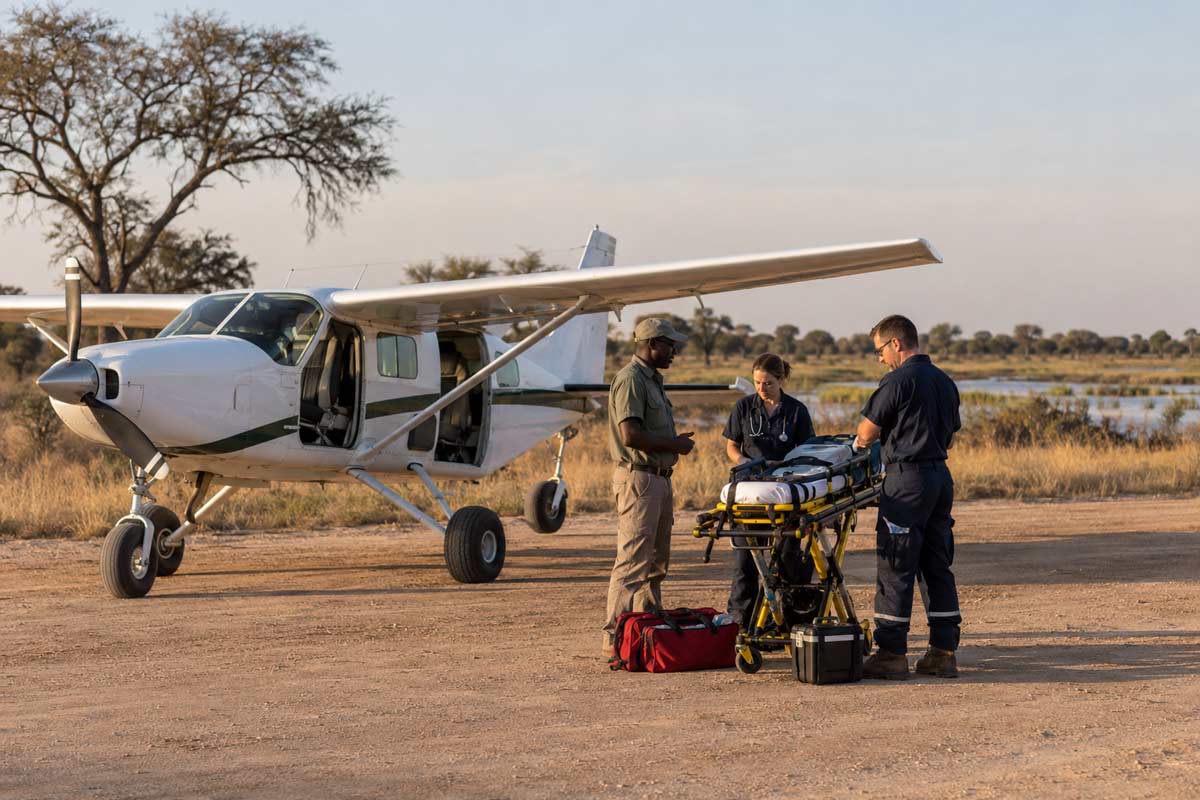
A minor illness or injury may be assessed and treated at camp or through a nearby medical service. A more serious condition may require transport to Maun, which is the principal access town for the Delta. Depending on the diagnosis and care required, the traveller may then need further transfer to a larger medical centre in Botswana or South Africa.
The closest medical facility is not necessarily the most appropriate one. A qualified medical professional should assess whether the traveller can be treated locally, moved by road, transferred by light aircraft or evacuated using a medically equipped aircraft.
Air evacuation may be complicated by:
- Darkness and airstrip operating restrictions
- Poor weather or reduced visibility
- Aircraft and medical-crew availability
- The traveller’s condition and ability to fly
- Distance from the camp to the airstrip
- Insurer approval or payment guarantees
- Availability at the receiving medical facility
Travellers should not assume that every camp has an aircraft permanently available or that an evacuation can take place immediately. They should ask their safari operator how emergency transfers are normally handled and whether the camps on their itinerary can support departures after dark.
TravelSafe SOS can help coordinate communication between the traveller, lodge, medical professionals, evacuation provider and insurer. It does not make the final clinical decision, operate the evacuation aircraft or guarantee that a transfer will be immediately available.
Who Arranges and Pays for an Evacuation?
The lodge may initiate its emergency procedure and contact a local provider, but financial authorisation may still be required. Medical flights and complex evacuations can be expensive, particularly when specialist personnel, multiple flight sectors or an international transfer are involved.
Comprehensive travel insurance should include emergency medical treatment and evacuation suitable for remote safari travel. Travellers must check the policy wording rather than relying on a general statement that evacuation is covered.
Important questions include:
- Is emergency evacuation from a remote safari camp covered?
- What is the maximum evacuation benefit?
- Is transfer limited to the nearest appropriate facility?
- Is onward transfer to South Africa covered when medically necessary?
- Must the insurer authorise the flight in advance?
- What happens when urgent treatment cannot wait?
- Are pre-existing medical conditions covered?
- Does the policy include the activities planned in the Delta?
- Must the traveller pay first and claim afterwards?
TravelSafe SOS is not an insurance policy and does not pay for medical treatment, ambulance transport, evacuation or repatriation. Its role is to help activate and coordinate the immediate response. The insurer remains responsible for decisions concerning cover, authorisation and payment.
Travel Insurance and Emergency Assistance
What Happens If There Is No Mobile Signal?
Mobile data and Wi-Fi can be inconsistent across the Okavango Delta. An app-based alert can only reach the control centre when the device has a suitable connection. Although a phone may be able to calculate a GPS position without mobile data, it still requires connectivity to transmit the alert and location.
This limitation should form part of the traveller’s emergency planning. Before leaving for the Delta, ask the lodge or safari operator:
- Whether the camp has reliable mobile or Wi-Fi connectivity
- Whether guides carry radios or satellite communication equipment
- How staff communicate with Maun and emergency providers
- Whether communications remain available during activities away from camp
- What procedure applies if a guest becomes ill at night
- Where the nearest usable airstrip is located
If TravelSafe SOS cannot transmit an alert, the traveller should use the fastest available alternative. This may mean notifying the guide, contacting the camp by radio, using a satellite device or asking lodge staff to activate their established emergency procedure.
The app strengthens the traveller’s emergency plan, but it should not be the only method of requesting assistance in a wilderness area with known connectivity limitations.
How Should Travellers Prepare Before Visiting the Delta?
Emergency preparation should be completed before the traveller boards the first light-aircraft flight or leaves Maun.
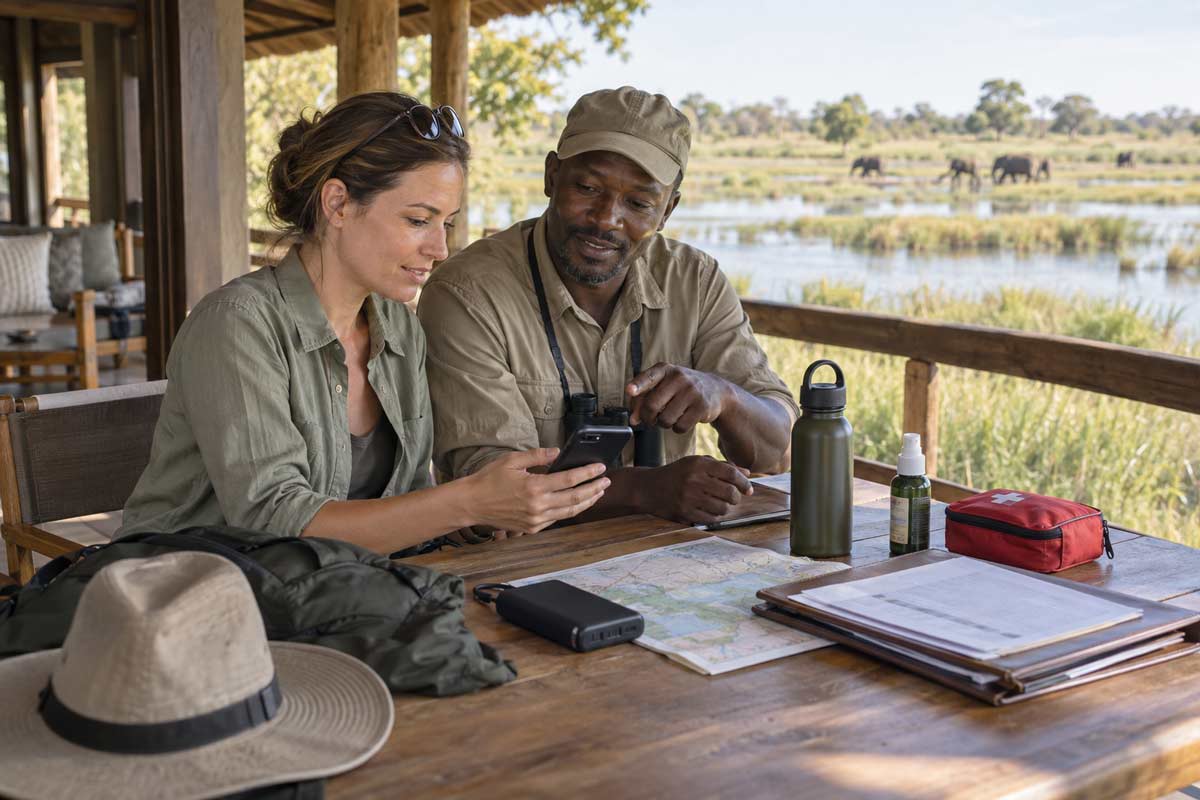
Download and register TravelSafe SOS before departure. Enable the required location, notification and calling permissions. Complete the personal profile and provide current medical, insurance, next-of-kin and travel-agent information.
Travellers should also:
- Carry sufficient prescription medication in their hand luggage
- Keep essential medical and insurance information available offline
- Tell a companion how to activate SOS on their behalf
- Save the lodge and safari operator’s emergency contacts
- Carry a charged phone and suitable backup power
- Obtain personalised malaria and vaccination advice
- Declare relevant medical conditions to the insurer
- Inform the operator about serious allergies or mobility needs
- Follow every instruction given by guides and camp staff
An itinerary should also be shared with a trusted contact. It should include camp names, dates, flight arrangements and the safari operator’s contact information. A person at home may know that the traveller is in Botswana without knowing which of several remote camps they are visiting.
Travel With a Clear Emergency Response Plan
The Okavango Delta remains one of Africa’s exceptional safari destinations. Its remoteness is central to its appeal, but that same remoteness can complicate access to medical assistance.
Responsible preparation does not require travellers to expect an emergency. It requires them to understand that a lodge, insurer, evacuation provider, doctor, travel agent and family member may all become involved if something serious occurs.
TravelSafe SOS gives registered travellers a direct pathway to a 24-hour control centre. When an alert is successfully transmitted, the operator can attempt to contact the traveller, assess the information available and begin coordinating appropriate assistance. Nominated contacts, insurers and registered travel agents can be included in the communication process where applicable.
Download and register TravelSafe SOS before travelling to Botswana. Complete your emergency profile, confirm your insurance cover and arrive in the Delta with a response plan already in place.