
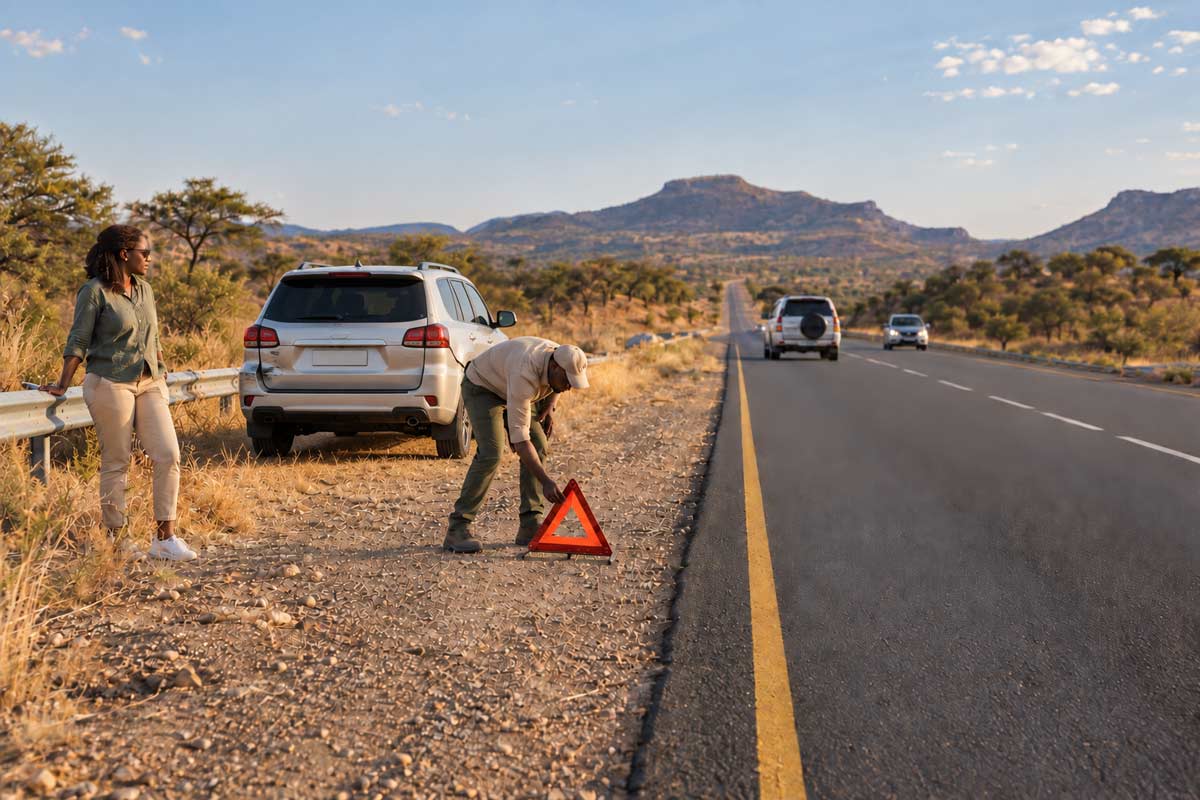
If you are involved in a road accident in Africa, stop in the safest position possible, switch off the ignition and look for immediate hazards. Check whether anyone has been seriously injured, warn approaching traffic without placing yourself in danger and contact the appropriate local emergency service.
Activate TravelSafe SOS when suitable connectivity is available. Provide your exact location, the number of people injured and a brief description of any immediate danger.
A road accident can create two emergencies. The first is the collision and the injuries it causes. The second is the continuing risk from passing traffic, fire, leaking fuel, an unstable vehicle, wildlife, darkness or an exposed roadside.
What happens during the first 10 minutes may influence how quickly the danger is controlled and appropriate assistance can be coordinated.
The First 10 Minutes
- Stop and assess the immediate danger.
- Switch off the engine if it is safe to do so.
- Do not smoke or allow flames near a damaged vehicle.
- Move away from traffic, fire, fuel or an unstable vehicle when movement is safe.
- Check who is injured and whether anyone is missing.
- Do not move a seriously injured person unless an immediate danger makes it necessary.
- Warn approaching traffic without standing in the roadway.
- Call the appropriate local emergency service.
- Activate TravelSafe SOS when connectivity permits.
- Share your available GPS location and a concise description of the accident.
- Follow instructions from qualified emergency personnel.
- Preserve phone power and keep a communication channel open.
Personal safety and urgent medical needs come before photographs, insurance forms, vehicle recovery or arguments about who caused the accident.
A passenger can activate help if the driver is injured, trapped or unable to communicate. When travelling in a group, one uninjured person should take responsibility for emergency communication while others assist only where it is safe to do so.
Protect Yourself From a Second Emergency
The vehicle may have stopped moving, but the danger may not be over.
On a busy urban road, approaching traffic may create the greatest immediate threat. On an isolated route, the risks may include darkness, poor visibility, an overturned vehicle, wildlife, livestock or a long delay before another vehicle arrives.
Fire, smoke or leaking fuel requires particular caution. Do not use cigarettes, matches or any other flame near the accident. Move to a safer position if remaining beside the vehicle exposes you to fire, traffic, floodwater, falling debris or another immediate danger.
Hazard lights, warning triangles and reflective clothing may help alert approaching drivers, but only use them when this can be done safely. Never walk into moving traffic or stand in the roadway to place a warning triangle.
Personal security must also be considered. Crowds may gather, particularly after an accident involving a pedestrian, cyclist or local vehicle. Remain calm, avoid confrontation and contact police and the TravelSafe SOS control centre if the situation becomes threatening.
There is no universal instruction to leave or remain at an accident scene. Local laws differ, and the safest decision depends on the injuries, location and immediate hazards. Do not abandon an injured person, but do not remain in a position where you may be struck by another vehicle or exposed to violence.
Check for Serious Injuries
You do not need to diagnose an injury to recognise that somebody requires urgent medical help.
Warning signs include unconsciousness, breathing difficulty, severe bleeding, confusion, seizures, repeated vomiting, serious burns, loss of movement or sensation, or severe pain in the head, neck, chest or abdomen. A trapped occupant or anyone whose condition is rapidly worsening also requires an urgent professional response.
Call for medical assistance as quickly as possible. Apply firm direct pressure to severe external bleeding when it is safe and you are able to do so. Follow instructions given by qualified emergency personnel.
Do not give an injured person food, alcohol or unnecessary medication. Do not move somebody with a possible head, neck or spinal injury unless fire, traffic, water or another immediate threat makes remaining in position more dangerous.
Do not remove a motorcyclist’s helmet unless this is necessary to maintain an airway and you are able to do so safely. Incorrect movement can worsen a serious injury.
Children, older travellers, pregnant travellers and people using blood-thinning medication may require medical assessment even when an injury is not immediately obvious. Shock and adrenaline can initially conceal pain or other symptoms.
Emergency Medical Help on an African Safari
WHO Post-Crash Response Guidance
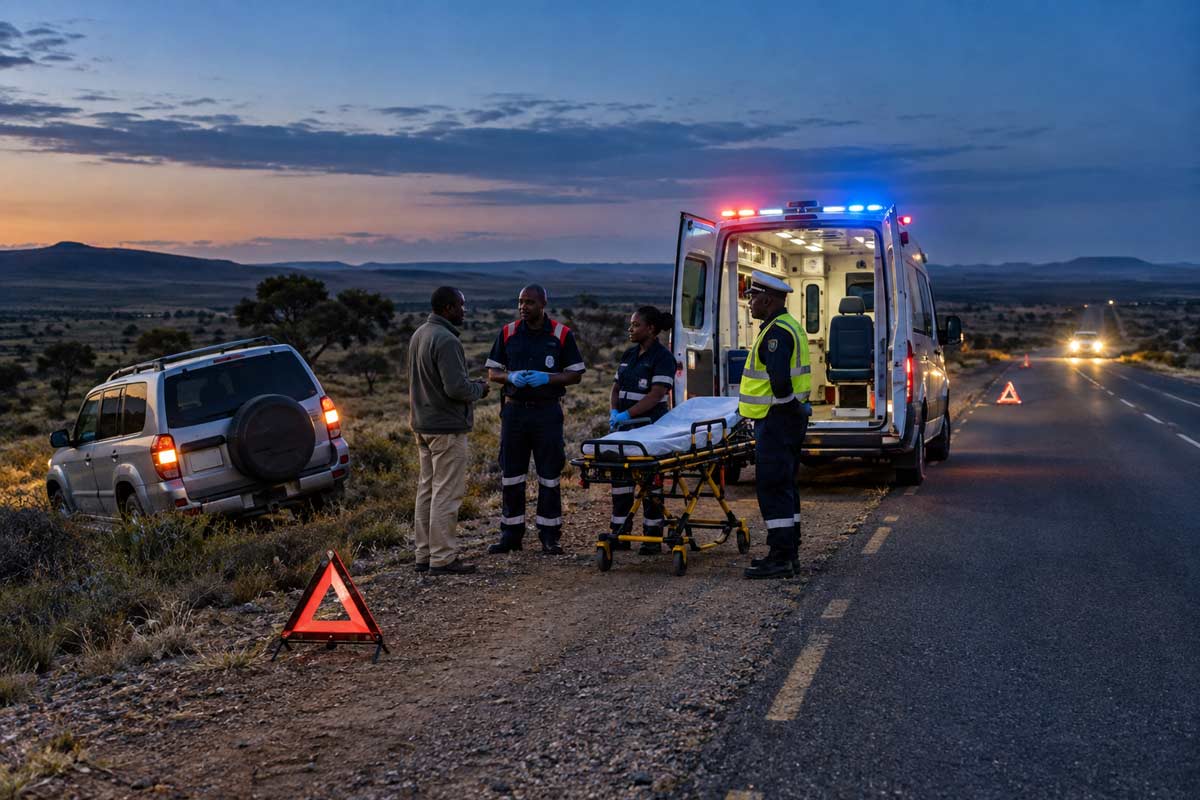
How Do You Call for Help When Every Country Is Different?
Africa does not have one universal emergency number. Police, ambulance and fire-service numbers differ between countries, and emergency-service availability can also vary between cities, rural areas, safari regions and islands.
TravelSafe SOS provides coverage across South Africa, Namibia, Eswatini, Lesotho, Botswana, Zimbabwe, Mozambique, Mauritius, Madagascar, Seychelles, Tanzania, Kenya, Rwanda, Uganda, Zambia and Zanzibar.
Before departure, travellers should save the verified emergency numbers for every destination and transit country. Rental-company, tour-operator, guide and accommodation contact details should also be stored offline.
If a TravelSafe SOS alert cannot be transmitted, use the fastest available alternative. This may be the driver’s radio, a lodge communication system, a satellite device, a police post, another vehicle or the travel operator’s emergency number.
Do not rely on a mobile app as your only emergency communication method in a remote area. Suitable connectivity is required for an SOS alert to reach the control centre.
What Information Should You Give the Control Centre?
Your first communication should be brief, factual and useful.
Provide your available GPS position, road name or route number, direction of travel and the nearest town nearest, junction, bridge, lodge or identifiable landmark. Explain how many vehicles and people are involved and whether anyone is unconscious, trapped or seriously injured.
Report any fire, fuel, traffic, wildlife or wildlife personal-security hazard. State whether the road is blocked and provide the vehicle registration, driver, guide or rental-company details when available.
A useful emergency description would be:
“We have had a rollover involving one vehicle. We are on the B1, approximately 35 kilometres north of [town], travelling south. There are four occupants. One is unconscious and one has severe bleeding. The vehicle is off the road and there is no visible fire.”
A map pin is valuable, but it may not explain how responders can reach the accident. Road access, direction of travel and the nearest junction, gate, bridge or settlement may be equally important.
TravelSafe SOS Location Sharing
How Can TravelSafe SOS Help After a Road Accident?
When an SOS alert is successfully transmitted, the TravelSafe SOS control centre receives the available alert, location and registered traveller information. An operator can attempt to contact the traveller, assess what has happened and begin coordinating an appropriate available response.
Depending on the accident and current operational procedures, this may involve communication with local medical services, police, fire or rescue services, a private ambulance, the guide or driver, the travel operator, the rental-car company, the traveller’s insurer, the registered travel agent and the nominated next of kin.
This can be especially important for a traveller from the United States or Europe who is injured, disorientated or unfamiliar with the country. Family members and insurers may be thousands of miles away and may not know the route, vehicle, operator or exact accident location.
TravelSafe SOS is not the police, ambulance operator, insurer, roadside-recovery company-re or medical-evacuation provider. It cannot guarantee the availability or arrival time of a responder, and it does not approve or pay insurance claims.
Its role is to provide an emergency coordination pathway. This helps reduce avoidable time lost establishing who the traveller is, where the accident occurred, what assistance may be required and which organizations or emergency contacts should be brought into the response.
The app should be downloaded and registered before the journey begins. Traveller, medical, insurance and emergency-contact information should be completed accurately while the traveller is safe and able to provide it.
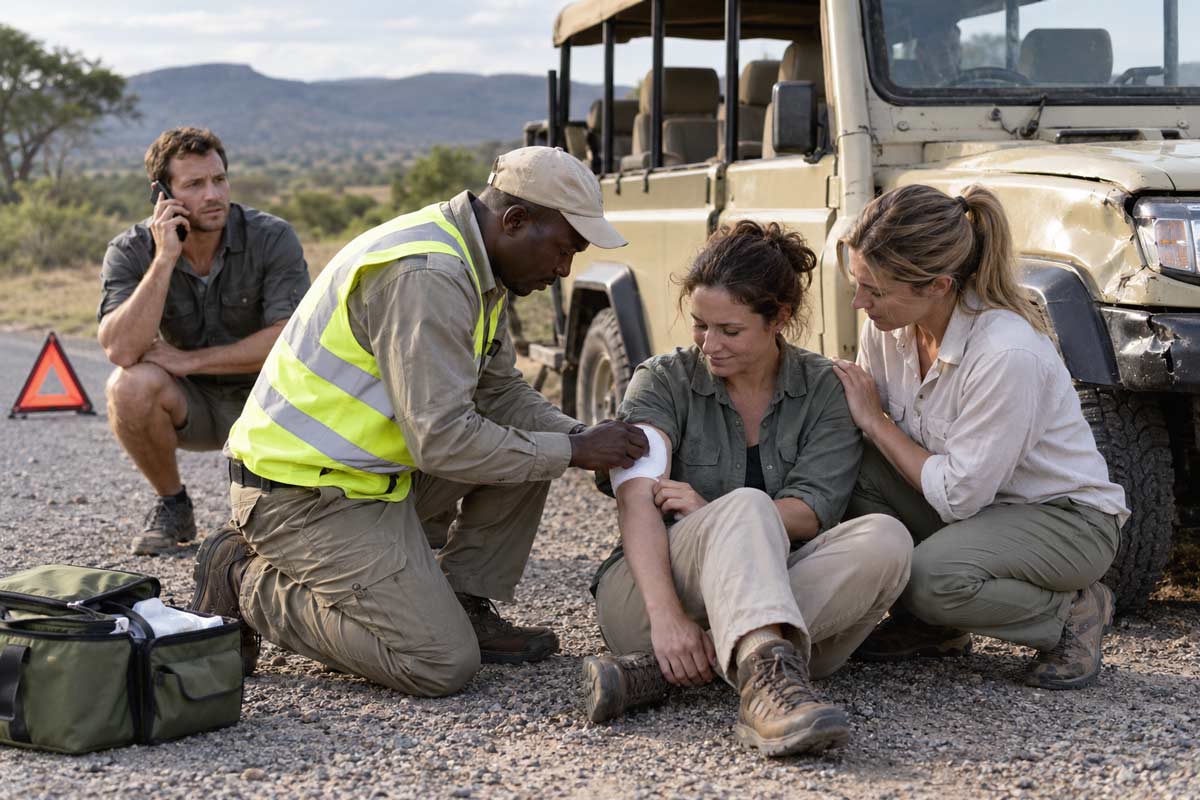
Why Exact Location Can Be Difficult After a Crash
After a road accident, travellers may be unable to explain exactly where they are. A passenger may have been asleep, the driver may be injured, or the collision may have happened between towns where there are few visible landmarks.
In a remote area, a map may show an unnamed road or track rather than a recognised route. Darkness, heavy rain or an accident that has forced the vehicle off the road can make identification even more difficult.
Share your available GPS position, but do not rely on a map pin alone. Responders may also need to know the direction in which you were travelling, your most recent town or accommodation, and the nearest junction, bridge, gate, airstrip, kilometre marker or settlement.
The vehicle registration, rental agreement, safari operator, transfer company and confirmed itinerary may all help establish the location. A local driver or guide may be able to explain the route and provide access instructions that are not visible on an international mapping service.
An accurate position identifies where the accident happened. Clear access information helps responders determine how to reach it.
What If There Is No Mobile or Internet Connection?
A TravelSafe SOS alert requires suitable connectivity to reach the control centre. GPS may establish a position on the device, but that does not mean the phone can transmit the alert.
If the SOS cannot be sent, use the fastest available alternative. Depending on the journey, this may include the driver’s radio, a lodge communication system, a satellite device, a roadside-assistance number, another vehicle or the travel operator’s emergency channel.
If connectivity appears briefly, send one concise message containing your location, the number of injured people, the most serious apparent injury and a working contact number. Preserve phone power by reducing unnecessary calls, lowering screen brightness and keeping at least one charged phone available for emergency communication.
Do not send an uninjured person walking alone along an unfamiliar or unsafe road unless there is no safer way to obtain help. Passing traffic, darkness, wildlife, extreme weather and personal-security risks may turn that journey into another emergency.
TravelSafe SOS should form part of a wider road-emergency plan that includes offline contact details, local emergency numbers, suitable insurance, route information and alternative communication arrangements for remote journeys.
When Should Police Be Contacted?
Police involvement may be required when somebody has been injured or killed, a driver has left the scene, a pedestrian or cyclist is involved, vehicles are obstructing traffic, public property has been damaged or a crime may have occurred.
Local law, rental conditions and insurance requirements differ. Some jurisdictions may require an accident to be reported even when injuries and vehicle damage appear minor.
Follow police instructions and remain calm and respectful. Ask for the attending officer’s name and obtain the accident report, case number or official reference details where available.
Do not offer an unofficial payment. Do not admit responsibility or sign a statement that you do not understand. If language is a barrier, request an interpreter or assistance from the tour operator, rental company, registered travel agent or another appropriate representative.
Contact your embassy or consulate if you are detained, seriously injured or facing a significant legal problem. Consular officials may provide information and assistance, but they cannot cancel local legal procedures, direct a police investigation or guarantee your release.
The decision to move a vehicle will depend on injuries, immediate danger and local requirements. A vehicle obstructing fast traffic may create another serious hazard, but moving it may also affect an investigation. Follow instructions from police or emergency personnel whenever possible.
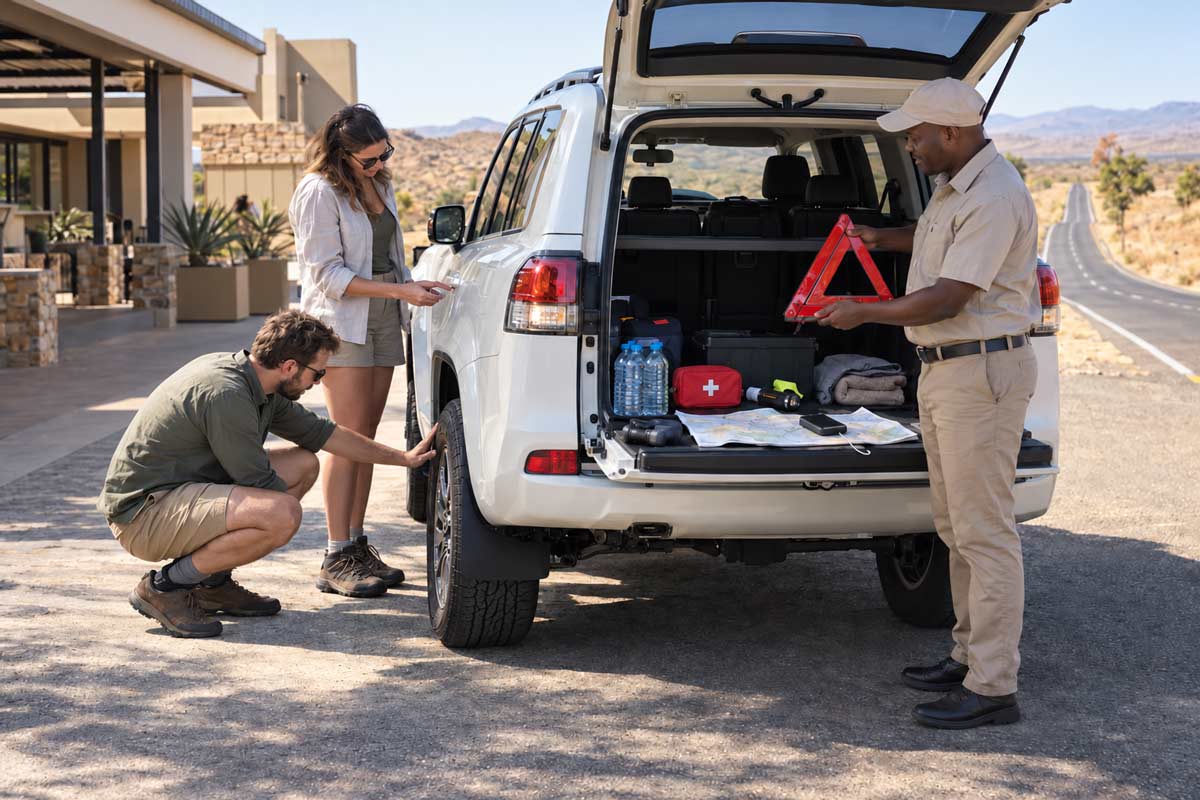
What Evidence Should You Record?
Record evidence only after urgent medical needs and immediate roadside dangers have been addressed.
When it is safe, photograph the vehicles, their positions, visible damage, number plates, road surface, signs, surrounding conditions and any relevant obstruction. Note the time, date, available location and weather conditions.
Obtain the other driver’s name, contact information and insurance details where applicable. Record witness details, the police reference number, the name of the transport provider and the guide or driver’s information.
Keep copies of medical reports, ambulance accounts, towing records, replacement-transport costs and other relevant receipts. Write a short factual account while the events are still clear.
Never stand in moving traffic to take a photograph. Do not unnecessarily photograph injured or deceased people, and do not publish accident images on social media. Avoid arguments about blame, speculative statements and documents that amount to an admission of liability unless you have received appropriate advice and understand what you are signing.
What If You Are in a Rental Car?
Life and medical safety take priority over protecting the vehicle or complying with administrative procedures.
Once urgent assistance has been activated, contact police where required and notify the rental company through its official emergency number. Follow its instructions concerning vehicle recovery, towing, replacement transport and continued travel.
Notify the relevant insurer or assistance company as soon as reasonably possible. Preserve the police reference, rental accident form, photographs, medical documents and receipts. Do not arrange repairs without authorization unless this is necessary for immediate safety and is permitted under the rental agreement.
Before collecting a rental vehicle, confirm:
- Who is authorized to drive
- Whether cross-border travel is permitted
- Whether gravel or unsealed roads are covered
- Whether specific routes are prohibited
- Whether after-dark driving is restricted
- How tyre, windscreen and underbody damage are treated
- What excess or deductible applies
- Which roadside-assistance number must be used
- Whether a police report is required
- How collisions involving wildlife or livestock are handled
A valid driving licence does not automatically mean that every vehicle, road or destination is covered. Travellers should read the rental conditions and insurance exclusions before beginning the journey.
What If You Were a Passenger?
Passengers can play a decisive role when the driver is injured, trapped, unconscious or unable to communicate.
Activate emergency assistance, identify the transport or safari company and explain where the vehicle is. Check on other passengers without entering traffic, approaching fire or moving seriously injured people unnecessarily.
Preserve the booking confirmation, driver information and vehicle details. Contact the tour operator or registered travel agent and notify your insurer, even if responsibility for the vehicle rests with another party.
Passengers should record their own injuries and obtain an appropriate medical assessment. A police report, medical records and proof of the transfer, taxi, shuttle or safari booking may later be needed for an insurance or legal process.
Do not assume that the driver or operator has already reported every injured passenger. Make sure your identity, condition and emergency-contact information are included in the response.
How Does Travel Insurance Apply?
TravelSafe SOS and travel insurance have different responsibilities.
TravelSafe SOS provides an emergency alert and coordination pathway when an SOS is successfully transmitted. Police, medical, fire, rescue and transport providers deliver the physical response according to local availability and operational circumstances.
Travel insurance may cover eligible medical treatment, ambulance transport, evacuation, repatriation or other accident-related expenses. Cover remains subject to the policy’s terms, limits, exclusions, authorization requirements and the circumstances of the accident.
TravelSafe SOS does not approve insurance claims, guarantee payment or pay for medical care, evacuation, towing or vehicle damage.
Before travelling, confirm that the policy covers:
- Every destination and transit country
- Self-driving and the rented vehicle class
- Passenger injuries
- Emergency medical treatment
- Ambulance and emergency transport
- Medical evacuation when clinically necessary
- Repatriation
- Planned activities and remote travel
- Declared pre-existing conditions
The insurer may require a police report, medical assessment, treatment plan, cost estimate or direct communication with the medical provider before authorizing eligible expenses. A hospital, ambulance or aircraft provider may also require a payment guarantee before accepting the patient or dispatching a service.
Travel Insurance and Emergency Assistance
Insurance may address the financial consequences of an accident. It does not replace the need to raise the alarm, communicate the location and begin coordinating immediate help.
Should You Continue Travelling After a Minor Accident?
A traveller may initially feel uninjured because shock and adrenaline can conceal pain. Headache, dizziness, confusion, neck pain, abdominal pain or increasing discomfort may develop later.
Seek appropriate medical advice if the vehicle rolled, airbags deployed, the impact was significant or somebody struck their head. Children, older people, pregnant travellers and people taking blood-thinning medication may require particular caution.
Any new or worsening symptom should be taken seriously. Do not continue driving if the driver is shaken, exhausted, injured or unable to concentrate.
The vehicle must also be safe. Damage to tyres, steering, lights, brakes, suspension, windows or seat belts may make continued travel dangerous even when the vehicle can still move.
A minor-looking accident should not become a more serious incident because the occupants continued without checking the people, vehicle and road conditions properly.
How Should You Prepare Before Driving in Africa?
Register TravelSafe SOS and complete your supported traveller, medical, insurance and emergency-contact information before departure. Enable the necessary permissions and tell a travelling companion how to activate SOS on your behalf.
Download offline maps and save verified local emergency numbers. Keep your rental company, accommodation, guide, operator and insurer contacts available without relying on an internet connection.
Share the planned route and expected arrival time with somebody responsible. Confirm fuel availability, weather, road conditions, border requirements and whether the journey involves long remote sections.
Check the vehicle’s tyres, lights, seat belts and required safety equipment. Carry drinking water, essential medication, charging equipment and a suitable power bank.
Wear a seat belt whenever one is available and use an appropriate child restraint. Avoid unnecessary night driving, never drive after drinking alcohol and do not use a handheld phone while driving.
Allow additional time on unfamiliar roads. Lower speeds provide more time to react to pedestrians, animals, potholes, stopped vehicles and sudden changes in the road surface.
WHO Road Traffic Injuries Guidance
Preparation cannot prevent every collision. It can, however, improve the traveller’s ability to identify the location, communicate the emergency and obtain appropriate assistance.
Travel With an Emergency Response Already in Place
Most road journeys through Africa are completed safely. A road accident can nevertheless happen to a careful traveller, whether that person is driving, travelling in a safari vehicle or sitting in a private transfer.
The first minutes matter. Preventing a second impact, recognizing serious injuries, communicating an accurate location and activating help should take priority over paperwork or vehicle damage.
When an SOS alert is successfully transmitted, TravelSafe SOS provides access to a 24-hour control centre. An operator can attempt to contact the traveller, assess the available information and begin coordinating an appropriate available response.
Depending on the emergency and current service procedures, this may include medical providers, police, rescue services, the transport operator, insurer, registered travel agent and nominated next of kin.
TravelSafe SOS cannot guarantee that a particular responder will be available or arrive within a specified time. Its value lies in giving the traveller a defined emergency pathway and helping the response begin with clearer information about who is involved, where the accident occurred and what help may be required.
Register before travelling. Complete your emergency profile, confirm your insurance details and make sure the correct people can be contacted if you are unable to manage the emergency yourself.