
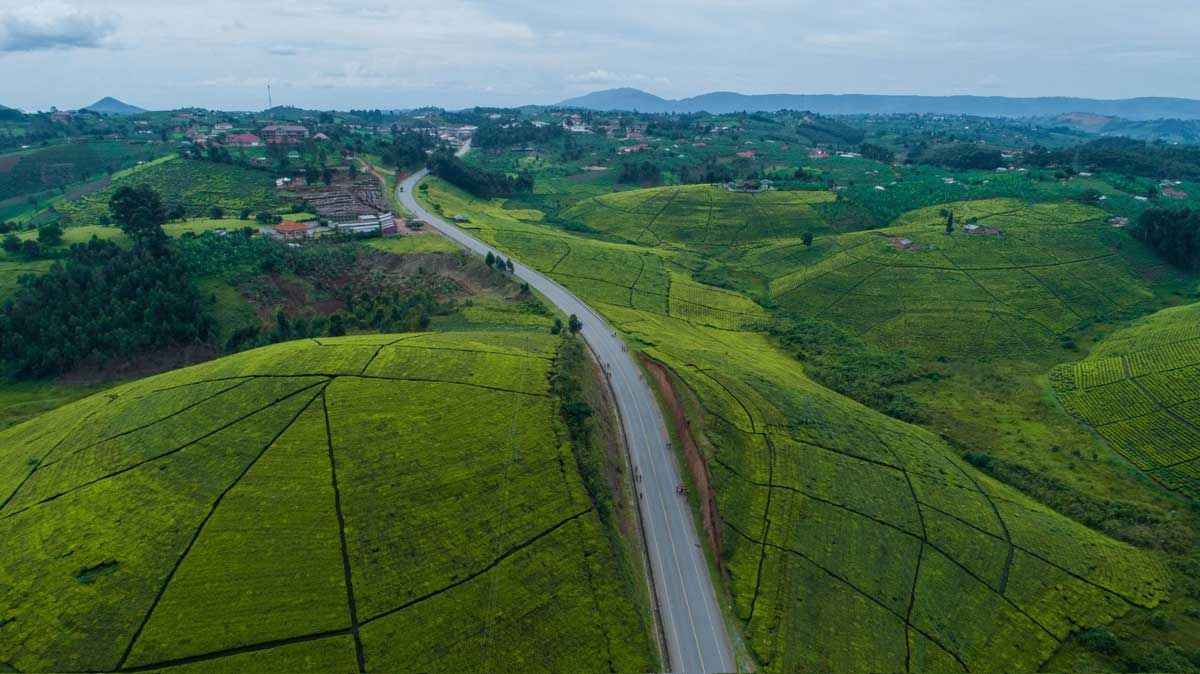
Uganda is one of Africa’s finest safari destinations, but unlike Botswana or the Serengeti, much of the experience happens on the road. Understanding how Uganda’s transport network works is essential for travelling safely and confidently.
Uganda Is Experienced Through Its Roads
Ask someone to describe Uganda and they will probably mention mountain gorillas, chimpanzees, the source of the Nile or spectacular wildlife. Few people immediately think about the roads.
Yet the roads are what connect almost every one of those experiences.
Unlike destinations where visitors arrive at a lodge by light aircraft and rarely leave the property, Uganda rewards travellers who move through the country. A typical itinerary may begin at Entebbe International Airport before winding through tea plantations towards Kibale Forest, crossing the Equator on the way to Queen Elizabeth National Park, continuing south into the mountains surrounding Bwindi Impenetrable National Park and finally returning through Lake Mburo before flying home.
Each day presents new landscapes, different communities and changing road conditions.
For many visitors, those journeys become just as memorable as the wildlife itself.
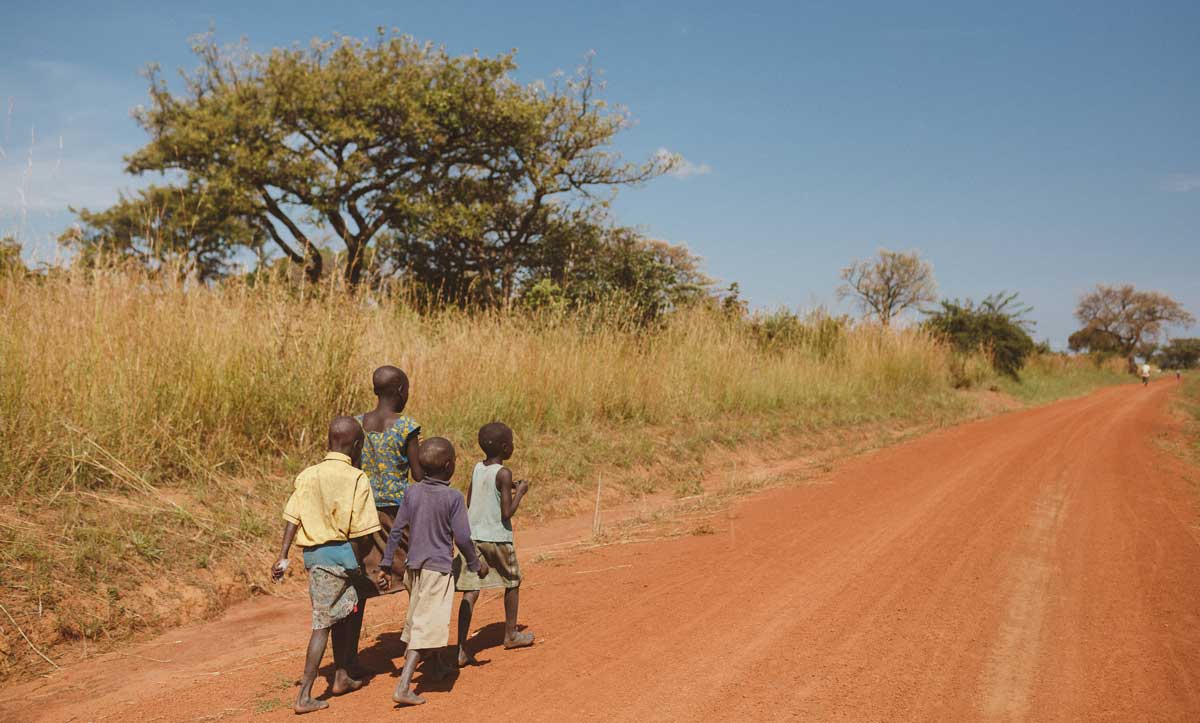
Children wave enthusiastically from village roadsides. Colourful roadside markets appear unexpectedly around a bend. Farmers cycle between fields carrying impossible-looking loads of bananas. Long-horned Ankole cattle graze quietly beside the road while the Rwenzori Mountains dominate the distant skyline.
Travelling through Uganda offers a perspective that simply cannot be appreciated from the air.
It also introduces a completely different set of safety considerations.
Most concerns relate not to crime, but to understanding local driving conditions, planning realistic travel times and appreciating that East African road travel follows a different rhythm from Europe or North America.
Visitors who embrace that rhythm generally discover that Uganda is not a difficult country to travel through. It simply rewards patience over speed.
Is It Safe to Drive in Uganda?
This is one of the first questions many independent travellers ask.
The short answer is yes.
The more useful answer is that driving in Uganda is safe when approached with the correct expectations.
Many online discussions focus almost entirely on road quality or accident statistics without explaining why visitors sometimes find driving more challenging than expected.
The issue is rarely the roads themselves.
It is the pace of travel.
A traveller looking at Google Maps might estimate that a journey of 320 kilometres should take four hours because that would be perfectly reasonable in Europe. In Uganda, the same journey may require considerably longer.
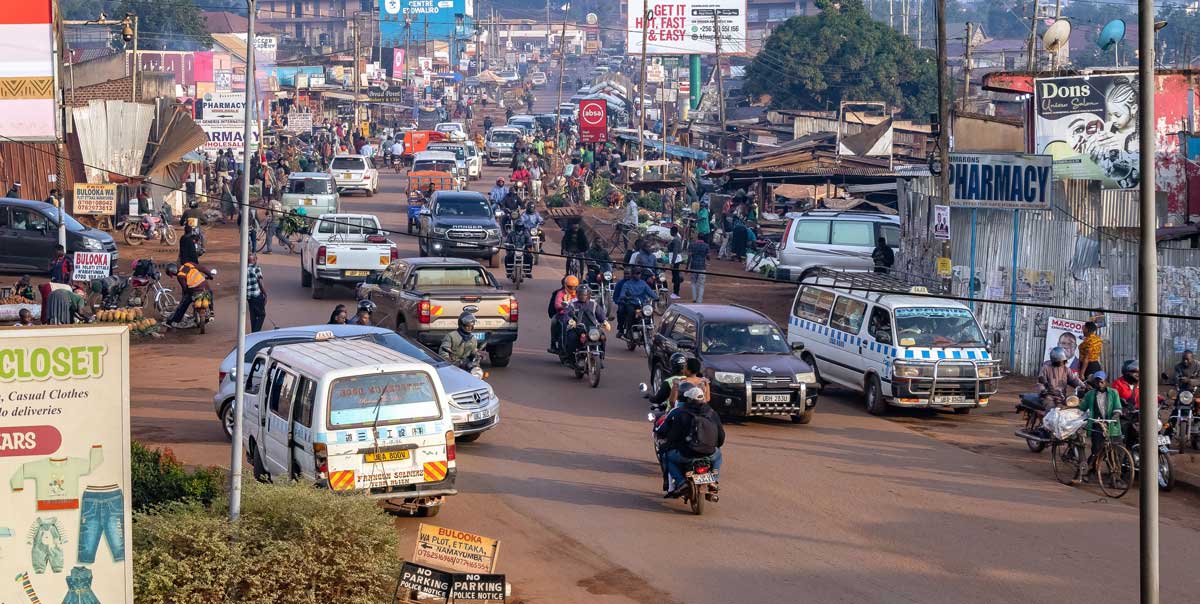
Roads pass through active communities rather than bypassing them.
School children walk beside the road.
Motorcycles weave confidently through traffic.
Livestock cross unexpectedly.
Markets spill naturally towards the roadside.
Police checkpoints encourage reduced speeds.
Occasional roadworks temporarily slow progress.
None of these situations are unusual.
They simply require a more defensive style of driving and an acceptance that African travel is measured by experience rather than average speed.
Visitors who adjust their expectations usually find driving in Uganda surprisingly enjoyable.
Why Most Safari Operators Prefer Road Travel
Many first-time visitors assume flying between parks must be safer than driving.
In Uganda, that is often unnecessary.
Road transport dominates because it allows visitors to appreciate the country’s remarkable diversity while remaining highly practical.
Professional safari companies have refined these routes over decades.
Drivers know where road conditions change.
They understand seasonal weather patterns.
They communicate continuously with lodges.
They know which fuel stations are dependable.
They monitor construction projects and local traffic conditions.
Most importantly, experienced safari guides recognise that travelling itself forms part of the holiday.
A transfer between parks is rarely viewed simply as transport.
It becomes an opportunity to stop at local craft markets, photograph spectacular scenery, visit tea estates, enjoy lunch overlooking a crater lake or watch daily life unfold across rural Uganda.
Professional operators therefore schedule journeys to remain comfortable rather than rushed.
This approach significantly improves both safety and enjoyment.
Visitors often arrive believing the wildlife will become their favourite memory.
Many leave remembering the journey between destinations just as vividly.
Self-Drive Safaris Versus Professional Drivers
Uganda has become increasingly popular among experienced self-drive travellers.
Hiring a four-wheel-drive vehicle offers considerable flexibility and appeals to photographers, birdwatchers and repeat visitors who prefer travelling independently.
However, independence should not automatically be confused with convenience.
Professional drivers provide advantages that many visitors only appreciate once they arrive.
They remove the stress of unfamiliar road rules.
They navigate confidently through busy towns.
They understand local customs.
They coordinate arrival times with accommodation providers.
Most importantly, they allow travellers to concentrate entirely on the experience rather than constantly interpreting road conditions.
That does not mean self-drive holidays should be discouraged.
Far from it.
Visitors with previous African driving experience frequently enjoy outstanding independent holidays throughout Uganda.
The important point is choosing the style of travel that matches both confidence and experience.
Someone undertaking their first safari often gains considerably more by sitting beside an experienced guide than behind the steering wheel.
Understanding Uganda’s Road Network
Uganda’s main tourism routes continue to improve each year through investment in national infrastructure.
Travellers arriving from Entebbe towards Kampala encounter modern highways before connecting with well-maintained tar roads serving many of the country’s major tourism destinations.
Further into rural regions, however, conditions naturally become more variable.
Gravel roads leading towards national parks remain entirely normal.
During the dry season they are generally straightforward.
Heavy rainfall can temporarily alter conditions, creating potholes or slower travel speeds until maintenance teams complete repairs.
This seasonal variation explains why experienced operators rarely promise exact journey times.
Instead, they provide realistic estimates based on current conditions.
Visitors should adopt the same philosophy.
Rather than asking, “How quickly can we get there?”, ask, “What might we discover along the way?”
That simple change in mindset transforms road travel from an obstacle into one of Uganda’s greatest attractions.
Why Night Driving Should Be Avoided Whenever Possible
If there is one recommendation that every experienced safari guide, professional driver and tour operator in Uganda agrees upon, it is this: avoid driving after dark unless it is absolutely necessary.
This advice is not based on fear. It is based on experience.
Uganda’s roads change character significantly once the sun goes down. Rural highways often have little or no street lighting, pedestrians may be walking home wearing dark clothing, bicycles are frequently used without reflective equipment and livestock continue to move freely across roads long after sunset. Add occasional rain, dust or glare from oncoming headlights and reaction times become much shorter than visitors are accustomed to.
For this reason, reputable safari operators build itineraries around daylight travel. Transfers normally begin after breakfast and are planned to arrive well before sunset, allowing guests time to settle into camp before evening activities begin.
Travellers planning independent road trips should follow exactly the same principle. It is better to spend an extra night in a national park or country lodge than to attempt another three or four hours on unfamiliar roads after dark. Besides being the safer option, it also creates opportunities to experience more of Uganda’s landscapes and communities.
Fuel, Vehicle Preparation and Roadside Planning
Visitors who have travelled extensively through Europe or North America often become accustomed to fuel stations every few kilometres and roadside assistance arriving quickly after a breakdown.
Uganda requires a little more planning.
Fuel is readily available in major towns and along the principal tourism routes, but once travellers head towards more remote conservation areas, service stations become less frequent. Experienced drivers therefore adopt a simple rule: refill whenever the opportunity presents itself rather than waiting until the tank is nearly empty.
Vehicle preparation deserves the same attention.
Before leaving Entebbe or Kampala, travellers should ensure that tyres, including the spare, are in good condition, fluids have been checked and essential recovery equipment is available. Even if a breakdown never occurs, these simple checks reduce unnecessary delays and provide peace of mind throughout the journey.
Equally important is planning the day itself. Carry sufficient drinking water, keep mobile phones fully charged, download offline navigation before leaving major towns and let your accommodation know your estimated arrival time. These are straightforward precautions, but together they form the foundation of safe road travel in remote areas.
Police Checkpoints and Driving Etiquette
International visitors are often surprised to encounter police checkpoints while travelling through Uganda.
These checkpoints are a normal part of road policing and should not cause concern.
Professional drivers slow down, remain courteous and provide any requested documentation before continuing their journey. Visitors driving independently should adopt exactly the same approach.
Ensure passports, vehicle registration papers, driving licences and insurance documents are easily accessible. Avoid rushing through checkpoints or attempting to bypass them. The process is generally routine and designed to improve road safety rather than inconvenience travellers.
Driving etiquette also differs slightly from what many visitors expect.
Patience is valued far more than speed. Local drivers may signal differently, motorcycles frequently move through slower traffic and agricultural vehicles are a common sight outside urban centres. Rather than becoming frustrated, experienced visitors simply adapt to the pace of travel.
That adjustment is often one of the defining moments of an African road journey. Instead of measuring progress by kilometres covered, travellers begin to appreciate the landscape unfolding around them.
Mobile Coverage and Staying Connected
Uganda’s mobile network has improved dramatically over the past decade and most visitors are pleasantly surprised by the quality of coverage in towns and along major highways.
Nevertheless, travellers heading towards remote forests, mountainous regions or isolated safari lodges should expect occasional gaps in service.
Rather than relying entirely on a live internet connection, download important information before setting out each morning. Accommodation confirmations, park permits, offline maps, passport copies and travel insurance documents should all remain accessible without mobile data.
Communication becomes particularly important when travelling between destinations that are several hours apart. If plans change because of weather, road conditions or an unexpected delay, informing your accommodation provider allows them to adjust arrival arrangements and prevents unnecessary concern.
Simple communication is one of the easiest ways to reduce travel stress.
Medical Facilities and Emergency Planning
Uganda has modern private hospitals in Kampala and well-established healthcare facilities in several regional centres. However, travellers exploring national parks should understand that advanced medical care may be some distance away.
Fortunately, Uganda’s tourism industry has considerable experience managing emergencies involving international visitors.
Safari lodges maintain communication with regional authorities, guides receive first-aid training and professional operators understand the procedures required if specialist medical care becomes necessary.
Preparation remains essential.
Travellers should carry adequate supplies of prescription medication, copies of prescriptions, travel insurance information and details of any allergies or existing medical conditions. Those undertaking gorilla trekking or more physically demanding activities should also ensure that their fitness matches the demands of the itinerary.
Good planning is rarely noticed when everything goes well.
It becomes invaluable when circumstances change unexpectedly.
Why Travel Insurance Is Essential for Uganda
One of the most common mistakes travellers make is assuming that travel insurance exists only to protect against cancelled flights or lost luggage.
For destinations such as Uganda, its greatest value often lies elsewhere.
Medical evacuation, specialist treatment, transport coordination and emergency accommodation can become extremely expensive without comprehensive insurance.
Fortunately, serious incidents involving international visitors remain uncommon.
However, travelling through remote conservation areas means that assistance occasionally requires aircraft, specialist vehicles or coordinated transfers between healthcare providers.
Comprehensive travel insurance provides the financial framework that allows these arrangements to take place quickly.
Before travelling, visitors should also understand exactly what their policy covers, particularly regarding adventure activities, gorilla trekking and emergency evacuation.
How TravelSafe SOS Supports Travellers Across Uganda
Planning reduces risk, but no traveller can eliminate uncertainty entirely.
Vehicles occasionally break down.
Flights are delayed.
Medical emergencies occur without warning.
Weather changes unexpectedly.
The question is not simply how to avoid these situations, but how quickly assistance can be coordinated when they occur.
TravelSafe SOS was developed specifically for this challenge.
If a traveller activates the SOS function, the alert is transmitted immediately to the TravelSafe SOS Control Centre together with the traveller’s location. From there, experienced coordinators assess the situation and begin organising the most appropriate response.
Depending on the circumstances, this may involve arranging emergency medical assistance, coordinating roadside support, communicating with accommodation providers, notifying travel insurers, updating travel agents or informing nominated next of kin.
The value lies in coordination.
Instead of trying to contact multiple organisations individually during a stressful situation, travellers have one professional point of contact capable of bringing all the necessary parties together.
That continuity remains available throughout Southern and East Africa, making it particularly valuable for travellers combining Uganda with Rwanda, Kenya, Tanzania, Zambia, Zimbabwe, Botswana, Namibia, Mozambique or South Africa within the same holiday.
Final Thoughts
Uganda is one of Africa’s great road-travel destinations.
Its national parks, mountain forests, lakes and welcoming communities are connected by journeys that become an integral part of the safari experience rather than simply the route between attractions.
Travelling safely in Uganda does not require extraordinary precautions.
It requires realistic expectations.
Allow more time than you think you need. Travel during daylight whenever possible. Choose experienced operators if you are unfamiliar with African driving conditions. Keep your plans flexible enough to accommodate changing weather and road conditions.
Visitors who adopt this approach usually discover something unexpected.
The journey itself becomes every bit as memorable as seeing mountain gorillas, watching lions climb fig trees or standing beside the Nile.
Travel Uganda with Confidence
Whether you are planning a self-drive adventure, a professionally guided safari or a tailor-made journey through East Africa, preparation is your greatest travelling companion.
Before leaving home, download TravelSafe SOS and travel with the reassurance that professional emergency coordination is available whenever and wherever you need it.