
Understanding Uganda Travel Safety in a Diverse Travel Environment
Uganda occupies a distinctive position within East Africa’s tourism landscape. The country offers extraordinary biodiversity, including mountain gorilla trekking in Bwindi Impenetrable Forest, chimpanzee tracking in Kibale Forest, classic savannah safaris in Queen Elizabeth National Park, and river adventures along the Nile near Jinja. This variety of environments makes Uganda one of Africa’s most rewarding travel destinations, but it also means that safety considerations are shaped by multiple operational factors rather than a single risk category.
Uganda travel safety must therefore be evaluated through a layered model. Visitors move between urban centers such as Kampala and Entebbe, remote rainforest parks, mountainous terrain, rural communities, and major rivers. Each environment introduces different exposure variables.
The country itself is generally stable and tourism infrastructure has improved steadily over the past two decades. However, the surrounding region includes areas of geopolitical sensitivity, particularly along certain borders. Uganda’s safety profile therefore combines relatively secure tourism corridors with a broader regional context that travelers should understand.
For practical travel planning, the most relevant safety considerations in Uganda typically involve:
- wildlife trekking environments
- road transport conditions
- healthcare access outside major cities
- opportunistic urban crime
- border region awareness
- environmental and health exposure
Travelers using established safari operators and structured itineraries usually experience Uganda as a welcoming and manageable destination. Understanding the diversity of travel environments simply helps ensure that preparation matches the realities of the journey.
National Stability and the Regional Security Context
Uganda has experienced long periods of relative political stability compared with several neighboring countries. The central government maintains strong control across most of the country, and major tourism destinations operate within stable administrative structures.
Kampala, the capital, is a busy regional city with growing infrastructure and an active commercial environment. While political debate and occasional demonstrations can occur, these events rarely affect tourism routes or wildlife destinations.
Regional context is still relevant because Uganda shares borders with South Sudan, the Democratic Republic of Congo, Rwanda, Kenya, and Tanzania. Certain border regions, particularly those adjacent to eastern Congo, occasionally experience heightened security monitoring due to instability across the frontier.
However, the majority of Uganda’s tourism areas remain well separated from these dynamics. Bwindi Impenetrable Forest, Queen Elizabeth National Park, Murchison Falls National Park, Kibale Forest, and the Nile corridor around Jinja are all established tourism regions with regular visitor traffic.
For travelers, the practical implication is not that Uganda is unsafe, but that route planning and awareness of official travel advisories remain sensible when moving close to international borders.
Tourism Geography and How Risk Varies Across Uganda
Uganda’s safety conditions differ significantly depending on location and activity.
Entebbe
Most international travelers arrive through Entebbe International Airport, located on the shores of Lake Victoria. The town is relatively calm compared with Kampala and serves as a gateway for many safari itineraries.
Kampala
Uganda’s capital city is energetic and densely populated. Traffic congestion, opportunistic theft, and informal transport services represent the main risks for visitors.
Bwindi Impenetrable Forest
This mountainous rainforest is home to half of the world’s remaining mountain gorillas. Trekking routes are steep and physically demanding, making terrain and weather the primary safety considerations.
Queen Elizabeth National Park
A classic savannah ecosystem with lions, elephants, buffalo, and hippos. Safari safety considerations here are similar to other African wildlife reserves.
Murchison Falls National Park
Uganda’s largest national park. Long driving distances and wildlife exposure are the main safety variables.
Jinja and the Nile River
Adventure tourism such as white water rafting and kayaking introduces physical activity risk similar to that found around Victoria Falls.
Understanding these geographic differences allows travelers to anticipate which types of exposure are most relevant at each stage of the journey.
Urban Safety and Crime Exposure
Crime affecting tourists in Uganda is generally opportunistic rather than violent. As in many cities worldwide, busy urban areas present higher exposure than controlled tourism environments.
The most common incidents affecting travelers involve:
- pickpocketing in crowded markets
- phone theft in nightlife areas
- bag snatching from pedestrians
- theft from unattended vehicles
- overcharging by informal transport providers
Visitors are most exposed when navigating unfamiliar areas late at night or carrying visible valuables. Kampala’s vibrant nightlife scene can also increase vulnerability when travelers combine alcohol consumption with unfamiliar surroundings.
Using hotel recommended transport, securing passports and excess cash in accommodation safes, and avoiding poorly lit areas after dark significantly reduce exposure.
Uganda’s tourism regions generally present far lower crime exposure than its largest urban centers.
Gorilla Trekking and Forest Environment Safety
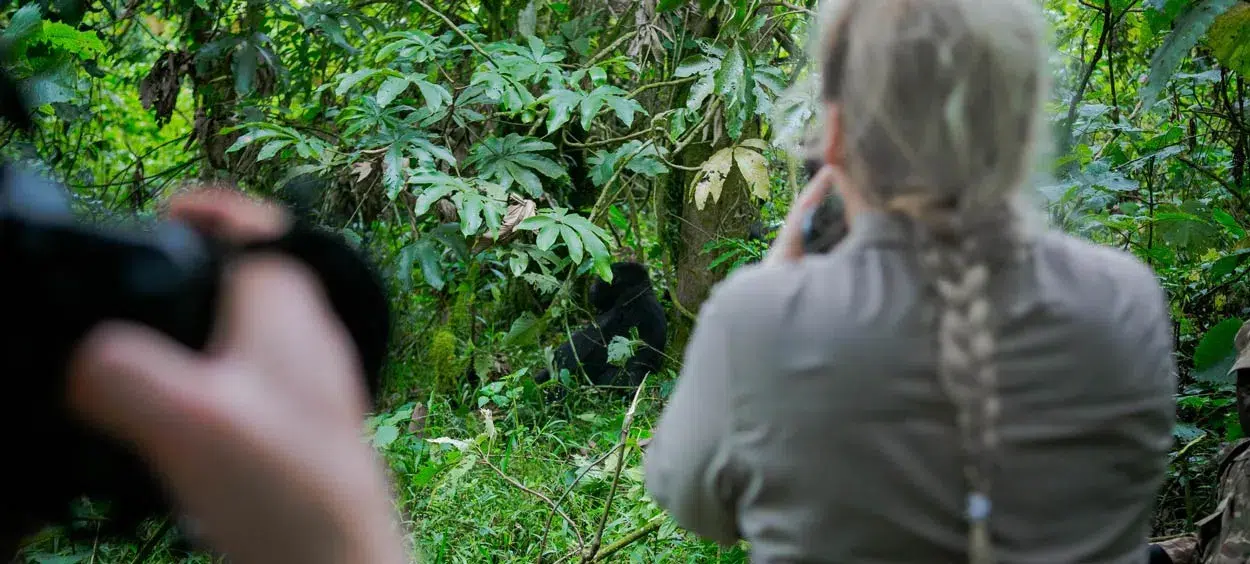
Mountain gorilla trekking is the highlight of many Uganda itineraries and one of Africa’s most unique wildlife experiences. Trekking takes place in Bwindi Impenetrable Forest and occasionally in Mgahinga Gorilla National Park.
The primary risks associated with gorilla trekking are not wildlife aggression but physical terrain and environmental conditions.
Important considerations include:
- steep forest slopes and uneven ground
- slippery trails during rainfall
- altitude and physical exertion
- thick vegetation and limited visibility
- extended trekking hours depending on gorilla location
Visitors are always accompanied by trained park rangers and trackers who monitor wildlife behavior and guide groups safely through the forest. These professionals manage distances between visitors and gorillas while maintaining strict health and conservation protocols.
Travelers who follow guide instructions, wear appropriate footwear, and prepare physically for the trek usually complete the experience safely. The most common problems are fatigue, minor injuries such as sprains, and dehydration rather than dangerous wildlife encounters.
Road Transport and Mobility Risk
Road travel represents one of the most practical safety considerations for visitors moving through Uganda. Many tourism destinations require long drives between parks and cities, often along rural highways where road conditions vary.
Common road safety variables include:
- heavy traffic around Kampala
- potholes and uneven surfaces on rural roads
- livestock crossing highways
- limited lighting during night driving
- motorcycle taxis operating in urban areas
Motorcycle taxis, known locally as boda bodas, are a common form of transport in cities but carry significantly higher accident risk than private vehicle transfers.
Most safari itineraries include professional drivers who are familiar with wildlife routes and rural road conditions. Using experienced drivers and avoiding night driving significantly reduces accident exposure.
For many travelers, transport risk statistically exceeds wildlife or crime related risks during their trip.
Healthcare Infrastructure and Emergency Evacuation
Uganda’s healthcare system is improving but remains uneven across the country. Kampala and Entebbe host several private hospitals and clinics capable of providing emergency stabilization and treatment for common medical conditions.
However advanced trauma care and specialist services are limited outside major urban centers. Remote parks such as Bwindi or Murchison Falls may be several hours from hospitals capable of handling complex injuries.
In serious medical emergencies, evacuation may involve:
- stabilization at a local clinic
- ground transfer to a regional hospital
- air evacuation to Kampala
- onward evacuation to Nairobi or another regional medical hub
Because of the remote nature of many tourism destinations, travel insurance that includes emergency evacuation coverage is strongly recommended for anyone visiting Uganda.
Effective emergency coordination becomes particularly important when incidents occur in remote parks or mountainous regions.
Health and Environmental Exposure
Uganda’s tropical climate and diverse ecosystems introduce several environmental health considerations that travelers should plan for before arrival.
Health related risks include:
- malaria exposure in many regions
- mosquito borne diseases
- dehydration in hot conditions
- waterborne illnesses where sanitation is limited
- altitude adjustment during mountain trekking
Travelers should seek professional medical advice regarding vaccinations and preventative medication prior to travel.
Seasonal weather patterns can also affect travel logistics. Heavy rainfall during certain months may slow road travel or affect trekking conditions in forest environments.
While these health and environmental factors are manageable with preparation, they remain important components of travel safety planning in Uganda.


Operational Preparedness for Travel in Uganda
Safe travel in Uganda relies heavily on structured planning and the use of experienced operators. Visitors moving through safari parks, rainforests, and river environments benefit from local knowledge and logistical coordination.
Effective safety planning includes:
- booking wildlife trekking through licensed park authorities
- using reputable safari operators and guides
- arranging transfers with experienced drivers
- carrying travel insurance that includes evacuation coverage
- maintaining awareness in urban environments
- preparing physically for trekking activities
Uganda is not characterized by widespread violence against tourists. Instead, the country presents a dynamic travel environment where terrain, distance, and activity choice influence the safety equation.
TravelSafe SOS provides centralized emergency coordination across Uganda’s tourism network including Kampala, Entebbe, Bwindi, Queen Elizabeth National Park, Murchison Falls, and the Nile adventure corridor. This coordination strengthens response capability where terrain, wildlife environments, or healthcare limitations may affect emergency logistics.
Frequently Asked Questions
Is Uganda safe for tourists
Uganda is generally considered safe for tourists who travel through established tourism routes and use reputable operators. The country’s main risks relate to road transport conditions, trekking environments, and healthcare access rather than widespread violent crime.
Is gorilla trekking safe in Uganda
Gorilla trekking in Uganda is safe when conducted through licensed park authorities and trained ranger guides. Visitors are closely supervised and strict rules are followed to ensure both human and wildlife safety. The main risks involve steep terrain, weather conditions, and physical exertion rather than dangerous wildlife encounters.
Is Kampala safe for visitors
Kampala is a busy urban center where petty crime can occur, particularly in crowded markets or nightlife areas. Visitors who remain aware of their surroundings, avoid carrying visible valuables, and use trusted transport providers generally navigate the city safely.
Are Uganda’s national parks safe to visit
Uganda’s national parks are considered safe when visitors follow guide instructions and remain within designated areas. Wildlife moves freely in these environments, so guided game drives and ranger supervision are essential for maintaining safe distances from animals.
Does Uganda have good hospitals
Uganda has several private hospitals in Kampala and Entebbe capable of providing emergency medical care. However advanced treatment may require evacuation to a regional medical hub such as Nairobi. Travel insurance with evacuation coverage is recommended.
What is the biggest safety risk for travelers in Uganda
For many visitors the greatest safety risks involve road travel and the physical demands of trekking rather than crime. Long driving distances and mountainous terrain make transport safety and physical preparation important aspects of travel planning.