Travel Safety App vs Insurance for Africa Travel: The 2026 Comparison Guide
Travel to Africa in 2026 continues to grow, yet many visitors still misunderstand the difference between Travel Safety App vs Insurance for Africa Travel. Insurance is essential for financial protection, but it does not provide real-time emergency help. A travel safety app, however, covers the operational and coordination gap that insurance cannot fill.
Across South Africa, Namibia, Mozambique, Tanzania, Kenya, Rwanda, Uganda, Zambia, and Zimbabwe, instant response is critical. In these regions, distances are large, mobile reception is inconsistent, and emergency systems differ from country to country. This is why understanding Travel Safety App vs Insurance for Africa Travel is now a fundamental part of trip planning.
Why Traditional Travel Insurance Is Not Emergency Response
Many travelers believe insurance will dispatch help during a crisis. It does not. Insurance protects finances after the event, but it does not manage the emergency itself.
Insurance generally does not:
- Send responders to your exact GPS coordinates
- Provide guidance during live security incidents
- Coordinate rescue logistics in remote areas
- Track your phone if you go missing
- Contact lodges, operators, or family for you
- Provide continuous support during unfolding emergencies
With Travel Safety App vs Insurance for Africa Travel, the comparison is clear: insurance handles reimbursement, not crisis management.
What a Travel Safety App Provides That Insurance Cannot
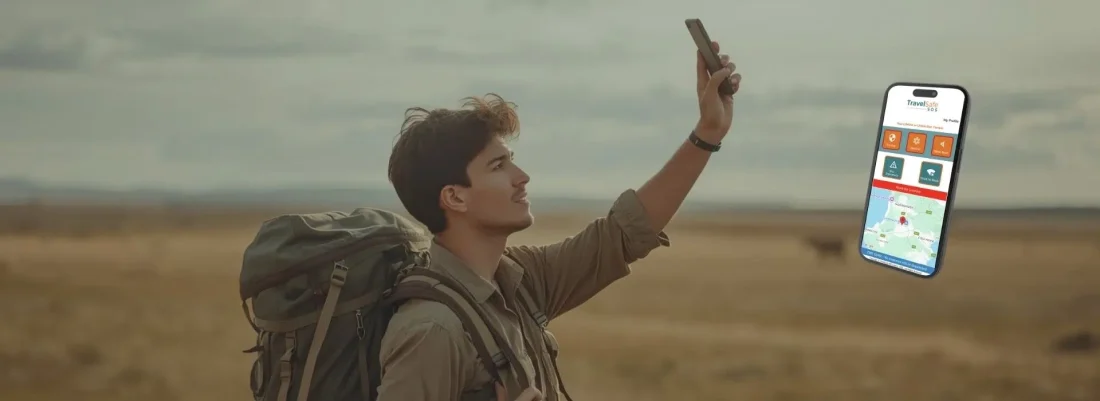
A travel safety app is built specifically for live emergencies in Africa. The moment you press the SOS button, a 24/7 control center calls you back, identifies your location, and activates responders.
A professional safety app offers:
- Real-time geolocation
- Immediate human assistance
- Coordination with local medical and security teams
- Notifications to insurers, agents, and next of kin
- Coverage across multiple African countries
- Support in areas with poor signal using last known GPS
This is the operational half of the Travel Safety App vs Insurance for Africa Travel equation — the part that saves time and reduces risk.
Why Speed of Response Matters in Africa
Africa’s landscapes and infrastructure make fast intervention essential. Safari parks, rural roads, islands, and mountain regions all create situations where minutes matter.
Common emergencies requiring rapid activation:
- Road accidents on remote highways
- Injuries on safari or during bush walks
- Marine incidents on boats or snorkeling trips
- Sudden medical issues far from hospitals
- Getting lost in areas with no formal address systems
Insurance will pay later.
A safety app helps now.
Security Emergencies: The Biggest Weakness of Travel Insurance
Most insurance policies exclude help during security issues. They do not guide you if you feel unsafe, experience confrontation, or become stuck near unrest.
A travel safety app can help with:
- Urban safety threats
- Aggressive encounters on the road
- Suspicious driver behavior
- Forced route changes
- Protest areas or localized disruptions
- Missing persons situations
This is the most important distinction in Travel Safety App vs Insurance for Africa Travel — real-time help does not exist in standard insurance.
Why Travelers Need Both Tools Working Together
Insurance protects your finances.
A travel safety app protects your life.
Together, they offer:
- Full financial cover for medical costs
- Immediate human-led triage and guidance
- Real-time GPS-based response
- Support across 17 TravelSafe SOS countries
- Peace of mind for solo travelers, families, and groups
For Africa travel in 2026, the combination is now considered best practice.
FAQS Travel Safety App vs Insurance for Africa Travel
Why is a travel safety app necessary if I already have insurance for Africa travel?
Insurance covers financial losses, but it cannot coordinate real-time rescue or medical response. A travel safety app fills this operational gap by immediately calling you back, seeing your GPS location, and activating responders within minutes. In Africa—where distances, network issues, and limited infrastructure slow down traditional emergency support—having both tools ensures maximum protection.
Does travel insurance provide real-time help during a safari emergency?
No. Insurance reimburses medical costs but does not coordinate on-the-ground help during a wildlife incident, hiking injury, or remote-area emergency. A safety app, however, connects you instantly to a 24/7 control center trained specifically for Africa’s safari environments, ensuring responders reach you quickly.
Will travel insurance track my location if I go missing in Africa?
Insurance does not have GPS tracking or monitoring capabilities. A travel safety app stores your last known location, shares live pins with the control center, and assists responders in finding you even if your signal drops. This is crucial in deserts, national parks, islands, and rural zones.
Can a safety app help during urban security threats that insurance excludes?
Yes. Insurance rarely assists with crime-related situations. A safety app provides live guidance if you feel unsafe, encounter aggressive behavior, or get caught near unrest. Operators remain on the line, escalate to security partners, and guide you step-by-step to safety.
Which responds faster during a medical emergency in Africa, insurance or a safety app?
A safety app responds immediately. Insurance often requires long call center queues, paperwork, and pre-authorization. TravelSafe SOS calls you back in minutes, coordinates local medical teams, and helps guide responders directly to your GPS location.
Does a travel safety app still work with poor mobile signal?
Yes. Safety apps store your last known GPS position and push your alert as soon as even a tiny amount of signal returns. This feature is vital in rural or wilderness areas. Insurance cannot function without a stable phone call.
Should families and solo travelers use both insurance and a safety app in Africa?
Absolutely. Solo travelers may have no one nearby to help, and families can become separated or overwhelmed during an emergency. A safety app notifies your chosen contacts automatically, coordinates local support, and acts as your real-time lifeline while insurance manages the financial side of the incident.

