
Malaria remains the single most important travel health risk for visitors exploring Southern and East Africa. The disease is entirely preventable in many cases and highly treatable when recognised early, yet it continues to cause unnecessary illness because travellers misunderstand where the real risks lie. Understanding malaria before you travel is one of the most valuable investments you can make in a safe African holiday.
Malaria Is One of the Few Travel Risks You Can Predict
Ask experienced safari guides what concerns first-time visitors most and the answers are usually predictable.
Lions.
Elephants.
Political instability.
Remote wilderness.
Very few people mention malaria.
Ironically, malaria is responsible for far more serious illness among international travellers than dangerous wildlife. The difference is that wildlife attracts attention while mosquitoes do not. A traveller instinctively respects an elephant standing beside the road. Very few give the same level of thought to a mosquito bite during dinner on the deck of a luxury safari lodge.
This difference in perception explains why malaria continues to concern travel medicine specialists despite enormous advances in prevention and treatment.
The disease itself is well understood.
The parasite has been studied extensively.
Excellent preventive medication exists.
Rapid diagnostic tests are widely available.
Modern treatment is highly effective when started early.
The greatest danger today is not a lack of medical knowledge.
It is delay.
Travellers delay seeking advice before departure because they assume malaria is someone else’s problem.
They delay using insect repellent because they have not seen many mosquitoes.
They delay seeking treatment because early symptoms resemble influenza or simple travel fatigue.
Each of these delays increases unnecessary risk.
The encouraging news is that malaria behaves in remarkably predictable ways.
It depends on geography.
It depends on altitude.
It depends on climate.
It depends on rainfall.
Understanding these four factors immediately explains why malaria risk changes dramatically across Southern and East Africa and why one traveller may require prophylaxis while another visiting the same country may not.
The objective of this guide is not to create anxiety.
It is to replace uncertainty with understanding.
Millions of people safely visit Africa every year because they prepare properly, understand where exposure occurs and respond quickly if symptoms develop.
Malaria should be managed with respect rather than fear.
Understanding How Malaria Really Spreads
One of the most common misconceptions among travellers is that malaria exists everywhere within an affected country.
It does not.
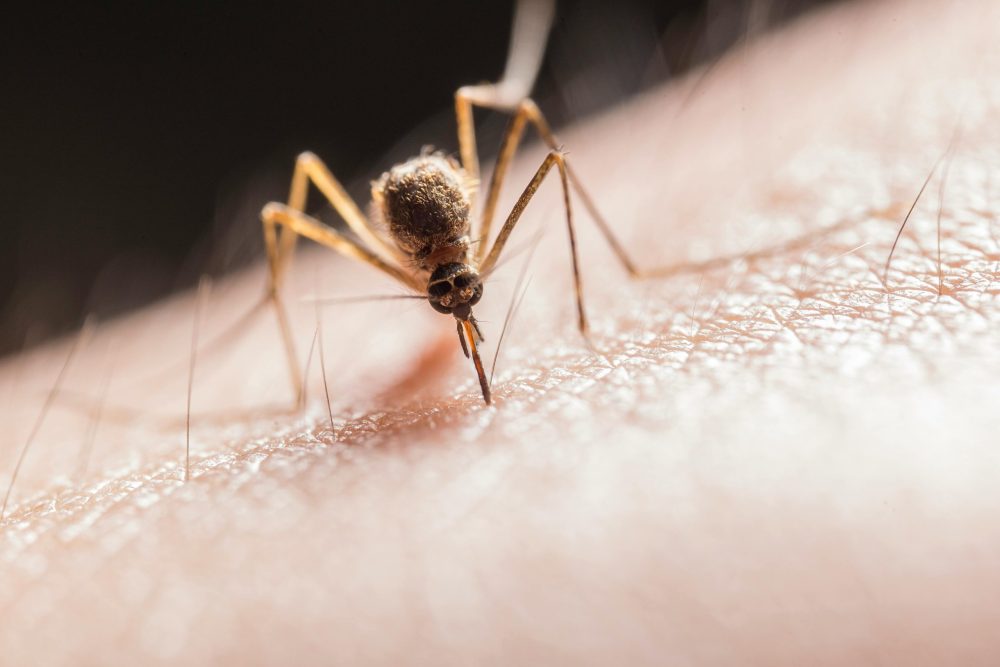
Malaria is caused by parasites transmitted through the bite of infected female Anopheles mosquitoes. Those mosquitoes thrive only under particular environmental conditions. Warm temperatures, standing water, humidity and suitable breeding habitats all influence transmission. Remove one or more of these factors and malaria risk falls significantly.
This is why altitude is so important.
Cities situated well above sea level often experience much lower malaria transmission because cooler night-time temperatures interrupt the mosquito’s life cycle. Coastal plains, river valleys and floodplains, by contrast, provide ideal breeding conditions throughout much of the year.
Rainfall also plays an important role.
Following seasonal rains, temporary pools of standing water become breeding sites for mosquitoes, increasing their numbers over the weeks that follow. This explains why malaria transmission often rises after rainy seasons rather than during them.
For travellers, this means risk is neither random nor constant.
A luxury beach resort on the Indian Ocean may present a higher malaria risk than a remote mountain lodge because climate, rather than accommodation quality, determines mosquito activity. Likewise, an expensive safari camp cannot eliminate mosquitoes simply because it offers five-star service.
Mosquitoes do not distinguish between budget travellers and luxury travellers.
They respond only to environmental conditions.
This is why experienced travel doctors rarely begin consultations by asking where you are staying.
Instead they ask where you are travelling.
Your itinerary tells them almost everything they need to know.
Africa Is Not One Malaria Zone
Perhaps the greatest mistake made by travel websites is treating Africa as though it were a single destination.
Nothing could be further from reality.
Southern and East Africa contain extraordinary geographical diversity, and malaria follows those differences closely.
South Africa illustrates this perfectly.
Cape Town, the Garden Route and most of the Western Cape present virtually no malaria risk, while parts of Limpopo, northern KwaZulu-Natal and the Kruger region require seasonal precautions.
Kenya follows a completely different pattern.
Nairobi’s altitude makes malaria relatively uncommon, yet the coast around Mombasa, Diani Beach and the Lake Victoria Basin presents substantially higher exposure.
Botswana demonstrates another variation.
Much of the country remains low risk for large parts of the year, while northern regions including Chobe National Park and parts of the Okavango Delta experience seasonal malaria transmission.
Mozambique presents one of the highest overall malaria burdens in Southern Africa, particularly along the coastline, river systems and lowland regions.
Tanzania combines low-risk highlands with higher-risk coastal districts, wildlife reserves and Zanzibar.
Uganda experiences malaria across much of the country, while Rwanda generally records lower overall transmission because of altitude, although localised risk remains in some lower-lying districts.
These examples illustrate why general advice often creates confusion.
Travellers do not need to memorise malaria maps.
They need to understand that risk changes with geography.
Once that principle becomes clear, discussions about medication and prevention become much more logical.
Do All Travellers Need Malaria Tablets?
This is probably the single most common question asked at travel clinics, yet it has no universal answer.
The correct recommendation depends on your itinerary rather than your destination country alone.
A business traveller attending meetings in Cape Town for four days has a completely different risk profile from a family combining the Kruger National Park with Mozambique, or a honeymoon couple spending a week on Zanzibar after a Serengeti safari. Even within the same country, two visitors may receive different medical advice because one remains in high-altitude cities while the other spends time in coastal districts or low-lying wildlife reserves.
For this reason, malaria prevention should always begin with a consultation at a travel clinic or with a healthcare professional experienced in travel medicine.
The medications most commonly prescribed for Southern and East Africa include atovaquone-proguanil (widely known by the brand name Malarone), doxycycline and mefloquine. Each has advantages and disadvantages depending on the traveller’s age, medical history, pregnancy status, planned activities and the length of the journey.
No medication is perfect.
Some people experience mild side effects while others tolerate them extremely well. Some medicines are taken daily, while others begin before departure and continue after returning home. Choosing the correct option is therefore an individual medical decision rather than a recommendation that should be copied from internet forums or social media groups.
Travellers sometimes ask whether prophylaxis is necessary if they are staying in luxury safari lodges.
The answer is simple.
Mosquitoes are influenced by geography, rainfall and temperature, not by accommodation prices.
Luxury lodges invest heavily in mosquito management, screened rooms, air conditioning and environmental control, but these measures reduce exposure rather than eliminate it. Medication and mosquito avoidance should be viewed as complementary strategies that work together rather than alternatives from which travellers choose only one.
The Most Effective Prevention Begins Before Sunset
One of the reasons malaria remains such a persistent travel health issue is that many visitors assume prevention begins when they swallow a tablet.
In reality, medication is only one layer of protection.
The most effective malaria prevention strategy combines several simple habits that together reduce the likelihood of infection dramatically.
Most malaria-carrying mosquitoes are active from dusk until dawn. This means that the period immediately before sunset becomes one of the most important parts of the day for travellers in malaria-risk regions. Applying a high-quality insect repellent before evening activities, wearing lightweight long-sleeved clothing where practical and choosing accommodation with screened windows or air conditioning all reduce exposure during the hours when mosquitoes are most active.
Experienced safari guides often notice a pattern among repeat visitors.
They rarely need reminding to apply repellent.
They instinctively carry lightweight clothing for evening game drives.
They understand that sitting beside a river at sunset is one of Africa’s great pleasures, but they also know it is precisely the environment where mosquitoes become more active.
These habits soon become routine.
Rather than limiting enjoyment, they allow travellers to relax because they know they have already reduced their risk as much as reasonably possible.
Good malaria prevention is therefore not complicated.
It is simply consistent.
The Symptoms Most Travellers Mistake for Flu
If there is one message that every traveller should remember after reading this guide, it is this:
Never ignore a fever after visiting a malaria-risk area.
Malaria rarely announces itself dramatically.
It usually begins quietly.
A mild headache.
Muscle aches.
Fatigue.
A slight fever.
Chills.
Many travellers assume they have caught influenza on the flight home, become dehydrated after several days on safari or simply need a good night’s sleep after travelling.
Unfortunately, malaria often looks exactly like these far more common conditions during its earliest stages.
The difference is that malaria can deteriorate rapidly if treatment is delayed.
Fortunately, modern diagnosis is straightforward.
Rapid diagnostic tests and blood smears are widely available throughout Africa’s larger private hospitals and are routinely used by clinicians familiar with tropical diseases. Treatment is highly effective when started promptly, particularly for Plasmodium falciparum, the species responsible for most severe malaria across Southern and East Africa.
Symptoms may develop during the holiday itself or several weeks after returning home.
This is where many international travellers encounter difficulties.
Doctors working in countries where malaria is uncommon may not immediately suspect it unless patients specifically mention recent travel to Africa.
For that reason, always tell medical staff exactly where you have travelled.
Mention every country visited, including safari destinations, coastal regions and rural areas.
That information is often the key that leads to an immediate malaria test rather than an incorrect diagnosis.
What Happens If You Become Ill on Safari?
One of the greatest concerns for travellers is the thought of developing malaria hundreds of kilometres from a major hospital.
While the situation sounds alarming, professional safari operators prepare for exactly these circumstances.
Remote tourism has always required careful planning.
Safari guides receive first-aid training.
Lodge managers understand emergency procedures.
Communication systems connect camps with regional medical providers.
Air evacuation companies operate throughout many parts of Southern and East Africa.
Should a guest develop symptoms consistent with malaria, the response generally begins immediately.
Initial assessment takes place at the lodge or camp before medical professionals are consulted. Depending on the location and the severity of symptoms, the traveller may be transported by road to a nearby clinic, transferred by scheduled aircraft or evacuated by specialist medical aviation services to an appropriate hospital.
The important point is that these situations are not unfamiliar.
They have established procedures.
The challenge is rarely deciding that medical care is needed.
The challenge is ensuring that everyone involved receives accurate information quickly enough to begin coordinating the response.
In remote environments, communication often becomes just as important as medical treatment itself.
Why TravelSafe SOS Makes Such a Difference
Travellers often imagine that the biggest obstacle during a medical emergency is finding a hospital.
In reality, the greater challenge is usually coordination.
Imagine a family staying in a remote safari concession.
One traveller develops a high fever overnight.
The lodge manager contacts a doctor.
The insurer needs medical information.
The evacuation provider requires the exact location.
Family members back home want updates.
The travel consultant is trying to rearrange flights.
Every organisation is working towards the same objective, yet without coordination valuable time can easily be lost.
TravelSafe SOS was created specifically to solve this problem.
When the SOS function is activated, the TravelSafe SOS Control Centre immediately receives the traveller’s location and begins assessing the situation. Experienced coordinators communicate with medical providers, accommodation, evacuation services, insurers, travel agents and nominated next of kin while ensuring that accurate information flows between everyone involved.
This coordinated approach reduces confusion during precisely the period when travellers are least able to manage multiple conversations themselves.
The service operates across the countries covered by TravelSafe SOS, allowing travellers to move confidently between South Africa, Namibia, Botswana, Zimbabwe, Mozambique, Zambia, Malawi, Tanzania, Zanzibar, Kenya, Uganda, Rwanda, Eswatini, Lesotho, Mauritius, Madagascar and the Seychelles with continuous emergency support throughout their journey.
Final Thoughts
Malaria remains one of Africa’s most significant travel health considerations, but it is also one of the most manageable.
The overwhelming majority of international visitors complete their journeys without experiencing malaria because they understand that prevention begins before departure and continues throughout the trip. They seek professional medical advice, take appropriate prophylaxis where recommended, avoid mosquito bites as consistently as possible and respond immediately if symptoms develop.
The greatest danger is not the mosquito itself.
It is complacency.
Assuming that luxury accommodation removes the risk.
Believing that a mild fever is “probably just flu.”
Waiting another day before seeking medical advice.
These are the decisions that allow a treatable illness to become a medical emergency.
Africa should never be remembered for anxiety about malaria.
It should be remembered for extraordinary wildlife, remarkable landscapes and unforgettable experiences shared with confidence.
Knowledge makes that confidence possible.
Travel Africa with Confidence
Whether your itinerary includes the Okavango Delta, Kruger National Park, Victoria Falls, Zanzibar, the Serengeti, the Masai Mara or the beaches of Mozambique, preparation remains your most valuable travelling companion.
Download TravelSafe SOS before departure and travel knowing that professional emergency coordination is available throughout Southern and East Africa whenever you need it.
Disclaimer
This guide is intended for travel planning and education only. It is not a substitute for professional medical advice. Always consult a qualified travel medicine practitioner before departure and seek immediate medical assessment if you develop symptoms during or after travel to a malaria-risk area.