
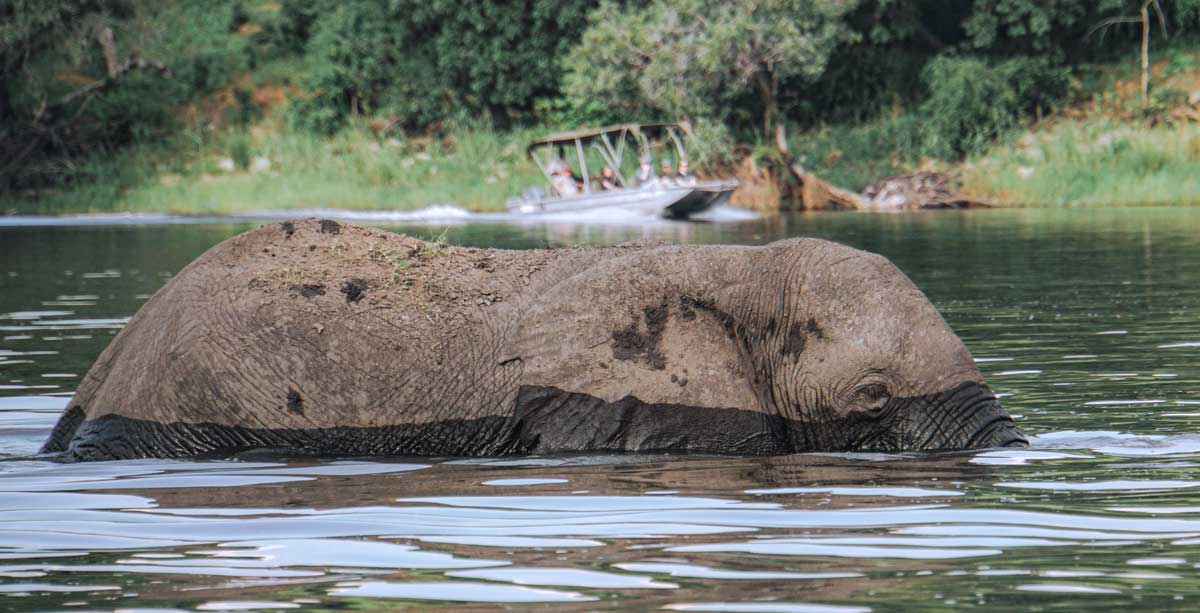
Botswana has built one of Africa’s finest safari industries around small camps, light aircraft and carefully managed wilderness areas. Understanding how these transport systems work will help you travel confidently through one of the continent’s most remarkable destinations.
Botswana Is One of Africa’s Best Organised Safari Destinations
Visitors planning their first holiday to Botswana are often surprised by how different the country feels from many other safari destinations.
In Kenya, much of the experience unfolds across extensive road networks connecting lodges and national parks. Uganda rewards travellers who explore slowly by vehicle, while South Africa combines modern highways with well-developed tourism infrastructure.
Botswana has chosen a different path.
Rather than constructing large resorts or encouraging mass tourism, the country has deliberately developed a low-volume, high-value safari model that protects fragile ecosystems while delivering extraordinary wildlife experiences. Many camps are deliberately small, visitor numbers are carefully managed and some of Africa’s most spectacular wilderness areas remain accessible only by light aircraft or specialised safari vehicles.
For travellers, this creates a holiday unlike almost any other.
Instead of rushing between destinations, visitors move through the country in carefully coordinated stages. A typical itinerary may begin with an international arrival in Maun or Kasane before continuing by light aircraft into the Okavango Delta. From there, safari vehicles, boats or mokoros provide access to landscapes that remain largely untouched by modern development.
The result is a safari experience that feels genuinely wild.
It also means that understanding transport logistics becomes an important part of travelling safely.
Fortunately, Botswana’s tourism industry has spent decades refining these systems. What may initially appear complicated is, in reality, a remarkably well-coordinated network designed specifically for visitors exploring remote wilderness areas.
Why Botswana Relies on Light Aircraft
One of the biggest differences between Botswana and many other African safari destinations is the role played by aviation.
Visitors unfamiliar with the country often wonder why so many itineraries include several short flights rather than longer road transfers.
The answer lies in geography.
Botswana is vast.
The Okavango Delta alone covers thousands of square kilometres, while national parks such as Chobe, Moremi and the Central Kalahari are separated by considerable distances. Building extensive road networks through these fragile ecosystems would fundamentally alter the wilderness that visitors travel to experience.
Light aircraft provide a far more sustainable solution.
They reduce driving times dramatically, minimise environmental impact and allow guests to reach remote camps without disturbing sensitive wildlife habitats.
For many visitors, these flights become one of the highlights of the journey.
Flying at low altitude above elephants moving through floodplains, giraffes feeding beneath acacia trees and winding channels of the Okavango offers a perspective that cannot be experienced from the ground.
The flight itself becomes part of the safari.
Are Light Aircraft Safe?
For travellers who have never flown in a small aircraft, the experience can understandably create some apprehension.
This is especially true for visitors accustomed to large commercial airliners.
In reality, charter aviation forms the backbone of Botswana’s safari industry and has done so successfully for many decades.
Aircraft operate under civil aviation regulations and are flown by commercial pilots who specialise in remote operations. These pilots become exceptionally familiar with local weather patterns, bush airstrips and the operational requirements of safari tourism.
Unlike scheduled airline travel, flights remain flexible.
If visibility deteriorates, crosswinds become excessive or storms develop along the planned route, departures may be delayed or rescheduled.
Visitors occasionally view these delays as inconvenient.
Experienced operators see them differently.
Postponing a flight demonstrates that safety is taking priority over schedule.
The willingness to delay departures when conditions require it is one of the strongest indicators of a professional aviation culture.
Travellers should therefore embrace flexibility rather than expecting airline-style precision in remote wilderness environments.
Bush Airstrips and First Impressions
Landing on a bush airstrip is often one of the defining memories of a Botswana safari.
There are no large terminals.
No baggage carousels.
No jet bridges.
Instead, visitors step directly from the aircraft into one of Africa’s great wilderness landscapes.
It is not unusual to see zebra grazing near the runway or elephants crossing nearby shortly before an aircraft lands.
To newcomers this can appear extraordinary.
To experienced safari operators it is entirely normal.
Bush airstrips are carefully managed and inspected before aircraft arrive. Ground staff and guides check that wildlife has moved away before landing is authorised, and pilots communicate continuously throughout the process.
Visitors are then welcomed by their guide before travelling the final distance to camp in specially adapted safari vehicles.
The transition from aircraft to wilderness happens within minutes.
It is one of Botswana’s unique strengths.
Rather than spending hours transferring through busy airports or urban traffic, visitors find themselves immersed almost immediately in one of the world’s last great wilderness areas.
Road Transfers: Slow Travel by Design
Not every journey in Botswana takes place in the air.
Road transfers remain an essential part of most itineraries, particularly around Chobe National Park, the Makgadikgadi Pans and areas surrounding Maun and Kasane.
First-time visitors occasionally become impatient because these journeys progress more slowly than expected.
That is entirely intentional.
Safari roads are not highways.
They are part of the experience.
Vehicles frequently pause for elephant crossings, lion sightings or herds of antelope moving through the landscape. Guides interpret tracks in the sand, identify birds overhead and explain the ecology of the surrounding environment as they drive.
The destination certainly matters.
But in Botswana, the journey itself is equally important.
Visitors who stop measuring progress by kilometres travelled quickly discover why Botswana consistently ranks among Africa’s finest safari destinations.
The transport system has been designed not simply to move people, but to immerse them in the wilderness from the moment they arrive.
Self-Drive Safaris: Freedom Comes with Responsibility
Botswana has become one of Africa’s premier destinations for experienced self-drive travellers. The attraction is easy to understand. A well-equipped four-wheel-drive vehicle allows visitors to explore remarkable landscapes at their own pace, spend longer at wildlife sightings and enjoy a level of independence that is increasingly difficult to find elsewhere.
That freedom, however, comes with greater responsibility than many first-time visitors anticipate.
Driving in Botswana is fundamentally different from driving in Europe, North America or Australia. Outside the major towns, many routes pass through genuine wilderness where veterinary fences, fuel stations and roadside assistance may be separated by considerable distances. Deep sand, seasonal floodwaters and rough tracks are all part of the experience rather than unexpected obstacles.
None of these conditions should discourage independent travel.
They simply mean that Botswana rewards preparation.
Travellers who research their route carefully, carry the correct equipment, understand the limitations of their vehicle and allow generous travel times generally find Botswana one of the most rewarding self-drive destinations in Africa.
Those who attempt to rush between destinations or underestimate the environment often discover that nature sets the timetable.
Understanding Driving Conditions in Botswana
One of the most common mistakes made by visitors is assuming that road conditions remain consistent throughout the country.
They do not.
Around Gaborone, Maun and Kasane, visitors encounter modern roads that compare favourably with many other African destinations. As itineraries move towards Moremi Game Reserve, the Okavango Delta or the Central Kalahari, the character of the journey changes completely.
Deep sand replaces tar.
Tracks rather than roads become the normal route.
Water crossings may appear during seasonal flooding.
Wildlife moves freely without fences or warning signs.
Driving in these areas is less about speed and more about reading the landscape. Experienced guides constantly assess tyre pressure, surface conditions and weather while adapting their driving accordingly.
Visitors undertaking self-drive safaris should adopt the same approach.
Patience is not simply good practice.
It is one of the most important safety tools available.
Wildlife Has Priority
Botswana offers one of the few places on Earth where visitors genuinely feel that wildlife remains in control of the landscape.
Elephants may block a road for twenty minutes while a family group crosses slowly towards water.
Lions occasionally rest in the shade of a track.
Buffalo, giraffe and antelope appear with little warning around bends.
These encounters are not interruptions to the journey.
They are the journey.
The safest drivers understand that animals always have priority.
Attempting to pressure wildlife by sounding the horn, driving too closely or trying to manoeuvre around animals creates unnecessary risk for both people and wildlife.
Professional safari guides rarely need to explain this because they know that patience almost always resolves the situation naturally.
Visitors should follow the same philosophy.
Allow wildlife to dictate the pace.
It is one of the defining characteristics of a Botswana safari.
Communication in Remote Areas
One of Botswana’s greatest attractions is also one of its greatest logistical challenges.
Many safari camps and conservation areas are intentionally remote.
Visitors may spend several days in places where there are no towns, very little traffic and only intermittent mobile coverage.
Rather than viewing this as a disadvantage, experienced travellers prepare accordingly.
Accommodation providers should always know your expected arrival time.
Vehicles should leave camp with sufficient drinking water and fuel.
Offline maps should be downloaded before entering remote areas.
Travel documents, insurance information and emergency contacts should remain accessible even without an internet connection.
Good communication before entering remote regions reduces uncertainty later.
It also allows operators to respond quickly if a traveller fails to arrive as expected.
Medical Facilities and Emergency Planning
Botswana has an excellent reputation for professionally managed tourism, but visitors should remember that safari camps are deliberately located far from major urban centres.
Minor illnesses can often be managed locally, while more serious medical emergencies may require evacuation to Maun, Kasane, Gaborone or specialist facilities elsewhere in Southern Africa.
This possibility is not unusual for remote wilderness tourism.
It simply reinforces the importance of preparation.
Before travelling, visitors should ensure they have comprehensive travel insurance that includes emergency medical evacuation. Prescription medication should be carried in sufficient quantities for the duration of the trip, together with copies of prescriptions and details of any significant medical conditions.
Professional safari operators routinely maintain emergency communication systems and have established procedures for contacting medical assistance should the need arise.
Preparation allows these systems to function efficiently when time matters most.
Why Coordination Matters More Than Distance
When people imagine emergencies in remote areas, they often assume the greatest challenge is physical distance.
Distance is certainly important.
Coordination, however, is usually even more important.
A traveller experiencing a medical emergency in the Okavango Delta may require communication between camp management, charter aircraft operators, medical professionals, travel insurers, family members and onward accommodation.
The success of the response depends on how effectively these organisations work together.
This is why experienced safari operators invest so heavily in communication and contingency planning.
Every stage of the journey is connected.
Understanding who is responsible for each part of the response dramatically reduces delays when unexpected situations arise.
How TravelSafe SOS Supports Travellers in Botswana
TravelSafe SOS was developed specifically for travellers exploring destinations exactly like Botswana.
Journeys often involve multiple flights, remote lodges, charter aircraft, safari vehicles and several accommodation providers spread across vast wilderness areas.
If an emergency occurs, travellers activate the SOS feature within the app.
The alert immediately reaches the TravelSafe SOS Control Centre together with the traveller’s location.
From there, experienced coordinators assess the situation and begin organising the appropriate response.
Depending on the incident, this may include communication with medical providers, charter aviation companies, accommodation, travel insurers, travel agents and nominated next of kin.
The benefit is continuity.
Rather than relying on several organisations to exchange information independently, one professional control centre coordinates the response from beginning to end.
For travellers combining Botswana with Namibia, Zimbabwe, Zambia, South Africa or Mozambique, the same support continues throughout the entire itinerary.
Final Thoughts
Botswana has become one of Africa’s premier safari destinations because it has resisted the temptation to overdevelop its wilderness.
Instead, it has created a tourism model based on conservation, low visitor numbers and carefully managed access to extraordinary landscapes.
Transport reflects that philosophy.
Light aircraft replace highways.
Safari vehicles replace coaches.
Patience replaces speed.
Visitors who understand this quickly realise that travelling through Botswana is not simply about reaching a destination.
Every flight, every game drive and every river crossing becomes part of the safari itself.
By preparing carefully, respecting wildlife, allowing flexibility and travelling with experienced operators, visitors can enjoy one of the world’s greatest wilderness destinations with complete confidence.
Explore Botswana with Confidence
Whether your itinerary includes the Okavango Delta, Chobe National Park, Moremi Game Reserve or the Makgadikgadi Pans, preparation transforms an outstanding safari into a seamless one.
Download TravelSafe SOS before your journey and explore Botswana knowing that professional emergency coordination is available throughout your travels across Southern and East Africa.
FAQs About Botswana Travel Safety
Is Botswana safe for safari holidays?
Yes. Botswana is widely recognised as one of Africa’s safest safari destinations. Its low-volume tourism model, highly professional operators and well-managed conservation areas provide an excellent environment for international visitors.
Are light aircraft flights in Botswana safe?
Yes. Charter flights form an essential part of Botswana’s safari industry and are operated by experienced commercial pilots under civil aviation regulations. Flights may be delayed when weather conditions require it, reflecting a strong safety culture.
Can I self-drive through Botswana?
Experienced travellers regularly enjoy self-drive holidays in Botswana. Visitors should prepare carefully, use appropriate four-wheel-drive vehicles, carry sufficient supplies and understand that driving conditions differ significantly from those on conventional roads.
What should I do if elephants block the road?
Remain patient and keep a safe distance. Never attempt to drive through a herd, sound your horn or pressure animals to move. Wildlife always has priority in Botswana’s national parks and concession areas.
Do I need travel insurance for Botswana?
Yes. Comprehensive travel insurance, including emergency medical evacuation, is strongly recommended for all visitors travelling to remote safari regions.
What happens during a medical emergency in a remote camp?
Safari operators have established emergency procedures and communication systems. Depending on the situation, medical evacuation may be coordinated to larger facilities while TravelSafe SOS assists with communication between responders, insurers and family members.
Does TravelSafe SOS operate throughout Botswana?
Yes. TravelSafe SOS provides coordinated emergency assistance across Botswana and throughout Southern and East Africa, helping travellers access rapid medical, logistical and emergency support wherever their journey takes them.